

Introduction: The Qur’ān and the Sunnah constitute the twin foundations of Islam. While the Qur’ān is the revealed word of Allah, the Sunnah of the Prophet Muḥammad ﷺ provides its practical exposition and authoritative interpretation. Without the Sunnah, the Qur’ān cannot be fully understood or implemented. The Qur’ān commands believers to obey Allah and His Messenger, making obedience to the Prophet (SAW) an inseparable part of faith (Qur’ān 4:59; 59:7; 33:21; 53:3–4). Consequently, the preservation and authenticity of the Ḥadīth—the recorded sayings, actions, approvals, and descriptions of the Prophet (SAW)became one of the greatest intellectual achievements in human history.
In the modern period, however, the status of Ḥadīth has been challenged by Orientalist scholars and by various Muslim modernists influenced by Western historical criticism. They argued that the Ḥadīth literature emerged centuries after the Prophet (SAW) , that the Isnād system was a later fabrication, and that the science of Ḥadīth criticism developed too late to ensure authenticity. Among the most outstanding contemporary scholars who systematically responded to these allegations was Muḥammad Muṣṭafā al-Aʿẓamī (1930–2017). Through meticulous manuscript research, historical investigation, and textual analysis, he demonstrated that the Sunnah was carefully preserved from the earliest period of Islam. His scholarship not only defended the authenticity of the Sunnah but also re-established confidence in the classical methodology of the Muḥaddithūn. His works remain among the most authoritative responses to Orientalist criticism and continue to influence contemporary Islamic scholarship.
The Divine Status Of The Sunnah : The authority of the Sunnah is rooted in the Qur’ān itself. Allah repeatedly commands believers to obey the Messenger (SAW) , not merely as a political leader but as the divinely guided interpreter of revelation: “Whoever obeys the Messenger has indeed obeyed Allah” (Qur’ān 4:80). Similarly, Allah declares: “Whatever the Messenger gives you, take it; and whatever he forbids you, abstain from it” (Qur’ān 59:7). The Qur’ān also identifies the Prophet (SAW) as the ideal model: “Indeed, in the Messenger of Allah you have an excellent example” (Qur’ān 33:21). Furthermore, the Prophet (SAW) did not speak regarding religion from personal desire: “Nor does he speak from his own desire. It is nothing but revelation revealed ” (Qur’ān 53:3–4). These verses establish that the Sunnah possesses binding legal and religious authority. The Prophet (SAW) was entrusted not only with delivering revelation but also with explaining and implementing it. Thus, rejecting authentic Ḥadīth effectively undermines the Qur’ānic command to obey the Messenger.
The Early Preservation Of The Sunnah : One of al-Aʿẓamī’s most significant contributions was his demonstration that writing and documentation existed long before Islam and flourished during the Prophet’s lifetime. Contrary to the Orientalist assumption that Arabia was almost entirely illiterate, al-Aʿẓamī showed that pre-Islamic Arabia possessed contracts, treaties, commercial records, correspondence, inscriptions, genealogical records, poetry, and legal documents. Literacy was therefore more widespread than commonly assumed. he first revelation itself emphasized reading and writing: “Read in the name of your Lord Who created… Who taught by the pen” (Qur’ān 96:1–5). This divine emphasis on literacy shaped the educational policy of the Prophet (SAW). He established educational centres in Madinah, appointed teachers throughout Arabia, encouraged literacy among men and women, and even accepted teaching literacy as ransom for prisoners captured after the Battle of Badr. The Prophet (SAW) employed dozens of official scribes who recorded revelation, treaties, tax regulations, correspondence, and legal instructions. Al-Aʿẓamī identifies more than sixty scribes serving the Prophet (SAW), considerably more than earlier historical estimates. This extensive literary activity fundamentally contradicts the claim that Islam relied solely upon oral transmission.
Recording Of Ḥadīth during The lifetime Of Prophet (SAW): One of the principal misconceptions challenged by al-Aʿẓamī concerns the recording of Ḥadīth. Orientalists such as Ignaz Goldziher and Joseph Schacht argued that Ḥadīth remained unwritten until the second century Hijrah. Al-Aʿẓamī refuted this conclusion through overwhelming historical evidence. Numerous Companions maintained personal written collections (Ṣuḥuf) of Prophetic traditions. Among the most famous were:
Ṣaḥīfat al-Ṣādiqah of ʿAbdullāh ibn ʿAmr ibn al-ʿĀṣ.
The written collection of Abū Hurayrah transmitted through Hammām ibn Munabbih
The legal writings of ʿAlī ibn Abī Ṭālib
The written documents concerning Zakāt, treaties and judicial rulings
The Prophet (SAW) himself explicitly permitted writing.
ʿAbdullāh ibn ʿAmr reported: “I used to write everything I heard from the Messenger of Allah… The Prophet (SAW) said: ‘Write, for nothing comes out from this mouth except the truth.'” Likewise, Rāfiʿ ibn Khadīj narrated:
“We asked the Prophet whether we should write what we hear from you. He replied: ‘Write; there is no harm in it.’ These narrations establish that writing Ḥadīth was neither an innovation nor a later development.
Understanding Reports Prohibiting Writing : Some reports apparently prohibit writing anything besides the Qur’ān. Al-Aʿẓamī carefully analysed these reports and demonstrated several important points. First, many of these narrations possess weak chains of transmission. Second, some are mursal or disconnected. Third, the strongest narration was intended only to prevent writing the Qur’ān and Ḥadīth on the same sheet, thereby avoiding confusion between revelation and Prophetic explanation. Fourth, many scholars understood this prohibition as temporary until the Qur’ān had been completely distinguished from all other material. Thus the authentic evidence permitting writing clearly outweighs and explains the apparently contradictory reports.
“Islamic civilization established a uniquely rigorous historical methodology to preserve Ḥadīth literature, ensuring the Sunnah serves as a critically authenticated, divinely guided source of Islamic law, ethics, and belief alongside the Qur’ān. Modern scholarship, particularly by Muḥammad Muṣṭafā al-Aʿẓamī, academically defends this preservation, reaffirming that the Qur’ān and authentic Sunnah form the complete foundation of Islam.”
Refuting the Orientalist Theory Of Late Compilation: Goldziher and Schacht argued that systematic recording began only under the Umayyad Caliph ʿUmar ibn ʿAbd al-ʿAzīz. Al-Aʿẓamī demonstrated that this argument rests upon misunderstanding the technical terms kitābah, tadwīn, and taṣnīf. Writing (kitābah) had existed from the Prophet’s lifetime.
Tadwīn referred to systematic collection.
Taṣnīf referred to arranging material according to subject.
Therefore, when historians state that al-Zuhrī initiated tadwīn, they do not mean he was the first person to write Ḥadīth. Rather, he organised already existing written materials into systematic collections. The famous collections of al-Bukhārī, Muslim, Aḥmad ibn Ḥanbal and others therefore represent the culmination of a continuous documentary tradition rather than its beginning.
The Reliability of the Isnād System Perhaps the greatest contribution of Muslim civilisation to historical scholarship is the Isnād system. Every narration is accompanied by a documented chain of transmitters reaching back to the Prophet (SAW). Western critics frequently claimed that Isnāds were fabricated during the second century. Al-Aʿẓamī meticulously examined early manuscripts, historical reports and transmission patterns to demonstrate that Isnād was already functioning during the first century. He argued that the absence of Isnād in some legal or historical works cannot be used as evidence against its existence because scholars frequently abbreviated chains to avoid unnecessary repetition. Moreover, early Muslims became particularly careful after the emergence of political conflicts and fabricated reports. Muḥammad ibn Sīrīn famously stated: “Previously they did not ask about the chain, but when the fitnah occurred they said: ‘Name your transmitters.'” Rather than proving late invention, this statement demonstrates the increasing refinement of an already existing critical methodology.
Ḥadīth Criticism| A Prophetic Legacy: Modern critics often assume that the science of Jarḥ wa Taʿdīl was invented centuries after the Prophet (SAW).
Al-Aʿẓamī rejects this claim. He argues that the principles of Ḥadīth criticism originated with the Prophet (SAW) himself. The Prophet warned: “Whoever intentionally attributes a lie to me, let him prepare his seat in Hell”(Ṣaḥīḥ al-Bukhārī). He also warned: “In later times there will come liars who will narrate to you things neither you nor your fathers have heard”(Ṣaḥīḥ Muslim). He further instructed believers: “It is enough falsehood for a man to narrate everything he hears”(Ṣaḥīḥ Muslim). These Prophetic statements established the ethical foundation of critical verification. The Companions themselves applied these principles rigorously. Abū Bakr sought corroboration before accepting certain reports. ʿUmar demanded supporting witnesses. ʿAlī required oaths from narrators in some cases. The Successors expanded these procedures into the sophisticated sciences later known as Jarḥ wa Taʿdīl and Muṣṭalaḥ al-Ḥadīth.
Thus, the science of Ḥadīth criticism evolved gradually from Prophetic guidance rather than being suddenly invented.
Al-Aʿẓamī’s Scholarly Contribution: Al-Aʿẓamī’s lasting contribution extends beyond defending the Sunnah. His doctoral work, Studies in Early Ḥadīth Literature, revolutionised modern Ḥadīth studies by documenting hundreds of early written collections and proving continuous literary activity from the first century. His Studies in Ḥadīth Methodology and Literature systematically explained the principles of transmission and criticism.
His Manhaj al-Naqd ʿinda al-Muḥaddithīn clarified the methodology employed by classical scholars in authenticating reports. He edited rare classical manuscripts, including Ṣaḥīḥ Ibn Khuzaymah, preserving important sources for future scholarship. Remarkably, he also pioneered the computerisation of Arabic Ḥadīth literature, decades before digital humanities became widespread, producing searchable electronic databases that anticipated contemporary digital research tools.
Contemporary Relevance: The challenges directed against the Sunnah today are often repetitions of earlier Orientalist arguments. Many contemporary Qur’ān-only movements continue to claim that Ḥadīth lacks historical authenticity. Al-Aʿẓamī demonstrated that these arguments rest upon selective reading of sources, misunderstanding of technical terminology, and insufficient appreciation of the remarkable critical methods developed by Muslim scholars.
His scholarship reminds contemporary Muslims that confidence in the Sunnah should rest not merely upon faith but also upon rigorous historical evidence. The preservation of the Sunnah represents one of the most sophisticated systems of textual preservation known in world intellectual history.
Conclusion: Muḥammad Muṣṭafā al-Aʿẓamī occupies a distinguished position among modern Muslim scholars for his monumental defence of the authority and authenticity of the Sunnah. Through careful manuscript analysis, historical documentation, and critical engagement with Orientalist scholarship, he demonstrated that the recording of Ḥadīth began during the lifetime of the Prophet (SAW), that the Isnād system originated in the earliest Muslim community, and that the science of Ḥadīth criticism evolved directly from Prophetic guidance and the practice of the Companions. His works effectively dismantle the claim that the Sunnah is a late historical invention. Instead, they establish that the preservation of the Prophet’s teachings was undertaken with extraordinary care through writing, memorisation, verification, and scholarly scrutiny. The Muslim civilisation developed an unparalleled methodology for preserving historical reports, making the Ḥadīth literature one of the most critically authenticated bodies of religious literature in human history. For Muslims, therefore, the Sunnah is not merely a historical record but the divinely guided explanation of the Qur’ān and an indispensable source of Islamic belief, law, ethics, and spirituality. The scholarship of Muḥammad Muṣṭafā al-Aʿẓamī continues to serve as a powerful academic defence of this enduring reality, reaffirming that the Qur’ān and the authentic Sunnah together constitute the complete and preserved guidance of Islam.
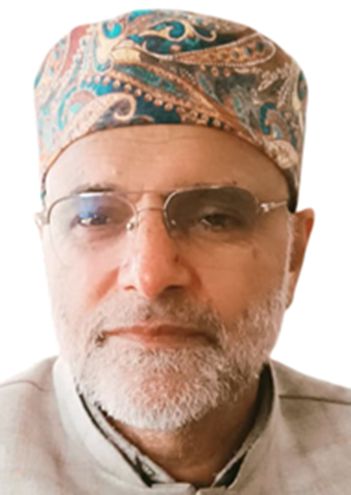
(The author a veteran academician is a former Professor and Head Department of Islamic Studies, Kashmir University. The views, opinions and conclusions expressed in this article are those of the author and aren’t necessarily in accord with the views of “Kashmir Horizon”)
[email protected]







