Education has always been the cornerstone of human civilization. It shapes individuals, strengthens societies, promotes innovation, and serves as the driving force behind economic growth and social transformation. For generations, obtaining a university degree was considered the most reliable pathway to employment, financial stability, and social mobility. Parents encouraged their children to pursue higher education with the belief that academic qualifications alone would secure a prosperous future. While this assumption held true for much of the twentieth century, the realities of the twenty-first century have fundamentally altered the relationship between education and employment.
Today, the world is experiencing unprecedented technological, economic, and social changes. Artificial intelligence, automation, digital technologies, globalization, climate change, and rapidly evolving labour markets are transforming every sector of society. Occupations that once offered lifelong security are disappearing, while entirely new professions are emerging at remarkable speed. In such an environment, educational systems designed for the industrial age are struggling to prepare students for the demands of a knowledge-driven economy. The result is a growing disconnect between what educational institutions teach and what employers, communities, and societies increasingly require.
This changing reality demands a fundamental reconsideration of the purpose of education. The challenge is no longer merely to increase access to schools and universities or to produce greater numbers of graduates. The more pressing challenge is to ensure that education develops individuals who are capable of adapting to change, solving complex problems, embracing innovation, and contributing responsibly to society. The future belongs not simply to those who possess academic qualifications but to those who combine knowledge with practical competence, ethical values, creativity, resilience, and a commitment to lifelong learning.
The Crisis Of Conventional Education: One of the greatest weaknesses of contemporary education lies in its continued dependence on a model that places excessive emphasis on examinations, grades, and certificates. For decades, success has largely been measured by academic scores rather than by the ability to apply knowledge in practical situations. Students often spend years memorizing information for examinations without developing the analytical, creative, and interpersonal skills necessary for success beyond the classroom.
While this system may have served the needs of industrial economies, it is increasingly inadequate in an era characterized by innovation and rapid technological change. Employers are no longer searching merely for graduates with impressive transcripts. They seek individuals who can communicate effectively, think critically, work collaboratively, solve unfamiliar problems, adapt to changing circumstances, and demonstrate initiative. Unfortunately, these competencies often receive insufficient attention within conventional educational programmes.
The consequence is a paradox that has become increasingly visible across many countries. Universities continue to produce millions of graduates every year, yet employers frequently report difficulties in recruiting candidates who possess workplace-ready skills. At the same time, many educated young people struggle to find meaningful employment despite holding respectable academic qualifications. This mismatch between educational outcomes and labour market expectations represents one of the defining educational challenges of our time.
The Employability Paradox In A Changing World: The contemporary employment crisis is frequently described as a shortage of jobs. In reality, it is equally a shortage of appropriate skills. Technological innovation has transformed the nature of work so profoundly that professional competence now extends far beyond disciplinary knowledge. Modern workplaces require individuals who can integrate technical expertise with communication skills, emotional intelligence, digital literacy, leadership, and ethical decision-making.
Employability today is not determined solely by what graduates know but by what they can do with their knowledge. A university degree may provide an entry point into professional life, but sustained success depends upon continuous learning, adaptability, creativity, and the capacity to respond effectively to new challenges. Global competition has intensified this reality. Professionals are no longer competing solely within local or national labour markets; increasingly they compete within an interconnected global economy where knowledge, innovation, and productivity determine success. Consequently, educational institutions must prepare students not merely to secure employment but to thrive in environments characterized by uncertainty, technological disruption, and continuous change.
From Information To Knowledge, Wisdom: Perhaps the most profound transformation affecting education is the changing nature of knowledge itself. In previous generations, educational institutions served primarily as repositories of information. Teachers transmitted knowledge, and students memorized it. Today, however, information has become universally accessible through digital technologies, online learning platforms, and artificial intelligence. Facts that once required years of study can now be retrieved within seconds. This transformation requires education to move beyond the simple transmission of information. The real challenge is helping learners convert information into knowledge and knowledge into wisdom. Information consists of facts and data. Knowledge emerges through understanding, interpretation, analysis, and application. Wisdom develops when knowledge is combined with ethical reflection, experience, creativity, and sound judgment. Educational institutions must therefore encourage students to question assumptions, analyse evidence, solve authentic problems, and reflect critically on the implications of their decisions. The future belongs to individuals who know how to learn rather than merely what to remember.
Holistic Education| A New Educational Paradigm: The limitations of conventional education have stimulated growing interest in holistic approaches to learning. Holistic education recognizes that human development cannot be reduced to academic achievement alone. Instead, it seeks the balanced cultivation of intellectual, practical, emotional, ethical, social, and creative capacities. Its objective extends beyond preparing individuals for employment. It aims to prepare them for life. A holistic educational framework rests upon several interconnected dimensions. The first is intellectual excellence, which includes critical thinking, scientific inquiry, interdisciplinary understanding, and the ability to analyse complex problems. Intellectual development remains fundamental because sound reasoning provides the foundation for responsible decision-making and innovation. The second dimension is practical competence. Learning becomes meaningful only when students can apply theoretical concepts to real-world situations. Practical education therefore requires internships, laboratory experiences, community engagement, research projects, industrial collaboration, and project-based learning. Such experiences enable students to acquire professional confidence while bridging the gap between classroom learning and workplace expectations.
The third dimension concerns emotional and social intelligence. Success in contemporary society depends increasingly upon communication, collaboration, empathy, adaptability, conflict resolution, and leadership. These competencies strengthen interpersonal relationships, improve workplace performance, and contribute to psychological well-being. Educational institutions must therefore provide opportunities for teamwork, dialogue, community service, and reflective learning that nurture mature, socially responsible individuals.
Equally important is ethical development. Scientific and technological progress without corresponding moral responsibility can generate significant social and environmental challenges. Education must cultivate integrity, accountability, compassion, respect for diversity, and commitment to justice. Character is not an optional outcome of education but one of its highest achievements.
Holistic education therefore represents a shift from producing graduates who merely possess qualifications to nurturing individuals capable of contributing meaningfully to society. It recognizes that genuine education integrates knowledge with values, competence with compassion, innovation with responsibility, and professional success with human flourishing.
Skills, Innovation, Lifelong Learning : The future of education depends not only on the acquisition of knowledge but also on the development of skills that enable individuals to adapt to rapidly changing social and economic realities. In today’s knowledge economy, employers increasingly value competencies such as critical thinking, creativity, communication, collaboration, digital literacy, leadership, and problem-solving. These transferable skills complement technical expertise and enable graduates to remain relevant in dynamic professional environments. As technological change continues to reshape industries, the capacity to learn, unlearn, and relearn has become one of the most important competencies of the twenty-first century.
Lifelong learning is therefore no longer an educational ideal but an economic and social necessity. The traditional assumption that formal education ends with graduation has become obsolete. Professionals must continuously update their knowledge, acquire new skills, and adapt to technological innovations throughout their careers. Educational institutions should cultivate this mindset by encouraging curiosity, independent inquiry, self-directed learning, and intellectual flexibility. Rather than preparing students for a single occupation, universities must prepare them for multiple careers and lifelong professional evolution.
Equally important is the integration of experiential learning into educational programmes. Internships, apprenticeships, research projects, field studies, community engagement, and industry collaborations provide students with opportunities to apply theoretical knowledge in practical settings. Such experiences strengthen professional confidence, improve workplace readiness, and enable learners to appreciate the complex realities that cannot be fully understood through classroom instruction alone. Practical learning also nurtures innovation by encouraging students to identify problems, design solutions, and evaluate their effectiveness in real-life contexts.
“An educational system’s success shouldn’t be judged by degrees or job data, but by the quality of people it nurtures. True education fosters knowledge, practical skills, wisdom, and compassion, serving as the essential foundation for human flourishing and a just, peaceful world.”
Artificial Intelligence And Future Of Human Learning: Artificial Intelligence (AI) has become one of the defining forces shaping contemporary education and employment. Intelligent systems now perform tasks that were once considered uniquely human, including data analysis, language translation, content generation, medical diagnosis, and predictive modelling. These developments have generated both optimism and concern regarding the future of work and the role of education. Rather than viewing artificial intelligence as a threat, educational institutions should regard it as a transformative learning tool. AI has the potential to personalize learning, improve access to educational resources, support research, and enhance administrative efficiency. Students can use intelligent technologies to explore complex concepts, simulate experiments, analyse large datasets, and engage with interactive learning environments that were unimaginable only a decade ago. At the same time, AI reinforces the importance of uniquely human capabilities that machines cannot easily replicate. Creativity, empathy, ethical reasoning, imagination, cultural understanding, emotional intelligence, and moral leadership remain essential human attributes. The educational challenge is therefore not to compete with machines in routine tasks but to cultivate those qualities that distinguish human intelligence from artificial intelligence. Future educational systems must combine technological competence with humanistic values, ensuring that innovation serves humanity rather than replacing it.
Entrepreneurship And Creation Of Human Capital : Education has traditionally prepared students to seek employment in government services, corporate organizations, or professional occupations. While employment remains an important objective, the rapidly changing global economy increasingly demands graduates who are capable of creating opportunities rather than merely searching for them. Entrepreneurship represents more than establishing businesses; it embodies a mindset characterized by initiative, innovation, resilience, and the ability to transform challenges into opportunities.
Educational institutions should therefore promote entrepreneurial thinking across disciplines rather than confining it to business schools. Students should be encouraged to identify societal problems, develop innovative solutions, and understand the fundamentals of financial literacy, project management, digital entrepreneurship, and social enterprise. Incubation centres, innovation laboratories, mentorship programmes, and collaborative research environments can provide valuable support for young innovators seeking to transform ideas into sustainable ventures.
Entrepreneurship also contributes significantly to national development by generating employment, promoting technological innovation, and stimulating economic growth. In an era of increasing automation, entrepreneurial capabilities enable graduates to remain economically productive while contributing to the broader goals of inclusive and sustainable development. Education for Character, Citizenship, and Sustainable Development
While employability and economic productivity are important objectives, the true purpose of education extends far beyond preparing individuals for the labour market. Educational institutions also bear responsibility for cultivating ethical citizens capable of contributing positively to society. Character formation remains one of the most enduring and significant functions of education.
The complexities of the contemporary world demand graduates who possess integrity, honesty, compassion, tolerance, environmental consciousness, and a strong commitment to social justice.
Technological progress without ethical responsibility can contribute to inequality, environmental degradation, misinformation, and social fragmentation. Consequently, ethics should not be treated as an isolated academic subject but integrated throughout the educational experience. Education should also strengthen democratic citizenship by encouraging critical thinking, civic participation, intercultural dialogue, respect for diversity, and peaceful conflict resolution. In increasingly pluralistic societies, educational institutions play a vital role in promoting mutual understanding and social cohesion. Sustainable development likewise depends upon educational systems that foster environmental awareness, responsible consumption, scientific literacy, and a commitment to the welfare of future generations. An education that combines professional competence with ethical responsibility ultimately contributes not only to economic prosperity but also to the creation of more just, peaceful, and sustainable societies.
Towards An Integrated Educational Ecosystem: Transforming education requires collective responsibility. Governments, universities, industries, communities, families, and learners themselves must collaborate in creating educational ecosystems capable of responding to contemporary challenges. Educational reform cannot succeed through curriculum revision alone; it demands institutional innovation, effective public policy, adequate investment, and meaningful partnerships between academia and industry.
Universities should regularly update curricula to reflect technological developments and emerging labour market needs while preserving their broader mission of intellectual inquiry and character formation. Faculty members must increasingly function as mentors, facilitators, researchers, and innovators rather than simply transmitters of information. Industry participation in curriculum development, internships, research collaborations, and skill development initiatives can significantly enhance graduate preparedness for professional life.
Governments should encourage interdisciplinary education, vocational excellence, digital infrastructure, research funding, and lifelong learning opportunities while ensuring equitable access to quality education. Students, for their part, must recognize that learning is a continuous personal responsibility rather than an activity confined to classrooms or examination periods. A collaborative educational ecosystem built upon shared responsibility offers the most effective pathway towards educational transformation.
Conclusion: Reimagining Education for Human Flourishing
The rapidly changing realities of the twenty-first century have made it increasingly evident that conventional models of education are no longer sufficient to address contemporary challenges. The expansion of higher education has undoubtedly increased access to learning, yet the persistence of graduate unemployment, skill mismatches, and social inequalities demonstrates that educational reform must move beyond quantitative growth towards qualitative transformation. The central challenge is not merely producing more graduates but preparing individuals who are intellectually competent, professionally skilled, ethically responsible, emotionally resilient, technologically adaptable, and socially committed. Holistic education offers a comprehensive response to these emerging realities by integrating intellectual excellence, practical competence, creativity, emotional intelligence, ethical leadership, lifelong learning, and civic responsibility within a unified educational framework. Such an approach recognizes that education should prepare individuals not only for employment but also for responsible citizenship, meaningful personal development, and constructive participation in an interconnected world. The future of education will therefore depend upon its ability to balance technological advancement with human values, specialized knowledge with interdisciplinary understanding, economic productivity with social responsibility, and innovation with ethical wisdom. Educational institutions must become centres of continuous learning, creativity, research, and character formation where students are empowered not merely to respond to change but to shape it responsibly. Ultimately, the success of an educational system should not be measured solely by the number of degrees it awards or the employment statistics it generates. Its true measure lies in the quality of human beings it nurtures—individuals who possess the knowledge to understand the world, the skills to transform it, the wisdom to guide their actions, and the compassion to ensure that progress benefits all. Only such an education can truly serve as the foundation for human flourishing, sustainable development, and a more just and peaceful global society.
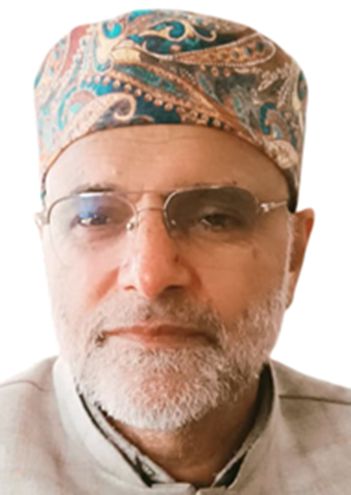
(The author a veteran academician is a former Professor and Head Department of Islamic Studies, Kashmir University. The views, opinions and conclusions expressed in this article are those of the author and aren’t necessarily in accord with the views of “Kashmir Horizon”)