

Universiti Malaya (UM) stands today as one of the most prominent symbols of Malaysia’s intellectual ambition and academic transformation. Established as the nation’s oldest public university, it has evolved from a colonial-era institution into a globally recognised centre of higher learning, research innovation, and interdisciplinary scholarship. Its current trajectory—reflected in its rising global rankings and expanding international collaborations—signals not only institutional success but also Malaysia’s broader aspiration to position itself as a knowledge-driven society in the twenty-first century.
Recent developments, including the announcement that UM is targeting a place among the world’s top 50 universities next year, further underline the confidence placed in the institution by national leadership. According to Higher Education Minister Datuk Seri Dr Zambry Abd Kadir, UM’s upward trajectory—from earlier positions in the 60s and 70s to its current 58th place in global rankings—reflects sustained efforts in academic excellence, research output, innovation, and holistic student development. This ambition is not merely symbolic; it is grounded in measurable progress and strategic institutional reforms.
At the heart of this vision lies a deeper philosophical shift in higher education policy: the recognition that modern civilisation is increasingly shaped not by natural resources alone, but by the generation and application of ideas. As Zambry noted, echoing the intellectual vision of Sir Winston Churchill, “The empires of the future will be the empires of the mind.” In this framing, universities such as UM become central engines of national development, producing not only graduates but also transformative ideas, technologies, and solutions for global challenges.
Global, Regional Academic Standing : Universiti Malaya’s position in global higher education rankings reflects its steady rise as a research-intensive institution. In the QS World University Rankings, UM has achieved a historic milestone by reaching 58th place among more than 8,000 universities worldwide. This achievement marks its highest ranking to date and demonstrates consistent upward mobility over recent years. This progress is not isolated. In regional rankings, UM has also established itself as a leading academic institution in Asia. In the QS Asia University Rankings 2026, it was placed 15th, reaffirming its status as Malaysia’s top-ranked university and one of Asia’s most competitive centres of higher learning.
Complementary global ranking systems further validate this standing. The Times Higher Education (THE) World University Rankings places UM within the 201–300 bracket globally, reflecting strong performance in research environment, teaching quality, and international outlook. While different ranking systems employ different methodologies, the convergence of results across multiple indices highlights UM’s broad-based academic strength. Subject-specific rankings further illustrate the university’s academic diversity. In disciplines such as engineering, social sciences, and religious studies, UM has demonstrated notable global competitiveness, with several subjects ranked among the world’s top 50 in previous QS subject listings. This multidisciplinary excellence reinforces UM’s identity as a comprehensive research university rather than a narrowly specialised institution.
Intellectual Environment, Scholarly Culture: Universiti Malaya’s academic strength is deeply rooted in its intellectual ecosystem, which promotes both disciplinary depth and interdisciplinary engagement. The university houses faculties across science, medicine, engineering, humanities, social sciences, and professional studies, creating a vibrant environment for cross-disciplinary collaboration.
A defining feature of UM’s scholarly culture is its strong emphasis on research productivity and international collaboration. Faculty members actively engage in publishing in high-impact journals, participating in global research networks, and contributing to policy-relevant scholarship. The university’s strong performance in international research collaboration indicators reflects its global academic integration.
Within this broader ecosystem, the Academy of Islamic Studies occupies a particularly significant position. It serves as a leading centre for Islamic scholarship in Southeast Asia, offering programmes that integrate traditional Islamic sciences with contemporary academic inquiry. Its curriculum includes Qur’anic studies, Hadith sciences, Islamic jurisprudence (fiqh), theology, philosophy, comparative religion, and Islamic finance.
This integration of classical and modern approaches allows the Academy to function as both a preserver of Islamic intellectual heritage and a contributor to contemporary global debates on ethics, law, and society. Its scholars actively engage in international conferences, peer-reviewed publications, and collaborative research, ensuring that Islamic scholarship remains dynamic, relevant, and globally connected.
“The Academy of Islamic Studies at Universiti Malaya (UM) expands the university’s impact through ethical scholarship and global collaborations, notably with institutions in Qatar. Ultimately, UM serves as a dynamic intellectual ecosystem that drives future-oriented knowledge and cross-cultural understanding. Its success highlights that modern global influence is built on ideas, knowledge, and human imagination rather than physical territory.”
Strategic Int’l Collaboration| Engagement With Qatar : One of the most significant recent developments in UM’s internationalisation strategy is its expanding collaboration with institutions in Qatar. This initiative reflects a broader effort to strengthen academic, cultural, and institutional ties across the Muslim world, particularly in areas such as Islamic finance, education, and community development.
Discussions between representatives of UM’s Academy of Islamic Studies and the Qatari Ambassador to Malaysia have opened pathways for cooperation with key institutions, including Qatar University, the Ministry of Endowments (Awqaf), and the Central Bank of Qatar. These engagements are structured around long-term institutional goals rather than short-term exchanges. Key areas of collaboration include curriculum development, joint academic programmes, and shared expertise in Islamic finance, governance, and ethics. By aligning curricula and developing joint degrees or modules, both institutions aim to enhance academic coherence and global relevance.
Research collaboration forms another major pillar of this partnership. Joint studies focusing on Islamic economic thought, financial ethics, and the role of religion in public life are envisioned as part of a broader effort to address contemporary global challenges through an Islamic intellectual framework. These initiatives reflect an understanding that modern problems require interdisciplinary and cross-cultural academic responses.
Academic and cultural exchange programmes further strengthen this partnership. Faculty and student exchanges are expected to foster intercultural understanding, broaden academic perspectives, and build long-term scholarly networks. In addition, planned institutional visits aim to formalise cooperation through memoranda of understanding and sustained academic engagement. Such collaborations highlight the evolving role of universities as transnational knowledge bridges, contributing not only to education but also to diplomatic and socio-economic development.
Integrating Academic Reputation, Societal Impact : Universiti Malaya’s global ranking achievements are not merely symbolic; they have tangible implications for academic development and societal impact. High international rankings enhance institutional visibility, attract global research partnerships, and expand opportunities for funding, mobility, and collaboration.
For students and scholars within the Academy of Islamic Studies, this global recognition translates into access to broader academic networks and platforms for international publication. It also enhances employability and professional mobility across global academic and policy institutions.
Importantly, UM’s academic philosophy extends beyond rankings. The university places strong emphasis on the social relevance of knowledge. Islamic studies at UM, for example, is not confined to textual analysis but actively engages with contemporary issues such as financial ethics, interfaith relations, social justice, and digital transformation. This reflects a commitment to producing scholarship that is both academically rigorous and socially meaningful. The University’s broader strategy also prioritises international research networks, with strong performance in global collaboration indicators. This reinforces its identity as a globally connected institution that contributes actively to international scholarly discourse.
Conclusion|A Global Knowledge Institution In Transformation:
Universiti Malaya’s rise in global rankings and its expanding international collaborations represent the outcome of sustained institutional commitment to excellence in teaching, research, and global engagement. Its trajectory reflects a broader transformation in higher education, where universities are increasingly expected to function as engines of innovation, ethical leadership, and global cooperation.
As Malaysia’s premier public university, UM occupies a strategic position not only in national development but also in global academic discourse. Its ambition to enter the world’s top 50 universities reflects both aspiration and achievement, grounded in measurable progress and institutional strength.
Within this broader framework, the Academy of Islamic Studies plays a crucial role in extending UM’s intellectual reach into domains of ethical scholarship, religious thought, and interdisciplinary inquiry. Its collaborations—particularly with institutions in Qatar—demonstrate how academic partnerships can transcend geographical boundaries to address shared global challenges.
Ultimately, Universiti Malaya stands as more than a university; it is a dynamic intellectual ecosystem shaping future-oriented knowledge, fostering cross-cultural understanding, and contributing meaningfully to the advancement of global higher education. Its journey reflects the enduring truth that in the modern world, the most powerful empires are indeed those built not on territory or resources, but on ideas, knowledge, and the human capacity to imagine a better future.
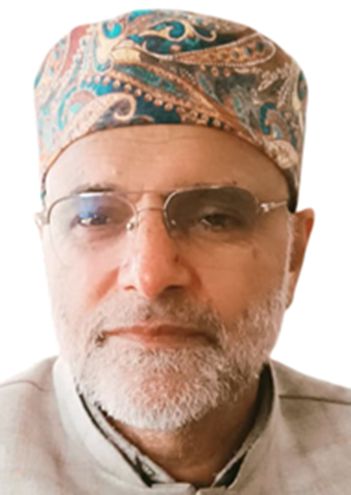
(The author a veteran academician is a former Professor and Head Department of Islamic Studies, Kashmir University. The views, opinions and conclusions expressed in this article are those of the author and aren’t necessarily in accord with the views of “Kashmir Horizon”)






