

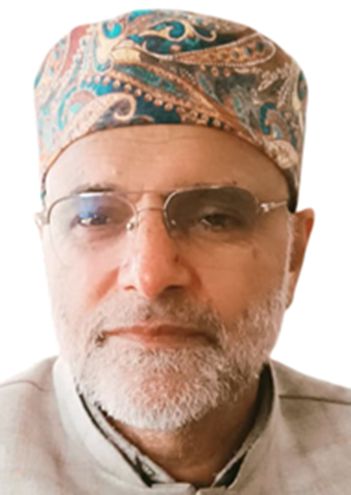
Prof. Hamid Naseem Rafiabadi
Introduction: The question of livelihood for religious scholars has become one of the most pressing concerns facing Muslim societies today. In many parts of the world, graduates of Islamic seminaries devote their lives to teaching, preaching, leading prayers, issuing guidance, and preserving the religious identity of the community. Yet they frequently find themselves confronting economic hardship, social comparison, and professional dissatisfaction. The issue is often discussed primarily in terms of salaries, institutional funding, and financial support. While these concerns are undoubtedly important, an equally significant question deserves attention: should religious service be measured principally through monetary value?
The modern world evaluates almost every profession through the lens of economic productivity and market value. The worth of a person is frequently determined by income, material possessions, and social status. Such a worldview inevitably affects religious institutions and their servants. Consequently, some people begin to compare the salary of an imam with that of a corporate executive, a teacher of Qur’an with a software engineer, or a madrasah instructor with a government officer. While such comparisons may appear natural in a market-driven society, they often overlook the unique nature of religious service and the spiritual objectives that distinguish it from ordinary occupations.
The preservation of religion has never been merely an economic enterprise. Throughout Islamic history, the greatest scholars and reformers considered their work a sacred trust before Allah rather than a commercial undertaking. This does not mean that scholars should live in poverty or that communities are absolved of their responsibility to support them. Rather, it means that the value of religious service transcends monetary compensation and cannot be reduced to financial calculations alone.
The Sacred Nature Of Religious Service: Islam views religious knowledge as one of the highest forms of worship. The Qur’an repeatedly elevates the status of those who possess knowledge and dedicate themselves to guiding humanity. The mission of the Prophets was not commercial; it was a divine responsibility. The Qur’an records numerous prophetic declarations in which the Prophets said to their communities: “I ask of you no reward for it; my reward is only from the Lord of the worlds.”
This recurring Qur’anic theme establishes an important principle: the essence of religious service is sincerity (ikhlas), not financial gain. The primary motivation for conveying divine guidance must be seeking the pleasure of Allah.
The scholars are described in Islamic tradition as the heirs of the Prophets. If prophetic missions were fundamentally acts of selfless service, then scholarly service must retain something of the same spirit. The mosque, madrasah, and educational institution should not be viewed merely as places of employment but as centres of spiritual and intellectual stewardship.
Unfortunately, contemporary materialism often obscures this reality. When religious service is viewed solely through the prism of income, disappointment becomes inevitable. The market rewards activities according to supply, demand, and profitability, whereas the value of religious work lies in its contribution to faith, morality, and the eternal welfare of humanity. The two systems operate according to entirely different standards.
The Problem Of Market-Based Evaluation: Modern societies tend to assign prestige according to economic success. A person earning a high salary is often considered more successful than someone engaged in teaching, scholarship, or community service. This mentality has influenced Muslim communities as well. Young graduates sometimes compare their financial condition with that of their peers who entered medicine, engineering, information technology, or business. Such comparisons can generate frustration and lead some to feel that choosing religious education was a mistake. This sentiment arises because society increasingly equates success with wealth rather than contribution, service, or moral leadership.
Yet if financial reward becomes the sole criterion of value, many of the most important human activities would appear insignificant. A mother nurturing her children, a volunteer serving the needy, or a scholar preserving religious knowledge may produce little measurable economic output, yet their contribution to society is immeasurable. Religious service belongs to this category of higher human endeavors. Its fruits are often invisible and long-term. A teacher who inspires faith in a child may influence generations. An imam who resolves family disputes may save an entire household from disintegration. A scholar who preserves authentic religious understanding may protect a community from confusion and extremism. These contributions cannot be quantified by salary scales.
Historical Models Of Scholarly Independence: Islamic history offers numerous examples of scholars who combined religious service with economic independence. Abu Hanifah was a successful merchant. Many jurists, hadith scholars, and theologians engaged in trade, agriculture, craftsmanship, or other professions. Their economic independence often strengthened their intellectual independence. The purpose of these activities was not the pursuit of wealth for its own sake. Rather, they enabled scholars to serve religion without becoming excessively dependent upon rulers, institutions, or donors. Economic self-sufficiency protected their dignity and allowed them to speak the truth fearlessly. This historical model provides an important lesson. Separating religious service from monetary value does not mean neglecting livelihood. Instead, it means refusing to allow financial considerations to define the worth of religious work. A scholar may earn through lawful means while understanding that his or her religious contribution possesses a value far beyond material compensation.
“The Muslim intellectual tradition views religious service as a sacred trust (Amanah) rather than a career, seeking reward from Allah rather than material status. While contemporary societies should generously support scholars, the true value of their work—preserving faith, transmitting knowledge, and providing moral guidance—cannot be measured financially. Reclaiming this vision restores sacred dignity to religious service, ensuring scholars serve for the higher purpose of seeking Allah’s pleasure and human betterment.”
The Danger Of Commercializing Religion : One of the greatest risks facing contemporary religious institutions is the commercialization of religion. When religious activities become excessively linked to financial incentives, several harmful consequences may emerge. First, sincerity may be weakened. Actions originally performed for Allah’s pleasure can gradually become motivated by income, recognition, or institutional advancement. Second, public trust may decline. Communities become suspicious when religious leadership appears excessively concerned with financial matters. The moral authority of scholars depends significantly upon the perception that they are guided by principles rather than personal gain. Third, competition may replace cooperation. Instead of viewing religious work as a collective mission, individuals may begin competing for positions, influence, and resources.
Fourth, the educational mission itself may suffer. Institutions may prioritize expansion, publicity, or fundraising over the intellectual and spiritual development of students. None of these dangers imply that scholars should not receive compensation. Islamic law clearly permits payment for teaching, leading prayers, and other religious services. The issue is not compensation itself but allowing financial considerations to become the primary measure of success.
Community Responsibility Toward Religious Servants: While emphasizing the spiritual nature of religious service, it is equally important to reject the notion that scholars should be left to struggle economically. The community bears a significant responsibility toward those who dedicate their lives to preserving and transmitting religious knowledge. A society that benefits from the efforts of scholars, imams, teachers, and preachers must ensure that their basic needs are met with dignity. The Prophet ﷺ emphasized the rights of workers and encouraged fair treatment of those who serve others. Neglecting the material welfare of religious servants can create unnecessary hardships and discourage talented individuals from entering the field. Therefore, separating religious service from monetary value does not mean underpaying scholars or ignoring their needs. Rather, it means recognizing that financial support is a means of enabling service, not a measure of its worth. Communities should provide adequate compensation out of gratitude and responsibility, while scholars should maintain awareness that their ultimate reward lies with Allah.
Reviving The Concept Of Barakah : An important dimension often neglected in contemporary discussions is the Islamic concept of barakah (divine blessing). Modern economic thinking focuses primarily on numerical income, whereas Islamic thought considers both quantity and blessing. Many religious scholars throughout history lived modestly yet enjoyed remarkable contentment, influence, and productivity. Their lives demonstrate that prosperity cannot be reduced to financial figures alone. A smaller income accompanied by barakah may bring greater satisfaction and benefit than a larger income devoid of spiritual blessing. This perspective does not eliminate material concerns, but it places them within a broader framework. The objective is not poverty but balance. Material means are necessary, yet they should remain servants of higher spiritual goals rather than becoming ends in themselves.
Integrating Skills, Livelihood: One practical solution is encouraging religious students to acquire complementary skills. Technology, translation, publishing, research, teaching, counseling, entrepreneurship, and other fields can provide additional income while remaining compatible with religious service. Such an approach offers several advantages. It reduces financial pressure, enhances self-reliance, and allows scholars to contribute more effectively to society. Most importantly, it preserves the distinction between earning a livelihood and serving religion. One activity generates income; the other fulfills a sacred mission. This balanced model reflects the practice of many early Muslim scholars. It enables religious workers to maintain both dignity and independence while continuing their educational and spiritual responsibilities.
Reframing Success: Perhaps the most important reform required today is a redefinition of success. Muslim societies must challenge the assumption that income alone determines worth. A successful scholar is not necessarily the one with the highest salary. Rather, success may be measured by integrity, knowledge, influence, service, and proximity to Allah. Similarly, a successful institution is not merely the one with the largest buildings or the greatest financial resources but the one that produces sincere, knowledgeable, and morally upright individuals. The Qur’anic worldview consistently directs attention toward eternal rather than temporary standards. Wealth has value, but it is not the ultimate criterion of excellence. Human beings are judged by faith, righteousness, sincerity, and beneficial action. When communities internalize this perspective, the social status of religious service naturally rises. Scholars cease to be evaluated primarily by their economic position and are appreciated for their intellectual and spiritual contributions.
Conclusion: The challenge of livelihood among religious scholars is real and deserves serious attention. Institutions must improve financial support, communities must fulfill their responsibilities, and scholars should pursue lawful means of economic stability. Yet the deeper issue concerns how religious service is understood and valued. Religious service should never be reduced to a commercial transaction. Its essence lies in devotion, sincerity, guidance, and the preservation of faith. While compensation is necessary, it cannot define the true worth of teaching the Qur’an, preserving prophetic traditions, nurturing moral character, and guiding communities toward Allah. The Muslim intellectual tradition reminds us that the greatest servants of religion often viewed their work not as a career but as a trust. Their reward was not confined to salaries, recognition, or worldly status; it was sought from Allah, whose recompense surpasses all earthly calculations. In an age dominated by material measurements, Muslim societies must reclaim this vision. Scholars should be supported generously, but the value of their service should never be measured merely by money. The preservation of faith, the transmission of knowledge, and the moral guidance of humanity are treasures whose worth exceeds every financial scale. When religious service is understood in this light, it regains its sacred dignity, and society benefits from scholars who serve not for wealth alone but for the higher purpose of seeking the pleasure of Allah and the betterment of humanity.
(The author a veteran academician is a former Professor and Head Department of Islamic Studies, Kashmir University. The views, opinions and conclusions expressed in this article are those of the author and aren’t necessarily in accord with the views of “Kashmir Horizon”)






