“Prime Minister’s appeal may also be politically significant. At a time when economic nationalism is gaining prominence globally, encouraging domestic tourism and local expenditure aligns with the “Vocal for Local” campaign that has become central to the government’s economic messaging.”
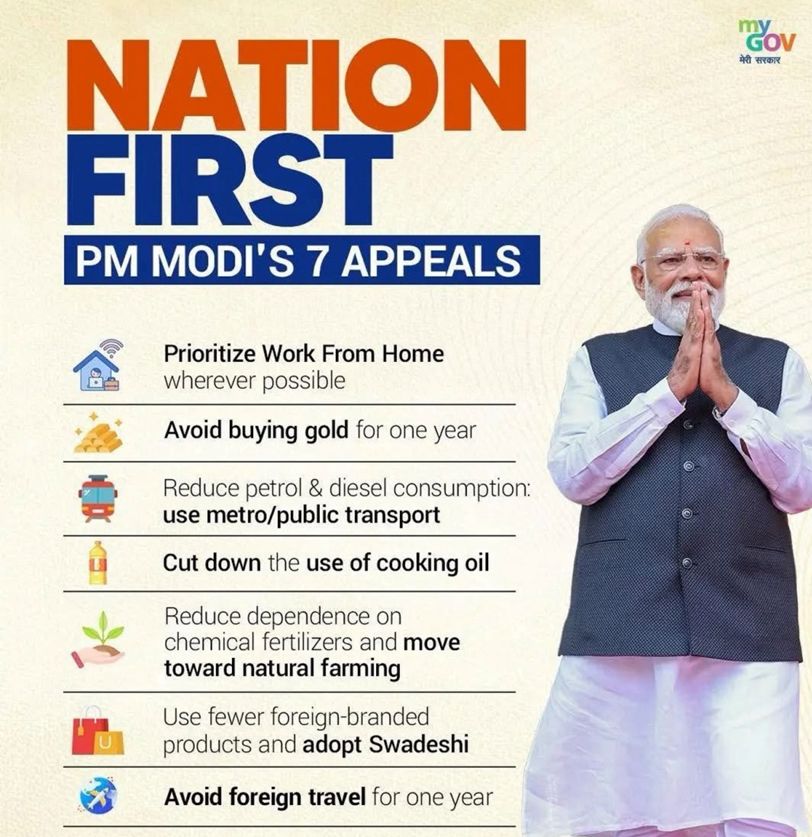
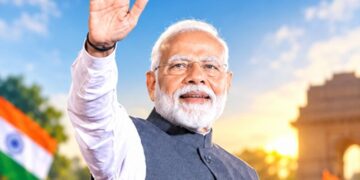
As geopolitical tensions in West Asia continue to unsettle global markets and threaten energy security, Prime Minister Narendra Modi has issued a wide-ranging appeal to citizens, urging them to become active participants in safeguarding India’s economic stability and long-term national interests. Addressing a public gathering in Hyderabad, the Prime Minister outlined seven key behavioural and economic changes that citizens should voluntarily adopt in response to the ongoing global uncertainty triggered by the West Asia crisis. The Prime Minister’s message was not merely a political speech or a symbolic appeal for patriotism. It reflected a deeper recognition of the vulnerabilities India faces in an interconnected global economy—particularly its dependence on imported crude oil, fertilisers, edible oils, and foreign luxury consumption. At a time when international crude oil prices have surged beyond 100 US dollars per barrel and touched highs of 126 dollars due to tensions surrounding the Strait of Hormuz, Modi’s remarks signalled an attempt to prepare the country psychologically and economically for possible turbulence ahead. The seven-point appeal focused on reducing imported fuel consumption, avoiding unnecessary foreign travel, limiting extravagant overseas expenditure, reducing excessive gold purchases, reviving work-from-home practices, cutting edible oil consumption, and promoting organic farming to reduce fertiliser imports. Taken together, these measures indicate a broader push toward economic nationalism, resource conservation, and strategic self-reliance under the vision of “Viksit Bharat 2047.”
A Crisis Beyond Borders: The backdrop of Modi’s appeal is critical. West Asia remains one of the most volatile regions in the world and is central to global energy supplies. Any prolonged disruption in the Strait of Hormuz—a narrow but strategically crucial maritime passage through which nearly one-fifth of global oil trade passes—can severely impact countries dependent on imported energy. India imports more than 85 percent of its crude oil requirement, making it highly vulnerable to external shocks. Rising crude oil prices directly affect India’s inflation, fiscal deficit, transport costs, industrial production, and household expenditure. Fuel price increases often have cascading effects across the economy, raising the prices of food, logistics, construction materials, and daily essentials. The Indian rupee also comes under pressure when import bills rise sharply, increasing demand for foreign currency reserves. Against this backdrop, Modi’s appeal can be interpreted as a pre-emptive attempt to build economic resilience at the grassroots level. Rather than relying solely on government interventions, the Prime Minister is seeking public cooperation in reducing economic stress through behavioural change.
Fuel Conservation | A National Duty: Among the most significant aspects of Modi’s address was his appeal to citizens to reduce imported fuel consumption by using public transport and carpooling. This reflects a growing concern over India’s energy dependence and the economic consequences of prolonged high oil prices. Fuel imports constitute one of the largest components of India’s foreign exchange expenditure. Even minor reductions in fuel consumption at the national level can save billions of dollars annually. By encouraging citizens to share rides and rely more on public transportation, the government appears to be reviving a wartime-style civic responsibility narrative where individual choices are linked to national economic security. The appeal also highlights a broader policy transition already visible in India’s push toward electric vehicles, ethanol blending, renewable energy expansion, and green mobility. Modi’s message indirectly reinforces the government’s long-term strategy of reducing oil dependence through sustainable alternatives. However, experts argue that behavioural appeals alone may not be enough unless accompanied by stronger public transport infrastructure, affordable mobility solutions, and urban planning reforms. In many Indian cities, overcrowded public transport systems and limited connectivity make private vehicles a necessity rather than a luxury. Therefore, while the Prime Minister’s appeal carries symbolic and moral value, implementation will depend significantly on institutional support.
Reconsidering Foreign Travel , Luxury Spending: Another major aspect of Modi’s speech was the call to reduce discretionary foreign spending, including avoiding foreign travel for a year and reconsidering destination weddings abroad. This suggestion reflects concerns about capital outflow during a period of economic uncertainty. Indians are among the world’s fastest-growing outbound tourist groups, spending billions of dollars annually on international travel, luxury shopping, education, and overseas celebrations. While such spending reflects rising prosperity among sections of society, it also contributes to foreign exchange outflow at a time when the government may need to preserve reserves for essential imports. Destination weddings, particularly among wealthy Indians, have become symbols of aspirational luxury. These events often involve large-scale expenditure in foreign countries, benefiting external economies more than domestic industries. Modi’s remarks subtly reframed such practices through the lens of national responsibility and economic prudence. The Prime Minister’s appeal may also be politically significant. At a time when economic nationalism is gaining prominence globally, encouraging domestic tourism and local expenditure aligns with the “Vocal for Local” campaign that has become central to the government’s economic messaging since the COVID-19 pandemic. Yet critics may view such appeals as moralistic or selective, arguing that economic slowdowns should not necessarily translate into restrictions on personal lifestyle choices. Others point out that foreign travel and international events also support sectors like aviation, hospitality, and global business networks. Nevertheless, Modi’s statement appears aimed more at voluntary restraint rather than regulatory action.
The Gold Obsession, Economic Implications: The Prime Minister’s call to limit excessive gold purchases for one year touches upon a deeply rooted cultural and economic issue in India. Gold holds emotional, social, and financial significance across Indian households, particularly during weddings and festivals. However, India is also one of the world’s largest importers of gold, leading to substantial pressure on foreign exchange reserves. Historically, high gold imports have widened India’s current account deficit. During periods of economic stress, governments have often attempted to curb gold imports through higher duties and financial instruments like sovereign gold bonds. Modi’s appeal seeks to address the issue through public awareness rather than restrictive policies. Economists note that reducing gold imports can significantly strengthen macroeconomic stability. However, changing public attitudes toward gold is not easy in a country where it is considered both an investment and a cultural necessity. The Prime Minister’s statement therefore represents an attempt to transform economic discipline into a patriotic act.
Return of Work From Home: Interestingly, Modi also advocated the revival of work-from-home practices. This recommendation may initially appear disconnected from the broader economic concerns, but it carries strategic implications. Work-from-home arrangements can reduce fuel consumption, urban congestion, and commuting expenses. During the COVID-19 pandemic, remote work demonstrated its potential in cutting transportation-related fuel demand significantly. Reintroducing flexible work culture during periods of global energy instability could help India moderate oil consumption without major economic disruption. At the same time, the proposal reflects changing realities of the digital economy. Many companies have already adopted hybrid work models. By endorsing work-from-home again, the Prime Minister is signalling that energy conservation and economic efficiency can coexist with technological adaptation. However, not all sectors can operate remotely. Manufacturing, retail, healthcare, transportation, and numerous informal economy jobs require physical presence. The success of such a recommendation will therefore remain limited to urban service sectors and technology-driven industries.
Edible Oil Dependency, Food Security: Modi’s appeal to reduce edible oil consumption points toward another major structural vulnerability in India’s economy. India imports a large proportion of its edible oil requirements, particularly palm oil, sunflower oil, and soybean oil. Global supply disruptions, climate shocks, and geopolitical conflicts have repeatedly exposed India’s dependence on foreign agricultural commodities. The Russia-Ukraine conflict had already disrupted sunflower oil supplies globally. Continued instability in international markets can increase food inflation and strain household budgets. Encouraging moderation in edible oil consumption thus serves both economic and public health objectives. Nutrition experts have long warned against excessive oil consumption due to rising obesity, diabetes, and cardiovascular diseases. Therefore, the Prime Minister’s statement intersects economic policy with public health messaging. Still, reducing national dependence on imported edible oils requires more than consumer restraint. It demands stronger domestic oilseed production, improved agricultural policies, investment in processing infrastructure, and incentives for farmers.
Organic Farming , Fertiliser Self-Reliance: Perhaps the most transformative aspect of Modi’s speech was his appeal to farmers to reduce dependence on imported chemical fertilisers and move toward organic farming practices. Fertiliser imports place a major burden on India’s subsidy system and foreign exchange reserves. Global fertiliser prices have become increasingly volatile due to geopolitical tensions and supply chain disruptions. India imports significant quantities of fertilisers and raw materials used in fertiliser production. Any disruption in global supply chains directly affects agricultural costs and food security. By promoting organic farming and alternative agricultural methods, the government aims to reduce external dependence while promoting sustainability. The Prime Minister linked this transition directly with the vision of “Viksit Bharat 2047,” suggesting that true development must include agricultural resilience and environmental sustainability. Organic farming also aligns with broader global concerns regarding soil degradation, groundwater contamination, and ecological balance. However, experts caution that a rapid transition away from chemical fertilisers could affect productivity if not managed carefully. India’s food security gains since the Green Revolution were largely built on intensive fertiliser use. Therefore, balancing sustainability with productivity remains a major challenge.
The Larger Political Message: Beyond economics, Modi’s appeal carries strong political symbolism. It invokes themes of sacrifice, collective responsibility, and nationalism. Historically, Indian leaders have often appealed to public discipline during moments of crisis—from wartime rationing to economic reforms. The Prime Minister’s language reflects an attempt to convert macroeconomic challenges into a mass participatory movement. Instead of presenting the crisis purely as a government problem, Modi framed it as a shared national responsibility requiring lifestyle changes across classes. This approach also strengthens the ideological foundations of the “Atmanirbhar Bharat” and “Vocal for Local” campaigns. Since the pandemic, the government has increasingly promoted domestic production, local industries, and reduced external dependence as central pillars of India’s future. The speech may also serve to psychologically prepare the public for possible economic difficulties ahead, including inflationary pressures, higher fuel prices, and tighter spending conditions. By issuing early appeals for restraint, the government appears to be laying the groundwork for broader acceptance of austerity-oriented measures if the global crisis deepens.
“PM Modi’s speech was his appeal to farmers to reduce dependence on imported chemical fertilisers and move toward organic farming practices. Fertiliser imports place a major burden on India’s subsidy system and foreign exchange reserves.”
Challenges Ahead: While the Prime Minister’s appeal has generated discussion, implementing behavioural change on a national scale remains difficult. Public participation campaigns often face limitations unless supported by concrete incentives and policy measures. For example, encouraging public transport requires efficient and affordable systems. Reducing edible oil imports demands stronger domestic agricultural reforms. Promoting organic farming needs financial support, training, and market linkages for farmers. Similarly, cutting foreign expenditure depends largely on individual financial capacity and lifestyle preferences. There is also the challenge of balancing economic caution with growth ambitions. Consumer spending, tourism, aviation, and retail sectors are important contributors to the economy. Excessive restraint could potentially slow demand in certain sectors already recovering from past disruptions. Nevertheless, the Prime Minister’s speech has succeeded in initiating a wider national conversation on economic responsibility, sustainability, and strategic resilience.
Kashmir Horizon View: The significance of Modi’s seven appeals lies not only in the immediate context of the West Asia crisis but also in the broader economic philosophy they represent. The message signals a shift from consumption-driven aspirations toward a culture of strategic restraint and self-reliance. In an era marked by geopolitical instability, climate crises, disrupted supply chains, and economic uncertainty, nations across the world are reassessing vulnerabilities. India’s challenge is particularly complex because of its size, developmental aspirations, and dependence on global energy and commodity markets. By asking citizens to voluntarily modify consumption habits, the Prime Minister is attempting to build a participatory model of national resilience. Whether these appeals translate into measurable behavioural change remains uncertain. However, the speech has reinforced the idea that economic security is no longer solely the responsibility of governments and institutions; it increasingly depends on collective societal choices. As global uncertainties continue to unfold, Modi’s appeal may ultimately be remembered less as a temporary crisis response and more as a reflection of India’s evolving economic nationalism—one that seeks to combine patriotism, sustainability, and self-reliance in the journey toward becoming a developed nation by 2047.
(“Team Kashmir Horizon” is committed to continuous improvement and invites feedback and suggestions from readers and its followers on social media sites. Reader insights are considered vital for enhancing content quality and empowering the community. The team encourages open communication and values the thoughts and ideas of its audience, believing that such input will enable them to serve the public more effectively. The initiative aims to ensure that readers have the best possible experience with “Kashmir Horizon”. Interested individuals can reach out to us via email at [email protected].)