

Maulana Abul Kalam Azad stands as one of the most significant figures in India’s modern history, not only as a freedom fighter but as a visionary thinker whose ideas continue to resonate in contemporary society. His life represents a remarkable synthesis of faith, reason, and civic responsibility, and his vision for education, national unity, and moral leadership offers enduring lessons for contemporary India. As highlighted in a special lecture at Jamia Hamdard, Azad’s intellectual and political contributions were guided by a profound belief that knowledge and morality are inseparable, and that education forms the cornerstone of a just and progressive society (Marazi, 2025). Born in 1888 in Mecca, Azad received rigorous training in classical Islamic scholarship, memorizing the Qur’an and mastering Arabic, Persian, and Urdu. Yet his intellectual pursuits extended far beyond religious studies. From an early age, he engaged with contemporary thought, exploring philosophy, science, and social reform. The lecture emphasized that Azad’s combination of traditional learning and independent inquiry enabled him to develop a vision that harmonized spiritual values with rational thought and practical knowledge. This approach informed his lifelong commitment to intellectual freedom, moral integrity, and the cultivation of well-rounded, socially responsible citizens. Azad’s engagement with journalism and public discourse reflected the practical application of his philosophy. He founded journals to address social inequities, promote national integration, and advocate a pluralistic vision of India. It was noted that Azad consistently emphasized that Indian identity must transcend religious distinctions and that unity should emerge from shared ethical and cultural values rather than coercion or superficial conformity. His insistence on composite nationalism remains particularly relevant in contemporary India, where sustaining social cohesion amid diversity continues to be a central challenge. In his political career, Azad combined moral vision with strategic leadership. He championed nonviolent resistance and dialogue as means of effecting social and political change, maintaining that ethical principles must guide action even in the pursuit of national independence. The lecture highlighted that Azad’s rejection of sectarian politics was rooted in the belief that India’s strength lay in its plural heritage, and that secularism should be understood as active respect for all faiths rather than mere tolerance. This perspective offers a guiding framework for a nation navigating the complexities of identity, faith, and civic responsibility today.Azad’s tenure as India’s first Minister of Education exemplified his commitment to translating philosophy into practice. Drawing from the ideas discussed in the lecture, he viewed education as a universal right and a key instrument for nation-building, emphasizing that schools should nurture both intellect and character. He advocated an education system that was inclusive, democratic, and oriented toward both ethical and cognitive development. By integrating modern scientific knowledge with moral and spiritual values, Azad sought to prepare individuals capable of contributing meaningfully to society while upholding ethical responsibility.
“Maulana Abul Kalam Azad’s life and thought, particularly his emphasis on inclusive education, pluralism, and moral integrity, offer a deeply relevant vision for contemporary India. His legacy, as discussed in the Jamia Hamdard lecture, is a practical necessity for building an educated, unified, and ethically grounded society. Azad’s enduring message is that the pursuit of knowledge, guided by moral purpose, is the foundation of a just, cohesive, and progressive nation.”
Under Azad’s leadership, foundational institutions were established to strengthen higher education, technical training, and cultural development. The lecture underscored that these initiatives were not only infrastructural but also ideological, reflecting a vision of India in which knowledge, creativity, and culture operate together to foster national cohesion. His focus on universal education, adult literacy, and women’s educational opportunities reflects a commitment to inclusion that remains central to contemporary discussions on educational policy and social equity. Cultural pluralism was central to Azad’s vision. He regarded India’s diversity of languages, religions, and artistic traditions as a source of strength rather than division. As explained in the lecture, Azad’s efforts to promote dialogue between communities and establish cultural institutions aimed to create shared spaces for mutual respect, understanding, and national unity. This model of pluralism, grounded in ethical values and social responsibility, continues to provide a framework for addressing the challenges of communal tensions and cultural fragmentation in modern India.
Azad’s moral philosophy integrated ethical principles derived from faith with a universal humanistic outlook. He believed that religion should inspire moral conduct without fostering division, and that reason and spiritual values should complement each other in guiding human action. The lecture emphasized that this ethical synthesis informed Azad’s approach to education, governance, and social reform, offering a model for contemporary society in which ethical considerations are integral to political and intellectual life. The relevance of Azad’s ideas today extends across multiple dimensions. His vision for education emphasizes equity and inclusion, his conception of nationalism stresses unity in diversity, and his ethical philosophy underscores the importance of moral guidance in all spheres of life. Revisiting Azad’s ideals provides an aspirational yet practical framework for addressing the social, cultural, and educational challenges facing India. By prioritizing moral and intellectual development alongside economic and technological advancement, his vision offers a holistic and ethically grounded approach to nation-building. In conclusion, Maulana Abul Kalam Azad’s life and thought exemplify the integration of knowledge, ethics, and civic responsibility. His emphasis on inclusive education, pluralism, and moral integrity, as contextualized in the lecture at Jamia Hamdard, continues to be profoundly relevant to contemporary India. Rediscovering and applying Azad’s vision is not merely an act of historical reflection but a practical necessity for building an educated, unified, and ethically grounded society. His enduring legacy reminds us that the pursuit of knowledge, when guided by moral purpose, forms the foundation of a just, cohesive, and progressive nation.
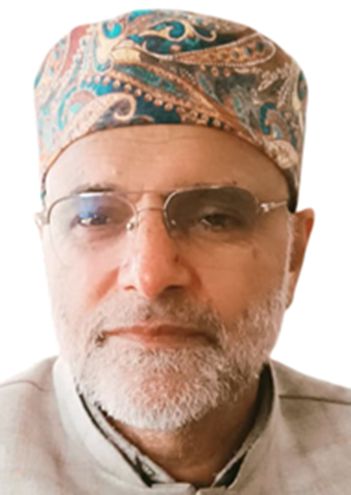
(The author a veteran academician is a former Professor and Head Department of Islamic Studies, Kashmir University. The views, opinions and conclusions expressed in this article are those of the author and aren’t necessarily in accord with the views of “Kashmir Horizon”)







