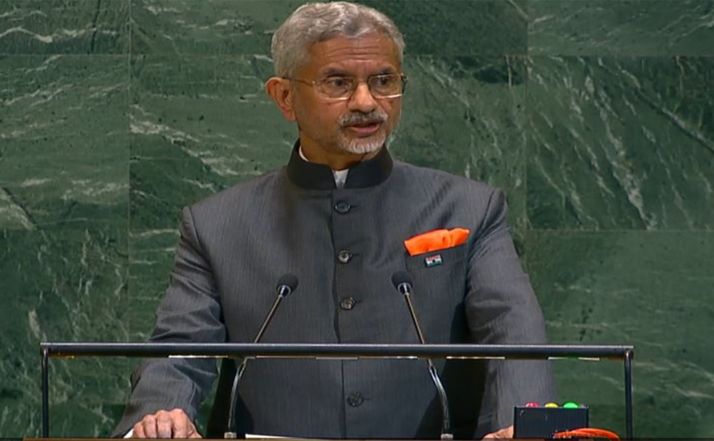
UN, NY External Affairs Minister S. Jaishankar on Satuday underscored the urgent need for collective action against terrorism, highlighting India’s extensive experience with the threat from its neighbor, identified as the “epicentre of global terrorism.”
Addressing the 80th UN General Assembly Session at Newyork Jaishankar referenced the recent murder of 26 tourists in Pahalgam, Jammu and Kashmir, as a stark reminder of the ongoing challenge posed by state-sponsored terrorism. Jaishankar emphasized that India has faced this issue since its independence, with many international terrorist attacks traced back to this neighboring country, which is prominently featured in UN-designated lists of terrorists. Jaishankar reaffirmed India’s commitment to defending its citizens against terrorism, citing the country’s military response, including precision missile strikes on terrorist targets in Pakistan and Pakistan-Occupied Kashmir during Operation Sindoor. This operation aimed to dismantle terrorist infrastructure and prevent future attacks. He stressed the importance of confronting threats and prioritizing counter-terrorism efforts, which he described as a synthesis of bigotry, violence, intolerance, and fear. The minister called for deeper international cooperation to combat terrorism, advocating for measures to cut off financing and sanction known terrorists. He warned that nations that support terrorism would ultimately face repercussions. Jaishankar also reflected on the evolution of the UN since its inception, noting its expanded role in addressing development goals, climate change, trade, and health access, driven by historical forces such as decolonization and globalization. In a complex global landscape marked by conflicts and economic challenges, Jaishankar reiterated India’s commitment to multilateralism and its dedication to promoting peace, development, and human rights, aligning with the UN Charter’s call to build peace and uphold human dignity.