

Historically, Jammu and Kashmir has been a focal point of intense political rivalries, vibrant campaigns, and staunchly loyal constituencies. But during the turbulent times in Jammu and Kashmir, the intense agitations and widespread unrest created a volatile environment for political engagement. Political discourse often centered on managing conflict rather than focusing on development and governance. This era also highlighted the complex interplay between national and local politics, with various parties and leaders navigating an unstable landscape. In recent years, there has been a shift towards more structured governance through the imposition of Governor’s rule, aimed at stabilizing the region. This transition has produced both positive and negative outcomes. On the positive side, the period of Governor’s Rule has seen a reduction in strikes and violence, and improvements in certain administrative areas.However, the Governor’s rule has faced challenges for its perceived disconnect from the everyday challenges faced by the people of Jammu and Kashmir. Initiatives like road widening,while intended to improve infrastructure, have sometimes exacerbated local hardships, revealing a gap in policy implementation that is sensitive to local needs.The relentless electricity shortages during brutal winters, coupled with soaring inflation, have significantly compounded the struggles of ordinary people. While strides have been made in curbing corruption and enhancing accountability, the situation remains a far cry from perfection. The debate over the effectiveness of Governor’s rule versus elected governance highlights a critical aspect of democratic engagement. Elected representatives are often seen as better positioned to understand and address local issues due to their proximity to the electorate and their accountability to voters.In a democratic setup, elections are crucial for ensuring accountability and providing a platform for diverse political voices. The presence of an opposition party further enhances this democratic process by offering alternative viewpoints and criticisms of the ruling administration.However, it is equally important to understand that the political landscape in Jammu and Kashmir in the past has been marred by challenges such as corruption, self-centrism and shifting alliances.Numerous persistent issues have long fueled skepticism among the public regarding political parties and their leaders. Today, as well this mistrust is exacerbated by the frequent and seemingly capricious shifts in alliances. Political figures and parties appear to change their affiliations as effortlessly as the wind changes direction.
“Today’s electoral process holds the potential for ushering in a more hopeful and productive era. However, for this promise to materialize, each and every stakeholder has a critical role. The central government must also ensure that post-election, real authority and resources are granted to the elected leaders.”
Furthermore, there are notable instances where leaders flagrantly push boundaries in mocking their rivals and their parties, amplifying the sense of instability and opportunism. There is a strong call for positive politics. The real challenge lies in fostering a political environment that is constructive and beneficial to the people of Jammu and Kashmir. Many believe that politics should not be a “dirty game” but rather a means to improve governance and address the needs of the populace. Can we expect leaders who stay above the fray, focusing solely on their responsibilities to society rather than engaging in political machinations? This is where the power of the voters becomes crucial. It is the electorate that has the power to shape whether the future is bright or bleak. Our votes are the key to steering our collective destiny. The role of voters is paramount. It is essential for the electorate to be discerning and to support candidates who are genuinely committed to public service rather than personal gain. This requires moving beyond emotional responses and making informed, realistic choices at the polls.The notion that politics can be a vehicle for positive change and societal benefit is significant. With the right leaders, effective governance can emerge, leading to a more stable and prosperous Jammu and Kashmir. Voters must strive to elect representatives who are dedicated to serving the public good, thus contributing to a more robust and effective democratic process. Elections in Jammu and Kashmir embody the region’s deepest aspirations, struggles, and dreams. Today’s electoral process holds the potential for ushering in a more hopeful and productive era. However, for this promise to materialize, each and every stakeholder has a critical role. The central government must also ensure that post-election, real authority and resources are granted to the elected leaders. Simultaneously, there must be a strong emphasis on accountability. Fostering integrity, transparency, and robust systems is essential to transforming these electoral hopes into tangible progress in the Jammu and Kashmir.
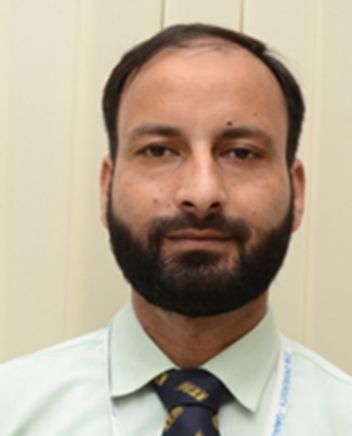
(The author a former Associate Professor in ITM University Gwalior and an IIMA (FDP) Alumnus is pursuing AIMA’s Advanced Business Consultancy Program. The views, opinions and conclusions expressed in this article are those of the author and aren’t necessarily in accord with the views of “Kashmir Horizon”)
Dr. Shahid Amin Bhat
[email protected]





