

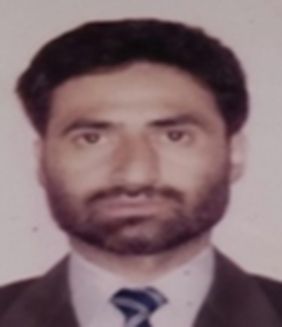
Calyampudi Radhakrishna Rao better known as C.R. Rao was born on 10 Septsember 1920 in Huvvina Hadagalli of the then Madras province of India. His father C. D. Naidu was an inspector of police and mother Laxmi kanthamma, a house wife. Rao did his high school education in Visakhapatnam, Andhra Pradesh and subsequently received his Master’s degree in Mathematics from Andhra University in 1940. He joined the Indian Statistical Institute Calcutta in January 1941 as a statistical trainee. He enrolled in the newly started master’s program of the Calcutta University, receiving a Master’s degree in Statistics in 1943 securing the highest rank and gold medal of the university. His master’s thesis was on a Characterization of random variables based on regression properties, a problem posed by Ragner Frisch. C.R. Rao joined as a regular employee of the Indian Statistical Institute in 1943 and embarked on a research career making fundamental contributions to statistics and at the same time assisting Mahalanobis popularly known as father of Statistics in India in his projects. Rao’s ground breaking paper, ‘Information and accuracy attainable in the estimation of statistical parameters’, was published in 1945 in the Bulletin of the Calcutta Mathematical Society, a journal that is otherwise not well known to the statistics community. The paper was subsequently included in the book Break throughs in Statistics, 1890-1990. This was an impressive achievement given Rao was only 25 at the time and had just completed his master’s degree in statistics two years prior. In 1946 Rao was deputed by Mahalanobis to work on an anthropology project of J.C.Trevor, at Cambridge in England. He would go on to do his PhD in 1946-1948 at King’s College, Cambridge University, under the supervision of Professor Ronald A. Fisher, widely regarded as the father of modern statistics. The Cramér-Rao inequality is the first of the three results of the 1945 paper. When we are estimating the unknown value of a parameter, we must be aware of the estimator’s margin of error. Rao’s work provided a lower limit on the variance of an unbiased estimate for a finite sample. The result has since become a cornerstone of mathematical statistics; researchers have extended it in many different ways, with applications even in quantum physics, signal processing, spectroscopy, radar systems, multiple-image radiography, risk analysis, and probability theory, among other fields. In an article published in the journal Statistical Science in 1987, the American statistician Morris H. DeGroot set out an intriguing story (corroborated by Rao’s own account) of how Rao arrived at the lower limit. Prof. Fisher had already established an asymptotic (i.e. when the sample size is very large) version of the inequality, and it seems a student had asked Rao, “Why don’t you prove it for finite samples?” in 1944. A then-24-year-old Rao did so in under 24 hours! The second outcome of the 1945 paper was the Rao-Blackwell Theorem, which offers a method to improve an estimate to an optimal estimate. The Rao-Blackwell theorem and the Cramér-Rao inequality are both related to the quality of estimators. A new interdisciplinary area called ‘information geometry’ was born as a result of the paper’s third finding. This field integrated principles from differential geometry into statistics, including the concepts of metric, distance, and measure. Erich L. Lehmann, a renowned statistician, said in 2008 that “this work [of Rao’s] was before its time and came into its own only in the 1980s”. So overall, Rao’s 1945 paper made an outstanding contribution, boosting the development of modern statistics and its widespread application in modern research. In a 2008 book, eminiscences of a Statistician: The Company I Kept, Lehmann also discussed the generative nature of the paper – i.e. the goldmine of insights that it was – and acknowledged that “several of my early papers grew out of Rao’s paper of 1945”. Indeed, one of Rao’s papers in 1948 offered a novel generic approach to testing hypotheses, now widely known as the “Rao score test”. In fact, the three test procedures – the likelihood ratio test of Jerzy Neyman and E.S. Pearson (1928), the Wald test (1943) of Abraham Wald, and the Rao score test (1948) – are sometimes called “the holy trinity” of this branch of statistics. While at Cambridge, during 1946–48, he worked on classification problems based on which he received his doctorate in 1948 (later in 1965 he received Sc.D from the same Cambridge University). He returned to India and rejoined the Institute in 1948. He married Bhargavi in the same year. He was a professor from 1949 and subsequently became Director of the then Research and Training School of the Institute. Rao also contributed to orthogonal arrays, a concept in combinatorics that is used to design experiments whose results are qualitatively good, as early as 1949. A 1969 Forbes article described it as “a new mantra” in industrial establishments. After the death of Mahalanobis on 28th June, 1972, Rao became the Director and Secretary of the Institute. Given the magnitude and relevance of his contributions, it might seem surprising that Rao entered the field of statistics by chance. Despite scoring first in mathematics at Andhra University, a 19-year-old Rao didn’t secure a scholarship there for administrative reasons. He was also rejected for a mathematician’s job at an army survey unit because he was judged to be too young. When he was staying at a hotel in Calcutta, he met a man who was employed in Bombay and had been sent to Calcutta to be trained at the Indian Statistical Institute. He asked Rao to apply to the institute as well. Rao did so, for a year-long training programme in statistics, hoping the additional qualification would help him land a job. P.C. Mahalanobis, then director of the institute, replied promptly and Rao was enrolled. That marked the beginning of a four-decade-long stay at the institute. Rao retired in 1979 and afterwards settled in the U.S. In 1976 after he expressed a desire not to continue as Director, he was honoured with Jawaharlal Nehru Professorship at the Institute. Though he made short visits to the U.S.A earlier, it was only in 1978 that he took up a temporary appointment at the University of Pittsburgh, U.S.A and subsequently remained there on a permanent basis as University Professor. In 1988 he moved to Pennsylvania State University as Eberly Professor of Statistics. Rao made contributions to nearly all fields of statistics. He has extensively contributed to estimation theory, testing of hypotheses introducing several new tests, linear models developing g-inverses, multivariate analysis including cluster analysis and factor analysis, characterizations of probability distributions, entropy measures, signal processing, sequential boot-strap, shape analysis, design of experiments and sample surveys. He made significant contributions to econometrics as well. Cramér-Rao inequality, Rao-Blackwellization, Rao’s score test, Rao’s U-test, Fisher-Rao metric, Rao distance, Rao’s orthogonal arrays, and Kagan-Linnik-Rao theorem are now classical. Cramér-Rao bound is one of the breakthroughs in Statistics. It is interesting to note that a version of this bound is used in the derivation of Weyl-Heisenberg uncertainty principle in Physics.
Pioneering Statistician Calyampudi Radhakrishnan Rao, 102, among the world’s most eminent statisticians, Professor Emeritus at Pennysylvania State University spent nearly all of his professional career in India, died on Wednesday i.e., on 23rd August 2023 in the United States. One of his famous statistical findings was that many famous people will die around their birthday and proved himself of less than a month of his birthday. A great loss to the world and particularly to the statistical community. In honour of C.R.Rao many programs were organized worldwide, Division of Social Sciences, Faculty of Fisheries, SKUAST-K is also planning to have a session on contribution of Rao in Statistics during One week training program on Changing Contour of Research in a Digital Era scheduled 4-11th September 2023.
Score test, one of the breakthroughs in Statistics, has found applications in econometrics and survival analysis. He was the first to introduce differential geometric methods in statistical estimation. He was also one of the first to discuss problems in cluster analysis and graphical representation of multi-dimensional data in reduced dimensions. Most of Rao’s theoretical work was not just motivated by applications, but actually grew out of applied problems. According to Rao, he would not have thought of Score test if he had not worked on a particular practical problem in genetics which Fisher asked him to investigate. Rao arrived at the g-inverse, while studying the long term effects of radiation on the survivors of the atom bomb attack. His work on shape analysis has origins in a problem posed by a cardiologist on constructing the shape of the human left ventricle from a pair of X-ray projection images taken from two perpendicular camera sets. Rao is author of 14 books, more than 350 research publications and nearly 30 edited volumes. Watching Rao lecture is like watching a skilled artist at work with every statistical function and procedure at his command. He is recipient of several awards and honours. He received the S.S.Bhatnagar award in 1963, elected Fellow of the Royal Society in 1967. He received Padma Bhushan in 1968 and the second highest honour, Padma Vibhushan in 2001 from the Government of India. He received the Wilks Medal of the American Statistical Association in 1979 and U.S. National Medal of Science in 2002. He is a member of several scientific academies, including the National Academy of Sciences of U.S.A. He has received honorary doctorates from several universities and institutes from all the continents, inclu ding the Indian Statistical Institute. Professor Rao delivered the 21st Convocation Address of Indian Statistical Institute held on March 5, 1987 entitled as “ Uncertainty Randomness and Creativity” and the 24th Convocation Address held on December 29, 1989 entitled as “Taming of Uncertainty”. The Indian-American statistician Calyampudi Radhakrishna Rao has been awarded the 2023 International Prize in Statistics, which is statistics’ equivalent of the Nobel Prize. It was established in 2016 and is awarded once every two years to an individual or team “for major achievements using statistics to advance science, technology and human welfare.” Prof. Rao’s work has influenced, in the words of the American Statistical Association, “not just statistics” but also “economics, genetics, anthropology, geology, national planning, demography, biometry, and medicine”. The citation for his new award reads: “C.R. Rao, a professor whose work more than 75 years ago continues to exert a profound influence on science, has been awarded the 2023 International Prize in Statistics.” The first half of the 20th century was the golden period of statistical theory in general, and Rao is undoubtedly one of the reasons for this being the case, thanks to his mathematical ingenuity. In the words of the late mathematician Samuel Karlin, Rao’s contributions to statistical theory have “earned him a place in the history of statistics”. Indian statisticians also owe Prof. Rao gratitude for his enormous contributions to the growth of statistics in the country, notably at the Indian Statistical Institute (where this author works). As Lehmann wrote, Rao was “the person who did the most to continue Mahalanobis’s work as a leader of statistics in India.” Pioneering Statistician Calyampudi Radhakrishnan Rao, 102, among the world’s most eminent statisticians, Professor Emeritus at Pennysylvania State University spent nearly all of his professional career in India, died on Wednesday i.e., on 23rd August 2023 in the United States. One of his famous statistical findings was that many famous people will die around their birthday and proved himself of less than a month of his birthday. A great loss to the world and particularly to the statistical community. In honour of C.R.Rao many programs were organized worldwide, Division of Social Sciences, Faculty of Fisheries, SKUAST-K is also planning to have a session on contribution of Rao in Statistics during One week training program on Changing Contour of Research in a Digital Era scheduled 4-11th September 2023.
(The author presently Professor Statistics at S K University Of Agriculture Sciences & Technology-SKUAST Kashmir has mailed this article to “Kashmir Horizon” for publication in this newspaper. The views, opinions, facts, assumptions, presumptions and conclusions expressed in this article are those of the author and aren’t necessarily in accord with the views of “Kashmir Horizon”.)
[email protected]






