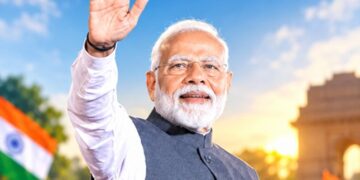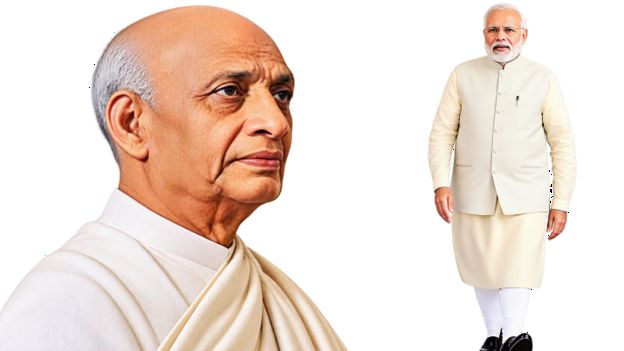
“From remembering Patel’s contribution to the integration of princely states to celebrating advances in satellite navigation and outlining measures to improve farmers’ incomes, PM’s message placed India’s development journey within a framework of institutional strength, economic resilience and technological advancement………”
Mohammad Irfan
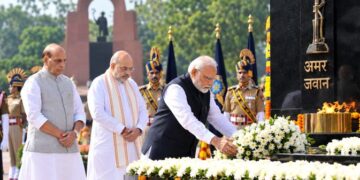
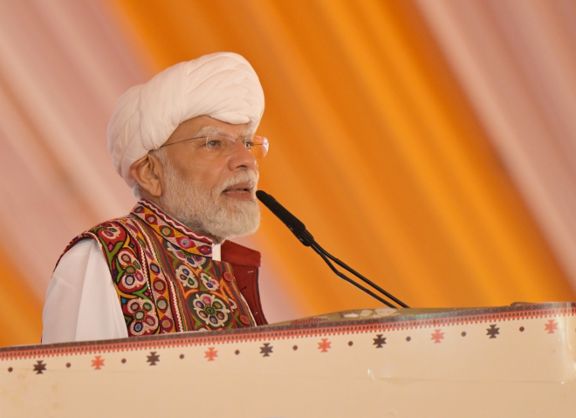 The National unity, technological self-reliance and rural prosperity emerged as the central themes of Prime Minister Narendra Modi’s engagements on the occasion of Rashtriya Ekta Diwas, as he paid tribute to Sardar Vallabhbhai Patel, congratulated India’s space scientists on a successful navigation satellite launch and highlighted development projects worth more than Rs 14,000 crore in Gujarat. The three developments, though distinct in their immediate objectives, reflect interconnected dimensions of the government’s broader vision of a developed India: strengthening national integration, building indigenous technological capabilities and creating a stronger economic foundation through agriculture, infrastructure and rural enterprise. From remembering Patel’s contribution to the integration of princely states to celebrating advances in satellite navigation and outlining measures to improve farmers’ incomes, the Prime Minister’s message placed India’s development journey within a framework of institutional strength, economic resilience and technological advancement. The birth anniversary of Sardar Patel, observed nationally as Rashtriya Ekta Diwas, provided the occasion to underline the continuing relevance of unity in a country characterised by immense geographical, linguistic, cultural and social diversity. Paying homage to Patel, Modi described him as the Iron Man of India and the architect of a united India, recalling his lifelong commitment to building a strong, prosperous and capable nation. In a message posted on X, the Prime Minister said Patel’s sacrifice and dedication to the service of the country remained an inspiration for India’s efforts to achieve the goals of Viksit Bharat and Atmanirbhar Bharat. The tribute carried significance beyond a ceremonial remembrance. Patel’s contribution to national integration remains an important chapter in India’s political history, particularly his role in bringing hundreds of princely states into the Union following Independence. His legacy continues to be invoked in discussions surrounding national cohesion, administrative consolidation and the responsibility of institutions in preserving the unity and integrity of the country.
Unity As The Foundation Of National Development: The emphasis on national unity in the Prime Minister’s message comes at a time when India’s development ambitions increasingly depend on its ability to combine economic growth with institutional stability and social cohesion. The vision of a developed India by 2047 requires coordinated efforts across states, regions and economic sectors. Infrastructure expansion, industrial development, technological innovation and social welfare programmes must operate within a larger framework of national priorities. In this context, Patel’s legacy offers a historical reference point for understanding the importance of a cohesive national framework. Prime Minister Modi’s appeal to citizens, particularly young people, to participate in the Run for Unity was aimed at reinforcing this message through public participation. The Prime Minister also referred to the Unity Festival at Ekta Nagar in Gujarat, where celebrations were scheduled to include parades by police and security forces and cultural tableaus. The broader objective of such observances is to encourage citizens to view national unity not merely as a constitutional or political principle but as a shared responsibility reflected in everyday social and civic life.
ISRO Mission And The Expanding Horizon Of Technological Self-Reliance: A major highlight of the day was the successful launch of GSLV-F18 carrying the NVS-03 navigation satellite, an achievement that drew congratulations from the Prime Minister for India’s scientists and engineers at ISRO. Prime Minister Modi described the mission as an important step towards strengthening NavIC, India’s indigenous satellite navigation system, saying that the satellite’s enhanced capabilities would advance the country’s pursuit of self-reliance in critical technologies. The launch represents another milestone in India’s efforts to develop and strengthen indigenous space-based infrastructure. Satellite navigation has become an essential component of modern economic and technological systems. Its applications extend across transportation, aviation, maritime operations, agriculture, disaster management, telecommunications and emergency response. For a country with India’s geographical scale and expanding digital economy, reliable navigation infrastructure has strategic as well as civilian significance. NavIC, India’s regional satellite navigation system, is designed to provide positioning, navigation and timing services over India and the surrounding region.Strengthening the system through successive satellite launches is important for improving service continuity, technological capabilities and the country’s ability to rely on indigenous infrastructure. The significance of NVS-03 therefore extends beyond the successful deployment of another satellite. It forms part of a larger effort to develop domestic capabilities in advanced electronics, satellite engineering, launch systems and space-based applications. Technological self-reliance has become increasingly important as countries seek to strengthen control over critical infrastructure and reduce vulnerabilities arising from excessive dependence on external systems.India’s expanding space programme has demonstrated the potential of domestic scientific institutions to undertake complex missions and develop technologies with applications across multiple sectors.
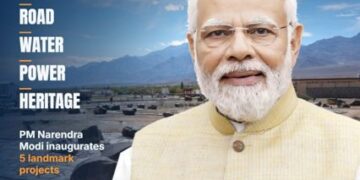
Banaskantha Development Package| Rural Economy At The Centre: While the space mission highlighted India’s technological ambitions, the Prime Minister’s programme in Banaskantha brought attention to another important dimension of the development agenda: strengthening the rural economy through agriculture, animal husbandry, dairy, infrastructure and improved market connectivity. Prime Minister Modi laid the foundation stone, inaugurated and dedicated development projects worth more than Rs 14,000 crore to the nation in the Gujarat district, covering several sectors with direct implications for farmers, livestock rearers, women, children and rural entrepreneurs. Describing farmers as among the strongest pillars of Viksit Bharat, the Prime Minister said the government had consistently prioritised their welfare and empowerment. The development package reflects the importance of agriculture and allied activities in India’s economic structure, particularly in regions where a substantial proportion of households depend on farming and livestock-based livelihoods. The rural economy is no longer being viewed exclusively through the traditional lens of agricultural production. Its future increasingly depends on value addition, scientific intervention, processing infrastructure, cooperative institutions, improved logistics and access to wider markets. Banaskantha offers an interesting example of this changing rural economic landscape. The district’s agricultural and dairy activities have demonstrated how irrigation, cooperative participation, food processing and technological interventions can contribute to expanding economic opportunities.
Direct Financial Support And Protection Against Economic Uncertainty: A substantial part of the Prime Minister’s address focused on financial assistance and policy interventions intended to reduce the economic burden on farmers. Referring to the PM Kisan Samman Nidhi, Prime Minister Modi said more than Rs 18,000 crore had been transferred to the bank accounts of approximately 10 crore farmers through the latest instalment. He said the scheme had become an important source of financial assistance for small cultivators, who constitute a significant proportion of India’s agricultural community. The Prime Minister also highlighted the government’s expenditure on fertiliser subsidies, minimum support price procurement and crop insurance, presenting these measures as part of a broader framework of agricultural support. According to the figures cited by him, nearly Rs 4.5 lakh crore had been transferred directly to farmers under PM-KISAN, while substantial expenditure had been incurred to protect cultivators from fluctuations in international fertiliser prices. He said that wheat and paddy farmers had received more than Rs 24 lakh crore through MSP procurement over the preceding 12 years. The Prime Minister also referred to compensation exceeding Rs 2 lakh crore under crop insurance arrangements and the expansion of solar-powered irrigation facilities through PM-KUSUM. Taken together, these interventions, according to Modi, had delivered or saved more than Rs 50 lakh crore for farmers.
“PM also referred to advanced reproductive technologies, including in-vitro fertilisation, as tools for improving livestock quality and productivity.The objective is to enable livestock rearers to obtain better economic returns through healthier animals, higher milk yields and reduced disease-related losses..….”
Dairy And Animal Husbandry|Expanding The Rural Income Base:
Animal husbandry received considerable attention during the Prime Minister’s address, reflecting its growing importance as a supplementary and, in many rural households, primary source of income. Prime Minister Modi described livestock rearing as a vital pillar of the rural economy and highlighted the importance of scientific breeding, veterinary care and disease prevention in improving productivity. He referred to the Rashtriya Gokul Mission and the newly developed research facility in Banaskantha, which is intended to strengthen indigenous livestock breeds. The facility is expected to support conservation and improvement of breeds such as Gir, Sahiwal and Kankrej cattle, along with Mehsana, Murrah and Jaffarabadi buffaloes. The Prime Minister also referred to advanced reproductive technologies, including in-vitro fertilisation, as tools for improving livestock quality and productivity. The objective is to enable livestock rearers to obtain better economic returns through healthier animals, higher milk yields and reduced disease-related losses. He said approximately 150 crore vaccine doses had been administered under the nationwide livestock vaccination programme, benefiting more than eight crore farmers through free vaccination of their animals. Prime Minister Modi also highlighted the increase in average daily milk yield per cow or buffalo, which he said had risen from less than five litres in 2013-14 to nearly eight litres. Fisheries, honey production and diversification of rural livelihoods. The Prime Minister also highlighted fisheries and beekeeping as emerging sources of supplementary income for rural households. He said India’s seafood exports had more than doubled, reflecting the expansion of the fisheries sector and the growing role of cooperatives. The fisheries sector has considerable potential to generate employment across production, processing, cold-chain logistics and exports. Its expansion can also help diversify rural incomes and reduce dependence on conventional agricultural activities. Similarly, beekeeping has emerged as an important supplementary occupation, particularly for small farmers and women associated with self-help groups. Prime Minister Modi said honey production had doubled over the past 12 years and described the contribution of women’s self-help groups to the sector as significant. He also noted that India had become the world’s second-largest exporter of natural honey.
Women And Children In The Development Framework: The Prime Minister’s development programme also included initiatives directed towards women and children. More than 4,000 modernAnganwadis were inaugurated across Gujarat, which, according to Modi, would benefit approximately four lakh children and pregnant women. Anganwadi centres occupy an important position in India’s public welfare framework, particularly in the areas of early childhood care, nutrition, maternal health and community-level support. Modernising these facilities can improve the quality of services available to children and women, particularly in rural and economically weaker communities.
Infra, Connectivity As Engines Of Economic Growth: Infrastructure development formed another important component of the Banaskantha programme. The Prime Minister highlighted the launch of two railway services, the Ahmedabad-Varanasi Sabarmati Express and the Mehsana-Becharaji-Sabarmati MEMU train. He also referred to the expansion of Ahmedabad Metro, including projects connecting GIFT City and the airport, and the proposed expansion of the Ahmedabad-Mehsana highway from four lanes to eight lanes. These projects underline the relationship between connectivity and economic development. Reliable transport infrastructure reduces travel time, improves access to markets, facilitates the movement of goods and strengthens connections between commercial centres.
PM Modi Reflects On 25 Years Of Public Service: During his address, the Prime Minister also reflected on completing 25 years of service as the head of a government, recalling that he first took oath on October 7, 2001, as Chief Minister of Gujarat. He expressed gratitude to the people of Gujarat for their continued support and guidance throughout his public life. Recalling his initial years in government, Modi said he had entered public administration without prior experience of government offices and official files but had learned through the support and guidance of the people. He credited the citizens of Gujarat for shaping his public service journey and said his commitment to serving the country would continue until the last moment of his life. “Until the final moment of my life, I will remain devoted only to your service,” he said. The reference to his 25-year journey placed the Gujarat development experience within a broader narrative of public service, administrative responsibility and the evolution of his political career. He also recalled the water and electricity shortages that affected parts of Gujarat in the past, urging citizens to continue conserving both resources. The emphasis on water management carries particular relevance for agricultural regions such as Banaskantha, where irrigation and groundwater availability are critical to agricultural productivity. The Prime Minister referred to the role of Narmada waters and drip irrigation in changing agricultural conditions in North Gujarat. He also highlighted the expansion of food-processing facilities, including increased capacity at the potato processing plant, which he said would benefit potato growers in the region.
Economic Resilience Amid Global Uncertainty: The Prime Minister also referred to the impact of international uncertainty on agricultural inputs, particularly fertilisers and raw materials. He said the government had taken measures to protect Indian farmers from the impact of rising international prices and ensure the availability of essential agricultural inputs. Citing the example of urea and DAP, Modi said the government was providing fertilisers to Indian farmers at prices substantially lower than those prevailing in international markets. He maintained that the objective was to prevent global price fluctuations from placing an excessive financial burden on domestic cultivators.
The Bigger Vision | Linking Unity With Self-Reliance: Taken together, the Prime Minister’s engagements on October 31 presented a development narrative connecting historical national integration with contemporary priorities of economic growth, scientific innovation and rural transformation. The tribute to Sardar Patel highlighted the importance of national unity as a foundation of India’s political and institutional framework. The successful GSLV-F18 mission carrying NVS-03 reflected the growing role of indigenous technology in strengthening strategic and civilian capabilities. Meanwhile, the Banaskantha development package brought attention to the importance of agriculture, dairy, food processing, connectivity and rural entrepreneurship in expanding economic opportunities. These sectors are interconnected rather than independent policy areas. Technological progress can improve agricultural productivity; better infrastructure can connect producers with markets; financial support can reduce economic vulnerability; and stronger rural enterprises can generate employment beyond traditional farming.
Kashmir Horizon View: As India observes Rashtriya Ekta Diwas, the broader significance of the occasion lies in connecting the country’s historical experience with its contemporary development ambitions. Sardar Patel’s contribution to national integration remains an enduring part of India’s history, while the country’s present aspirations require institutions, scientific establishments, economic sectors and citizens to work towards shared national objectives. The Prime Minister’s address in Gujarat placed farmers, livestock rearers, scientists, women, children and infrastructure development within this larger framework. The focus on rural prosperity suggests an approach in which agricultural growth is supported by modern technology, diversified livelihoods, processing facilities and better connectivity. The emphasis on NavIC and the ISRO mission, meanwhile, reflects the increasing importance of scientific capabilities in shaping India’s economic and strategic future. Ultimately, the success of the development agenda will be determined by its outcomes: higher and more stable farm incomes, improved rural employment, better public services, stronger technological capabilities and wider access to economic opportunities. The message emerging from the Prime Minister’s engagements was that the journey towards a developed India must draw strength from national unity while advancing through scientific innovation, economic self-reliance and inclusive development.
(“Team Kashmir Horizon” is committed to continuous improvement and invites feedback and suggestions from readers and its followers on social media sites. Reader insights are considered vital for enhancing content quality and empowering the community. The team encourages open communication and values the thoughts and ideas of its audience, believing that such input will enable them to serve the public more effectively. The initiative aims to ensure that readers have the best possible experience with “Kashmir Horizon”. Interested individuals can reach out to us via email at [email protected].)