The debate over whether Jammu and Kashmir needs more private universities or better existing universities requires a broader perspective. The real question is not simply how many universities we have, or whether they are public or private. The fundamental question is: What kind of higher-education system can equip our young people with knowledge, skills, character, research opportunities and dignified livelihoods? A university is more than a campus and a degree-awarding institution. Its worth ultimately depends upon the quality of teaching, research, graduate competence, innovation, affordability and contribution to society. J&K therefore needs institutions that are academically credible, professionally relevant, technologically equipped, ethically grounded and responsive to changing social and economic realities. An important historical perspective comes from Allama Muhammad Iqbal’s correspondence with Mahatma Gandhi in November 1920, during the formative efforts to establish Jamia Millia Islamia. Iqbal wrote: “While I am a strong supporter of National Education…” He connected education with economic capability, observing that “Political independence must be preceded by Economic independence.” More significantly, he argued that the principal need was “not Literature and Philosophy but technical Education which would make them economically independent,” while also recommending attention to “the technical side of National Science” alongside religious education.
Iqbal’s remarks belonged to a particular historical context and should not be mechanically applied today. Nor did he reject the humanities. As a philosopher and poet, he understood their importance. His larger point was that education must respond to the practical needs of society. That principle remains highly relevant to J&K. Our young people today face a different but related challenge. Many obtain degrees without acquiring the practical competencies required by a rapidly changing employment market.
Government employment cannot absorb every graduate, while private enterprise and productive sectors remain insufficiently developed. Consequently, the university debate must also become a debate about skills, entrepreneurship, industry and livelihoods. There is certainly a case for new private universities. They can bring investment, modern infrastructure, specialised programs, contemporary teaching methods and stronger industry connections. Emerging areas such as artificial intelligence, data science, cyber security, biotechnology, healthcare, renewable energy, tourism, hospitality, horticulture, food processing and digital services require specialised educational environments. New institutions can also introduce interdisciplinary programmes, incubation centres, innovation hubs, digital learning and international partnerships. Where genuine regional or academic gaps exist, private universities can contribute meaningfully to the diversification of higher education. But expansion is not synonymous with progress. A new campus does not automatically create academic excellence, just as an established university does not automatically become obsolete. Private ownership is no guarantee of quality, and public ownership is no guarantee of either success or failure.
What matters is academic performance, affordability, accountability, research capacity and graduate outcomes. J&K already has universities and colleges with experienced faculty, established campuses, libraries, laboratories, alumni networks and academic traditions. These institutions deserve serious investment and reform. Before creating additional universities, we should ask whether existing institutions have adequate laboratories, research funding, digital infrastructure, faculty development, student services, hostels, international collaborations and industry partnerships. At the same time, strengthening existing universities cannot mean protecting the status quo. They must be judged by outcomes. How many students acquire employable skills? How many conduct meaningful research? How many enter professional careers? How many become entrepreneurs? How closely do curricula correspond to changing requirements of employers and society?
A degree should increasingly be accompanied by demonstrable competence. Students should graduate able to communicate, write, analyse evidence, use digital tools, conduct research, solve problems and work collaboratively. Universities should provide internships, apprenticeships, fieldwork, laboratory training, clinical practice, industry projects and community engagement.
This does not mean reducing higher education to vocational training. Literature, philosophy, history, religion and the humanities remain essential for critical thinking, cultural understanding and ethical judgement. The objective should be to connect intellectual education with practical capability. For example, an English student can combine literature with editing, translation, publishing and digital communication. A history student can develop expertise in archival research, heritage management and museums. An economics student can acquire data-analysis and policy-research skills.
“Higher education in Jammu and Kashmir must prioritize institutional quality over expansion, focusing on nurturing capable, ethical, skilled, and culturally rooted graduates. The true benchmark of success lies in equipping young people to lead economic, intellectual, and moral growth, rather than simply increasing the number of universities.”
A student of Islamic studies can study classical scholarship while developing competence in research methodology, translation, comparative religion and contemporary social questions. Language competency should also become a strategic educational priority. J&K’s heritage in Kashmiri, Urdu, Persian and Arabic should be preserved and strengthened, while English remains indispensable for global scholarship, science, technology and employment. Hindi and other Indian languages facilitate national mobility and communication. Languages are not ornamental. They create opportunities in translation, interpretation, publishing, journalism, tourism, diplomacy, education, research and digital media. A multilingual graduate can carry Kashmir’s intellectual and cultural heritage into national and international spaces. Education must also cultivate values. Employability matters greatly, but universities should not produce technically competent individuals without responsibility and character. Professional ethics, research integrity, honesty, discipline, compassion, civic responsibility and respect for others should become part of institutional culture.
Employment, however, cannot be solved by universities alone. J&K needs a stronger productive economy alongside stronger universities. A technology graduate needs technology companies; a hospitality graduate needs a growing hospitality sector; a food-technology graduate needs food-processing enterprises; and an entrepreneur needs finance, mentoring and markets. Universities should therefore establish sustained partnerships with technology companies, hospitals, tourism and hospitality enterprises, horticulture and food-processing industries, handicrafts and textile businesses, renewable-energy companies, professional services and start-ups. Internships, apprenticeships, industry projects and campus recruitment should become integral to higher education. The question is therefore not simply whether J&K needs more universities. We must also ask whether it has enough employment-generating enterprises to absorb the graduates universities produce.
Creating more institutions without strengthening the economy could increase the number of degree holders without proportionately increasing opportunities. Affordability is equally important. Private universities can widen choice, but high fees may exclude economically weaker families. Transparent fee structures, scholarships, financial assistance and effective grievance mechanisms are essential. Strong regulation must ensure that expansion does not compromise academic standards or accessibility. The most sensible approach is therefore to combine institutional strengthening with carefully regulated expansion. Existing universities should receive targeted investment in faculty, research, laboratories, digital infrastructure and student support. New institutions should be encouraged where they address demonstrable academic, regional or economic needs and can show qualified faculty, credible programmes, sustainable finances, transparent fees and meaningful employment pathways. Ultimately, J&K does not need to choose between “more universities” and “better universities” as though the two are necessarily contradictory. It needs better higher education, wherever and however it is provided. The region needs institutions that are skill-based without becoming narrowly utilitarian; modern without becoming culturally rootless; globally connected while remaining locally responsible; technologically advanced while ethically guided; and professionally relevant without abandoning the humanities. Iqbal’s educational insight remains significant: education must respond to the circumstances of society.
For J&K today, this means confronting unemployment, skill gaps, technological change, brain drain and limited employment opportunities while protecting the intellectual and moral purposes of education. The real measure of educational progress is therefore not the number of campuses, departments or degrees. It is the quality of teaching, research productivity, graduate competence, employment and entrepreneurship, affordability, ethical development and contribution to society. The decisive question is not, “How many universities do we have?” It is: “What are our universities enabling our young people to become?” If they produce knowledgeable, skilled, ethical, confident and culturally grounded graduates who can find or create dignified livelihoods, conduct meaningful research and contribute to society, higher education is fulfilling its purpose. J&K needs quality before quantity, skills alongside scholarship, employability alongside ethics, and opportunity alongside access. The goal should not simply be another university. The goal should be another generation of capable young people equipped to shape the economic, intellectual, cultural and moral future of Jammu and Kashmir.
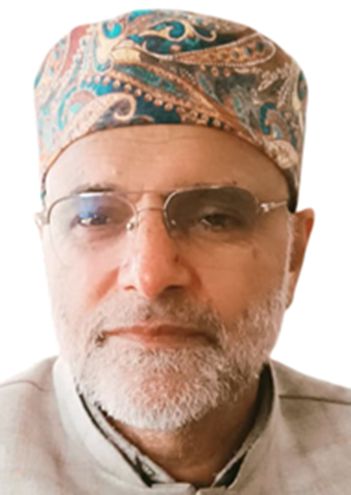
(The author a veteran academician is a former Professor and Head Department of Islamic Studies, Kashmir University. The views, opinions and conclusions expressed in this article are those of the author and aren’t necessarily in accord with the views of “Kashmir Horizon”)
[email protected]