The launch of the Kashmir Chapter of Orchid University at Solar Residency, Srinagar, on 21 September 2026, provided me an opportunity to reflect on a question much larger than the establishment of another educational initiative: What kind of education does Kashmir need in order to empower its young people, strengthen its economy, preserve its cultural heritage and prepare a generation capable of becoming responsible inheritors of the earth? In my address, I tried to place this question within a broader moral, intellectual and civilizational framework. My central argument was that education must bring together piety and competence, knowledge and skills, language and communication, academic learning and practical experience, employment and entrepreneurship, individual advancement and social responsibility. A university should not merely produce degree-holders; it should produce human beings of character and capability. The Qur’an provides a profound foundation for such a vision: “And We have certainly written in the Psalms, after the Reminder, that the earth shall be inherited by My righteous servants.” (Qur’an 21:105) While the verse has an important eschatological dimension, it also invites reflection upon humanity’s worldly responsibility. The Qur’an speaks elsewhere about succession and establishment upon the earth and describes human beings as entrusted with its cultivation and development. The crucial expression is “My righteous servants.” Righteousness in this context should not be reduced to private devotion alone. Responsible stewardship of the earth requires character, knowledge, competence, trustworthiness, justice, creativity and the ability to serve humanity. This is why I emphasised that piety without competence is insufficient for responsible stewardship, while competence without piety can become destructive.
A person may possess enormous technical knowledge but lack integrity, and such knowledge can then be used for exploitation or corruption. Conversely, a person may be sincere, religious and morally well-intentioned but lack the knowledge and skills necessary to perform a task effectively. Good intentions alone cannot build a hospital, design a bridge, administer an institution, establish an enterprise, preserve an ecosystem, develop technology or create employment. The Qur’anic model brings these two dimensions together. When Yusuf (AS) offered himself for responsibility in Egypt, he described himself as “trustworthy and knowledgeable” (Qur’an 12:55). Similarly, the Qur’an praises the combination of “strong and trustworthy” (Qur’an 28:26). Strength or capability and trustworthiness therefore belong together. Knowledge must be accompanied by character, and competence must be guided by ethical responsibility. This gives us a powerful educational formula: Faith → Character → Knowledge → Language → Skills → Competence → Responsible Service. The objective of education should therefore not be merely to increase the number of graduates but to develop competent and conscientious human beings who can teach, heal, build, innovate, administer, create enterprises, generate employment, protect resources and contribute to the common good. One of the concerns underlying my address was that much of our modern educational culture has unintentionally become disempowering.
A young person may spend fifteen or twenty years in education, pass examinations, obtain degrees and certificates and yet emerge without the practical skills, professional confidence or entrepreneurial capacity necessary to create a livelihood. We have too often reduced education to a linear formula: study, obtain a degree, search for a job. There is nothing wrong with seeking employment; a good job is a dignified means of livelihood. The problem arises when education produces a permanent psychology of dependency and makes young people believe that their ultimate achievement is to obtain a salaried position from someone else. Even in families that have traditionally been engaged in business, children may sometimes aspire to secure employment rather than acquire the knowledge and competence required to create, modernise or expand enterprises. Education should instead create agency. It should enable a young person to say: “I can work. I can create. I can solve problems. I can learn a new skill. I can communicate with the world. I can establish an enterprise. I can employ others. I can contribute to society.” That is empowerment. The purpose of education is not merely to make people qualified to occupy positions; it should make them capable of creating value. My own experiences in universities and educational institutions in Indonesia have reinforced this conviction.
During my academic engagements there, including at Muhammadiyah University of Guntur and universities in Yogyakarta, I observed educational approaches in which students were not treated simply as passive recipients of classroom instruction. Practical engagement, community work and hands-on activities were incorporated into education in ways that cultivated independence, responsibility and dignity of labour. In some settings, students were involved in activities such as cultivating land, transforming unproductive spaces into productive ones, producing goods, maintaining their campuses, learning practical skills and undertaking activities that connected education with everyday life. The message conveyed through such practices was important: students should learn by doing.A student should not consider cultivating the soil beneath his or her dignity. A university student should not think that stitching clothes, producing something with one’s hands, cleaning one’s surroundings, repairing equipment, growing food or managing a productive activity is incompatible with higher education. On the contrary, education should dignify productive work. A university should teach students how to use their minds, their hands and their character together. It should cultivate not only intellectual sophistication but also self-reliance, discipline and respect for labour. My experiences in Malaysia also reinforced the importance of connecting education with economic independence.
Students can be encouraged to undertake productive activities alongside their studies, gain workplace experience, understand markets and develop professional discipline. The principle is that a student should not remain merely a consumer of education. The student should gradually become a producer, contributor and participant in the economy. Such an approach changes the psychology of education. Learning is no longer something that happens exclusively inside a classroom and becomes useful only after graduation; learning itself becomes connected with productive life. This is where the Industry-Integrated Education model associated with Orchid University becomes relevant to Kashmir. Orchid University is not simply being presented as another conventional university offering degree programmes. Its distinctive contribution is its attempt to connect academic education with industry, apprenticeship, skills, employment and livelihood. Its SEEL framework — Skilling, Education, Employment and Livelihood — captures this philosophy. Skilling develops sector-specific competencies; education provides recognised academic qualifications; employment connects learning with real work environments; and livelihood enables individuals to convert education and skills into sustainable economic opportunity. Its Industry-as-Campus approach seeks to bring workplace experience into the educational process rather than making students wait until graduation before encountering the professional world. For Kashmir, however, the purpose should not be to reproduce another institution mechanically. Kashmir has its own economic structure, cultural heritage, geographical realities, industries and employment patterns.
The important question is how the principles of Industry-Integrated Education can be adapted to Kashmir’s actual needs. We should ask what our economy requires, what our employers need, what skills our young people lack and what opportunities can realistically be developed. This requires a change in the way we design courses. Sector demand should shape education. If Kashmir requires skilled people in healthcare and nursing, programmes should prepare them for actual healthcare environments. If horticulture is a major economic sector, education should not stop with cultivation but extend to food technology, processing, packaging, refrigeration, cold-chain management, quality control, logistics, branding and export. If tourism is to become a stronger source of livelihood, students need training not only in tourism theory but also in hospitality, culinary services, guest relations, reservations, digital marketing and destination management. If handicrafts are to survive and prosper, we need not merely artisans but designers, quality specialists, merchandisers, entrepreneurs, digital marketers and professionals who understand international markets. If the digital economy is expanding, students should acquire computing, software, digital communication, accounting, marketing and other relevant skills and should have opportunities to work on real projects.
The educational and economic cycle should therefore become: Sector Demand → Skill Mapping → Curriculum Development → Practical Training → Apprenticeship → Qualification + Experience → Employment/Entrepreneurship → Productivity → Business Growth → Additional Employment. In such a model, education becomes part of an economic ecosystem rather than an isolated academic activity. This is particularly important because Kashmir possesses extraordinary human potential. We have intelligent, ambitious and educated young people. The issue is not the absence of talent; the challenge is to convert talent into capability and capability into productive opportunity. The young population should not be viewed merely as a demographic challenge. It should be understood as a human-resource asset. But human resources become an asset only when they are properly educated, skilled, ethically grounded and connected with opportunities. Language competence forms another essential dimension of this educational vision. In today’s interconnected world, language is not merely a literary or cultural accomplishment; it is an economic, academic and professional capability. Kashmir has an extraordinary linguistic inheritance. Kashmiri connects us with our cultural memory and identity; Urdu remains a major language of literature, scholarship and communication across South Asia; Arabic opens doors to Islamic scholarship, theology, Qur’anic studies and the wider Arab world; and English provides access to global science, technology, higher education and international commerce. The objective should not be linguistic competition but linguistic complementarily.
A truly educated Kashmiri student should ideally be rooted in the mother tongue, competent in Urdu, professionally proficient in English and, where relevant, academically competent in Arabic. Language competence should also be linked with professional competence. A student of hospitality who knows English and Arabic may access wider professional opportunities. A healthcare professional with strong communication skills can work across diverse environments. A scholar competent in Arabic and English can participate in international academic conversations. An artisan who understands digital communication, English and e-commerce can take Kashmiri products beyond local markets. Thus, language itself becomes a form of empowerment. The future graduate must therefore be able not only to know but also to communicate what he or she knows. Knowledge that cannot be communicated remains limited in its social impact. Language education should consequently not be treated as an isolated academic requirement but integrated with professional and vocational education. The same principle applies to Kashmir’s extraordinary arts and crafts heritage. We should remember the historical contribution associated with Sayyid ʿAli Hamadani, Shah-i-Hamadan, whose arrival in Kashmir represents one of the great moments of intellectual, cultural and economic exchange between Kashmir, Persia and Central Asia.
“Kashmir’s legacy shows that knowledge, skill, and culture don’t just transform lives—they power livelihoods. Our mission: turn timeless wisdom into 21st-century progress.”
Historical scholarship distinguishes between what may be attributed directly to Shah-i-Hamadan and his associates and what developed later, particularly under Sultan Zain-ul-Abidin, but the wider Persianate influence upon Kashmir’s intellectual life, architecture, arts and crafts is beyond serious doubt. The popular cultural memory of Kashmir has long associated Shah-i-Hamadan and his network with the transmission of skills and crafts, while later rulers helped consolidate and expand these traditions. The result was a remarkable cultural synthesis. Persian and Central Asian influences became deeply woven into Kashmir’s civilisation, and Kashmir subsequently acquired international renown for its shawls, carpets, wood carving, papier-mâché, embroidery and other crafts. Kashmir has often been described in the cultural imagination as Iran-i-Saghir — “Little Iran”, reflecting the depth of the Persianate imprint upon its intellectual and artistic life. The lesson for our own time is profound. Knowledge did not merely produce books; it produced skills, crafts, industries and livelihoods. Cultural exchange became economic empowerment. Education became productive.
We must now ask how to reproduce this spirit in contemporary form. Take the Kashmiri shawl and qaleen. It is not enough to preserve these traditions through nostalgia. We must educate a new generation in design, quality control, modern production methods, branding, digital marketing, e-commerce, financial literacy, export procedures, supply-chain management, language competence and entrepreneurship. The young Kashmiri artisan should not merely know how to weave; he or she should also know how to design, price, market, communicate, brand, sell and reach international consumers. That is the difference between merely preserving a craft and empowering the craftsperson. Our traditional crafts can therefore become part of modern higher education. A university can establish programmes in craft management, textile design, heritage entrepreneurship, digital commerce and international marketing. A qaleen maker can become an entrepreneur. A shawl designer can establish a global brand. A student of Kashmiri art can become a curator, designer, researcher or digital entrepreneur. Our heritage should not be confined to museums; it should become a source of dignified livelihoods for the next generation. At the same time, we must confront honestly the limitations of a purely materialistic conception of education. The problem is not wealth itself. Islam does not condemn lawful prosperity, enterprise or professional success. The problem begins when money becomes the sole measure of success and professional ethics are subordinated to financial gain.
We have seen cases across different professions in which technically qualified individuals have been accused, investigated, prosecuted or convicted for corruption, embezzlement or professional misconduct. Such cases should not lead us to condemn entire professions. The overwhelming majority of doctors, engineers, administrators, teachers and other professionals serve society honestly and with dedication. But such cases do remind us of an essential truth: a degree does not guarantee character. Similarly, private medical practice is not itself wrong; doctors have a legitimate right to professional remuneration. But when financial incentives become more important than the welfare of patients, professional ethics are compromised. The same principle applies to engineers, administrators, contractors, teachers, lawyers, entrepreneurs and every other profession. Technical qualification without moral formation can become an instrument of private gain at the expense of public welfare. This is why education must cultivate ethical competence alongside technical competence. We need doctors who are professionally excellent and compassionate; engineers who are technically capable and honest; administrators who are efficient and trustworthy; entrepreneurs who are innovative and fair; teachers who are knowledgeable and dedicated; scholars who are intellectually rigorous and morally responsible.
Piety must therefore become socially productive. The pious doctor should serve patients with compassion. The pious engineer should refuse corruption. The pious administrator should protect public resources. The pious entrepreneur should treat workers fairly. The pious teacher should regard teaching as a responsibility. The pious scholar should pursue truth with intellectual honesty. The pious artisan should strive for excellence. In this sense, piety is not withdrawal from productive life; it is the ethical foundation for productive life. This is also why the concept of ṣalāḥ in Qur’an 21:105 deserves deeper educational reflection. A righteous person should not merely be personally observant; he or she should become beneficial to society. The Prophet (SAW) aid: “The best of people are those who are most beneficial to people.” The real measure of piety therefore includes the benefit one brings to others. Faith should produce responsibility, and responsibility should produce service. The university of the future should accordingly be much more than a collection of classrooms and examination halls. It should be an ecosystem of knowledge, character, skills, languages, innovation, industry, entrepreneurship and service. A student should graduate with a qualification, but also with language competence, technical skills, workplace experience, problem-solving ability, professional ethics, entrepreneurial confidence and a sense of social responsibility. This is what I mean by moving from disempowerment to empowerment. We need to move from degree to competence, from examination to application, from classroom to workplace, from job-seeking alone to employment and enterprise, from passive learning to learning by doing, from linguistic limitation to multilingual competence, from consumerism to creativity, from material success alone to ethical success, and from individual advancement to social contribution.
This is not an argument against universities. It is an argument for better universities. The role of Orchid University in Kashmir can therefore be understood as that of a catalyst, model-provider and academic-industry partner. It is not expected to replace Kashmir’s existing universities, colleges, skill institutions, industries or employers, nor can one university solve the entire employment challenge of the region. Its contribution is to bring an Industry-Integrated Education philosophy, the SEEL framework, apprenticeship architecture, employer-linked curriculum development and a Learn While You Earn approach into the Kashmir conversation. Kashmir, in turn, brings its universities, colleges, employers, artisans, entrepreneurs, cultural heritage, young people and local knowledge. Industry should articulate demand. Educational institutions should develop talent. Students should acquire knowledge, skills and experience. Employers should provide opportunities. Entrepreneurs should create enterprises. Government and public institutions should facilitate the ecosystem. Society should restore dignity to productive work. The objective is not simply to create more educational programmes. It is to create better pathways from learning to livelihood. The deeper philosophical foundation of this vision remains the Qur’anic declaration: The inheritance of the earth is not merely the possession of land or accumulation of wealth. It is the ability to cultivate, improve, protect and serve the world entrusted to us. It means developing knowledge, creating institutions, preserving culture, generating livelihoods, advancing science and technology, protecting natural resources and contributing to human welfare.
Thus, the educational mission before Kashmir can be expressed through a simple progression: Faith → Character → Knowledge → Language → Skills → Competence → Work → Enterprise → Service → Development. We need graduates who are pious without being passive, competent without being arrogant, educated without being disconnected from society, multilingual without losing their cultural roots, professionally successful without losing their ethical compass, and ambitious without abandoning their responsibility towards the common good. Let us therefore not ask only, “What job will this degree give my child?” Let us ask a deeper question: “What capability will this education give my child?” Can the student build something? Can the student teach something? Can the student repair something? Can the student design something? Can the student communicate with the world? Can the student establish an enterprise? Can the student employ another person? Can the student preserve a Kashmiri craft? Can the student transform knowledge into a service? Can the student use education for the benefit of humanity?
These are the questions of an empowering education. The real educational revolution Kashmir needs is therefore not merely technological; it is human, moral, intellectual and economic. We need an education system that produces neither merely pious individuals without competence nor competent individuals without conscience. We need pious professionals, ethical entrepreneurs, competent administrators, skilled artisans, innovative engineers, compassionate doctors, responsible scholars and confident young people who can participate productively in society. Our educational motto should therefore be: Piety with Competence, Knowledge with Skills, Language with Communication, Education with Experience, Employment with Entrepreneurship, and Success with Service. The historical experience of Kashmir itself demonstrates that education, knowledge and skills can transform a civilisation. The intellectual and cultural exchanges associated with Shah-i-Hamadan and the later development of Kashmir’s crafts remind us that knowledge can travel across civilisations, skills can generate livelihoods and culture can become an economic resource. Our responsibility today is to translate that spirit into the language of the twenty-first century.
Let us teach our young people not merely how to seek a job, but how to become employable, productive and entrepreneurial. Let us teach them not merely how to pass examinations, but how to solve problems. Let us teach them not merely how to speak one language, but how to communicate with Kashmir, India and the wider world. Let us teach them not merely how to consume, but how to create. Let us teach them not merely how to earn, but how to generate livelihoods for others. And above all, let us give them piety that produces responsibility and competence that produces service. For the ultimate purpose of education is not simply to make a person economically successful. It is to make a person useful, trustworthy, capable, creative and humane. That is the true meaning of empowerment. That is the educational challenge before Kashmir. And that is how education can prepare a new generation to become, in the Qur’anic sense, — righteous, capable and constructive inheritors of the earth.
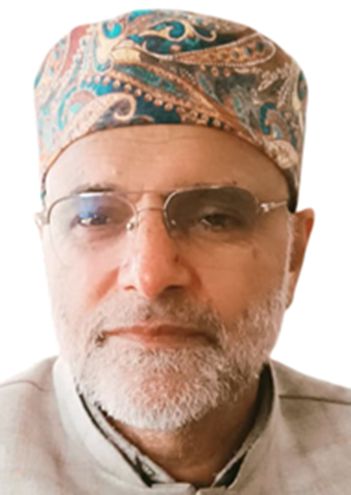
(The author a veteran academician is a former Professor and Head Department of Islamic Studies, Kashmir University. The views, opinions and conclusions expressed in this article are those of the author and aren’t necessarily in accord with the views of “Kashmir Horizon”)
[email protected]