The controversy surrounding the use of expressions such as “Assalam-U-Alikum,” “Insha- Allah” and “JazakAllah” by an IPS officer provides an opportunity to reflect on a much deeper question: how should Muslims understand their religious identity while participating fully and responsibly in a modern constitutional and pluralistic society? Islam does not ask a Muslim to abandon his or her cultural identity in order to become a responsible citizen. At the same time, Islam places upon every Muslim the obligation to act with justice, wisdom, restraint and respect toward people of every faith. The Islamic solution, therefore, is neither confrontation nor the suppression of religious identity, but the harmonious combination of faith, dignity, constitutional responsibility, peaceful coexistence and universal human values. Assalam-U-Alikum” literally means “peace be upon you.” The Arabic word Salām is associated with peace, security, well-being and wholeness, and the corresponding Hebrew shalom belongs to the same wider Semitic linguistic family. The expression is therefore not a slogan of hostility but a traditional greeting conveying a prayerful wish for peace. Its use by a Muslim does not, by itself, constitute hate speech, religious coercion or an abandonment of professional neutrality. An officer serving the State has a duty to uphold the Constitution and the law impartially, but professional neutrality should not be confused with the complete disappearance of personal identity. A Muslim public servant can be a faithful Muslim and, at the same time, an impartial officer of a secular democratic State. Indeed, Islamic ethics strongly support such impartiality. The Qur’an commands “Indeed, Allah commands justice and excellence” (Qur’an 16:90). It further declares: “O believers, stand firmly for justice, as witnesses for Allah” (Qur’an 4:135).
Justice is not restricted to Muslims. The Qur’an explicitly instructs Muslims not to allow hostility toward another people to make them abandon justice: “Do not let the hatred of a people cause you to depart from justice. Be just; that is nearer to righteousness” (Qur’an 5:8). This principle is particularly significant for public servants. An Islamic understanding of public office does not permit an official to favour a Muslim citizen over a Hindu, Sikh, Christian, Buddhist or citizen of any other background merely because of religious identity. Nor does it require the official to conceal the fact that he or she belongs to a particular religious or cultural tradition. The distinction is between personal identity and institutional conduct. A person may possess a religious identity; the State official must nevertheless exercise public authority impartially. Islam itself provides a remarkable foundation for this distinction. The Qur’an recognises human diversity as part of divine creation: “O humanity, we created you from a male and a female and made you peoples and tribes so that you may know one another” (Qur’an 49:13).
Diversity is therefore not presented as a defect that must be erased. It is a condition through which human beings can develop ta’aruf—mutual recognition and understanding. The same verse immediately establishes the Islamic criterion of human worth: “Indeed, the most honoured of you in the sight of Allah is the one most mindful of Him.” Thus neither ethnicity, language, caste, family name nor social status provides a legitimate basis for arrogance. This principle is particularly relevant to discussions about Sayyid identity in South Asia. Islam recognises the Prophet’s family and commands Muslims to honour Ahl al-Bayt, but respect for lineage cannot be transformed into a doctrine of hereditary moral superiority. The Qur’anic criterion is righteousness, and the Prophet (SAW) repeatedly condemned tribal, racial and ethnic arrogance. At the same time, it would be equally inappropriate to dismiss every claim of Prophetic descent as fraudulent merely because some genealogies may be disputed or historically difficult to establish. Islamic scholarship traditionally distinguishes between honouring lineage and making unsupported claims about lineage. Genealogical claims should therefore be examined through historical evidence, family records and, where relevant, responsible genealogical research rather than through sweeping accusations against an entire community.
Modern genetics can contribute useful evidence about population history and ancestry, but it cannot by itself determine every individual claim of descent from the Prophet (SAW). The Islamic solution is therefore neither blind acceptance nor blanket rejection, but tahqiq—careful verification. This principle of verification is itself Qur’anic: “Then verify carefully” (Qur’an 49:6). The same ethic should govern contemporary controversies. Before accusing a public servant of religious misconduct, one should establish precisely what was said, in what context, with what intention and whether any actual rule or constitutional obligation was violated. The Qur’an warns against acting upon unverified information because it can result in injustice toward innocent people. Islam’s answer to controversy is therefore not rumour, collective accusation or social-media outrage but tabayyun, evidence and justice.
The Prophet Muhammad (SAW) also established an important model for relations with people of other faiths. His interactions with Christians, Jews and other communities demonstrate that religious difference did not automatically become a basis for social hostility. The Qur’an commands Muslims to engage the People of the Book in the best manner: “Do not argue with the People of the Book except in the best manner” (Qur’an 29:46). It also says: “There is no compulsion in religion” (Qur’an 2:256). These principles make it impossible to equate ordinary religious expression with religious coercion without examining the actual circumstances. Saying “Assalam-U-Alikum” does not compel another person to become Muslim. Saying “Namaste,” “Sat Sri Akal,” “Shalom,” “Jai Hind” or another culturally meaningful greeting does not automatically constitute an attempt to impose a religious worldview upon the listener. The mature Islamic position is to recognise the dignity of the expression while ensuring that public authority is never used to impose belief. This is where the Islamic concept of adab becomes especially important. Muslims are called upon not merely to defend their rights but also to exercise those rights with courtesy and wisdom. Allah says: “Invite to the way of your Lord with wisdom and good instruction” (Qur’an 16:125).
“Public office must uphold public trust, equal citizenship, and human equality regardless of ancestry or religious identity. In response to controversy over Islamic greetings, Muslims should embody peace by balancing faith and identity with non-coercion, dignity, and democratic equality. This approach provides a constructive Islamic framework for peaceful coexistence in a diverse, constitutional society.”
Wisdom means recognising the difference between sincere religious identity and aggressive religious assertion. A Muslim officer may retain her personal language and identity while being especially conscious that her official position represents the State and not merely herself. If she addresses a mixed audience, she may choose language that is universally accessible when the circumstances require it, but she should not be made to feel that an ordinary Muslim greeting is inherently incompatible with public service. Conversely, Muslims should not demand that every public institution adopt Islamic expressions as though public neutrality required everyone to participate in them.
The Islamic solution is mutual restraint: the right to religious identity without the right to religious domination. This balance is deeply compatible with the constitutional idea of equal citizenship. The Muslim citizen does not need to choose between Islam and citizenship. Nor does a Hindu, Christian, Sikh, Buddhist or member of another tradition need to choose between his or her heritage and loyalty to the Constitution. The State belongs equally to all citizens, while citizens remain free to retain their identities subject to the law. The real test of secularism should therefore be equal treatment rather than cultural uniformity. If an officer uses a religiously associated expression but treats citizens of all communities fairly, her professional neutrality should be judged primarily by her conduct in office. Similarly, if an officer belonging to another community uses a culturally or religiously associated expression, the same standard should apply. Equal standards are essential because selective scrutiny can create alienation and suspicion among citizens.
The Islamic principle of justice demands consistency. The Qur’an says: “When you speak, be just, even if it concerns a close relative” (Qur’an 6:152). Justice therefore requires Muslims themselves to apply the same standards to their opponents that they expect others to apply to them. If religious expression becomes unacceptable merely because it belongs to a minority community, that raises a serious question of equal treatment; but Muslims should make that argument through evidence, constitutional principles and peaceful dialogue rather than through communal antagonism. The same principle should govern discussions of caste, genealogy and social status. Islam does not permit a person to claim superiority merely because of birth. The Prophet (SAW) taught that Allah does not judge people according to outward wealth, appearance or social status but looks to the heart and deeds. Consequently, the honour associated with the Prophet’s family should inspire humility, service and moral responsibility rather than arrogance. A person who possesses an honoured lineage but lacks justice, compassion and integrity cannot use ancestry as a substitute for character. Conversely, a person without an illustrious genealogy is not thereby inferior before Allah. The Islamic solution to hereditary arrogance is therefore not hatred of ancestry but the transformation of ancestry from an instrument of superiority into an obligation of ethical responsibility. The same approach can be applied to contemporary public life.
If a Muslim officer rises through education, perseverance and personal sacrifice, her achievement should become an encouragement to young people rather than a source of communal suspicion. If a Hindu, Sikh, Christian or member of another community achieves similar distinction, Muslims should celebrate the achievement with the same generosity. Islam’s concept of birr and justice permits cooperation in goodness and public welfare: “Cooperate in righteousness and piety” (Qur’an 5:2). This provides a powerful foundation for civilizational dialogue. Instead of asking whether a Muslim officer sounds “too Muslim,” or whether a Hindu officer sounds “too Hindu,” society should ask whether public institutions are delivering justice, protecting dignity, preventing discrimination and serving the common good.
The ultimate Islamic response to the controversy, therefore, is neither defensiveness nor aggression. It is adl (justice), ihsan (excellence), tabayyun (verification), hikmah (wisdom), rahmah (compassion), ta’aruf (mutual recognition) and hurriyyah within the bounds of law. A greeting should remain a greeting. A public office should be a symbol of public trust. Religious identity should remain compatible with equal citizenship. And ancestry should remain a matter of historical and familial identity, never a license for human superiority. If “Assalam-U-Alikum” means “peace be upon you,” then perhaps the most appropriate Islamic response to controversy surrounding those words is to embody their meaning: peace without surrendering dignity, identity without imposing it upon others, faith without coercion, citizenship without discrimination, and justice without fear or favour. That is not merely a defensive response to one controversy; it is a constructive Islamic framework for living together in a religiously diverse and constitutionally democratic society.
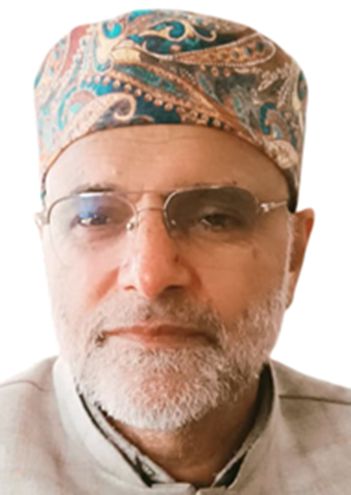
(The author a veteran academician is a former Professor and Head Department of Islamic Studies, Kashmir University. The views, opinions and conclusions expressed in this article are those of the author and aren’t necessarily in accord with the views of “Kashmir Horizon”)
[email protected]