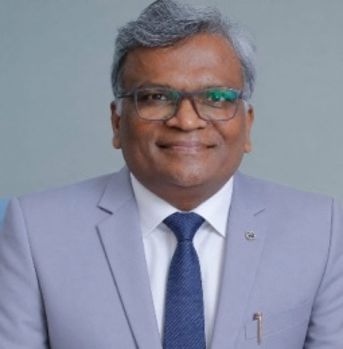
Dr. Haribhau R Bhapkar
Prime Minister Narendra Modi, has started a non-political dialogue with all the Indians through a special and Innovative program on radio known as Mann Ki Baat. While formulating and devising such a phenomenal program many transformative things can be linked to its massive social impact. We can understand the ins and outs as well as the analytics its entire process in three parts, Design Thinking perspectives, Mann Ki Baat program and its social impact. Design thinking (DT) for social impact is an iterative, human-centred approach that prioritizes the needs of communities to solve complex “wicked problems” like poverty, healthcare access, and education. While various models exist, the most widely recognized framework consists of threeto seven non-linear phases. But, Professors at Stanford University design the five phases which are accepted worldwide. The following are the five phases of Design Thinking:
1. Empathise: Understand the Community Deeply. The first step is to gain a deep, qualitative understanding of the people affected by the social issue. This goes beyond surface-level data to uncover unarticulated needs and hidden motivations. For example, Conduct user interviews, observational studies (shadowing), and immersion in the local environment.Empathy Maps and user’s persona help summarize a user’s thoughts, feelings, and frustrations.
2. Define: Frame the Right Problem. In this phase, you synthesize research findings to create a clear, actionable problem statement focused on human needs rather than business or organizational goals. Analyse data to identify patterns and write a “How Might We” (HMW) statement to guide the team.
3. Ideate: Generate a Wide Range of Solutions. With the problem defined, the team brainstorms as many creative solutions as possible. The goal is quantity over quality at the start, encouraging wild or unconventional ideas. The Brainstorming, Mind Mapping, the SCAMPER method (Substitute, Combine, Adapt, Modify, put to another use, Eliminate, Reverse), and “Worst Possible Idea” sessions are few techniques for this.
4. Prototype: Build Tangible, Low-Cost Models. Turn your best ideas into scaled-down, inexpensive versions to learn how they function in the real world. Prototyping is about “building to think” and identifying flaws early without heavy investment. Paper sketches, digital wireframes, physical cardboard models, or storyboards for role-playing scenarios are various formats for this phase.
5. Test: Validate and Refine with Users. The final phase involves putting your prototypes in front of real users to gather feedback. Testing isn’t about proving your idea “works” but learning what doesn’t and why, which often leads back to earlier stages. Usability Testing, A/B testing, and direct feedback sessions are key activities of this phase.
To start a socially impactful activity using design thinking, you follow these five iterative phases. Hon’ble Prime Minister and his Team might follow the DT philosophy for deciding the social activity. After through brainstorming, the team might have decided the non-political dialogue with all Indians through Mann Ki Baat program.Hon’ble Prime Minister launched on 3 October 2014, Mann Ki Baat is India’s first “visually enriched” radio program. It serves as a unique bridge between the Prime Minister and the nation, utilizing the wide reach of All India Radio to touch the lives of citizens in even the most remote and rural regions. Prime Minister launched Mann Ki Baat to establish a direct, non-political connection with the citizens of India. His vision for starting the program was driven by several key factors:
• Dialogue On Governance: According to the Ministry of Information and Broadcasting, the primary objective is to “establish a dialogue with the citizens on issues of day-to-day governance”.
• Reaching The Grassroots: Hon’ble Prime Ministerchose radio as the medium because of its vast reach, especially in rural and remote areas where television and internet access may be limited. Radio covers an estimated 90% of the Indian population.
• Participatory Democracy: The program aims to transform government initiatives into mass movements (Jan Andolans) by seeking public suggestions and support for nation-building.
• Highlighting Unsung Heroes: A major motivation was to create a platform that celebrates the achievements of ordinary citizens and “grassroots heroes” who are making positive changes in society.
• Apolitical Communication: The Prime Minister intended for it to be a “non-political” space to focus purely on social values, culture, and national progress.
• Collective Voice: He envisioned it as a “collective voice” (Jan Ki Baat) where the aspirations and stories of a “New India” could be shared monthly.
The program has reached its 131st episode as of February 2026, becoming a significant cultural phenomenon in India. Episodes are approximately 20 minutes long, airing on the last Sunday of every month at 11:00 AM. The content is curated from lakhs of letters and voice recordings sent by citizens. While the primary broadcast is in Hindi, it is simultaneously translated and aired in over 20 regional languages and several dialects to ensure inclusive access. In the context of design thinking, Mann Ki Baat is frequently studied as a model for human-centric communication and large-scale social innovation. It serves as a unique case where traditional media (radio) is combined with modern design principles to solve the “wicked problem” of nation-wide civic engagement.
“Mann Ki Baat serves as a national roadmap for “Viksit Bharat 2047” during Amrit Kaal by amplifying collective public participation (Jan Shakti). It empowers Gen Z, promotes digital/AI integration, supports the startup ecosystem, and advocates for “Zero Defect, Zero Effect” manufacturing to drive India’s long-term economic ascension.”
The Design Thinking Framework in Mann Ki Baat:
• Empathize & Listen (User Centricity): The program operates on a massive feedback loop. Before each episode, the government invites ideas and suggestions via the MyGov portal, toll-free numbers, and the NaMo App. In its early stages, it received over 61,000 suggestions and 1.43 lakh audio recordings, showcasing a deep “listening” phase.
• Define (Problem Identification): Rather than top-down political mandates, the program defines national priorities based on grassroots narratives. Issues like sanitation (Swachh Bharat), water conservation, and drug de-addiction are highlighted after identifying them as recurring concerns in citizen feedback.
• Ideate & Prototype (Collaborative Solutions): The show often prototypes social movements. For example, the “Selfie with Daughter” campaign started as a small local initiative in Haryana, was shared on the program, and then “scaled” into a nationwide movement to improve the child sex ratio.
• Iterate (Continuous Feedback): The program is non-linear; the PM often revisits topics (like Khadi or yoga) based on the spike in public interest and behavioural shifts observed after previous broadcasts.
This program has been achieving unprecedented milestones from which few of them are as follows.
• Massive Public Reach: The program has reached over 100 crore (1 billion) listeners at least once, with approximately 23 crore regular listeners tuning in monthly.
• Revenue Generation: Despite being produced using in-house resources from All India Radio (Akashvani), the program has earned approximately ₹34.13 crore in revenue since its inception.
• Global Influence: Broadcast in 11 foreign languages—including French, Swahili, Arabic, and Tibetan—the program serves as a tool for India’s “civilisational soft power” and democratic leadership.
• Sanitation & Environment: It played a pivotal role in the success of the Swachh Bharat Mission, turning cleanliness into a national obsession.
• Economic Shifts: Mentioning products or schemes has led to tangible surges in public interest and sales. For example, interest in Khadi and millets (Shri Anna) grew significantly following their discussion on the show.
• Women’s Empowerment: By celebrating stories of women achievers and Self-Help Groups (SHGs), it has helped mainstream the Beti Bachao Beti Padhao campaign.
• Digital Literacy: The platform was instrumental in encouraging citizens to adopt UPI and digital education tools during the COVID-19 pandemic.
• Recognition of Unsung Heroes: A core achievement of the program is providing a national platform to “grassroots heroes”. By sharing the stories of ordinary citizens working on rural innovation, water conservation, and social service, the program has fostered a sense of national pride and collective responsibility.
Concluding Remarks|A Mirror Of New India: The program’s legacy lies in its ability to amplify the “collective spirit” of the nation. It has successfully:
• Mainstreamed Unsung Heroes: By shifting the spotlight from political elites to grassroots innovators, it has redefined national merit.
• Institutionalised Public Dialogue: With over 131 episodes as of February 2026, it remains a rare platform where a world leader directly engages with millions of individual suggestions via MyGov.in.
• Fostered Social Transformation: From sanitation (Swachh Bharat) to fitness (Fit India), the program has proven that radio can still trigger mass behavioural changes in a digital age.
The program’s legacy lies in its ability to amplify the “collective spirit” of the nation. The program is positioned as a roadmap for India’s Amrit Kaal (the 25-year journey to a developed nation) and moving towards “Viksit Bharat 2047”. It has been focusing on Digital and AI Integration for welfare of society, emphasize the Startup Ecosystem and “Zero Defect, Zero Effect” manufacturing, encouraging Gen Z and first-time voters to lead India’s economic ascension. Ultimately, the future of Mann Ki Baat is not just about one person’s voice; it is about the “Jan Shakti” (power of the people) for accomplishing Prime Minister’s vision “Viksit Bharat @47”
(The author is Head, Department of Mathematics, HEP Nodal Officer, Central University of Kashmir. The views, opinions and conclusions expressed in this article are those of the author and aren’t necessarily in accord with the views of “Kashmir Horizon”)