Introduction: Mohandas Karamchand Gandhi (1869–1948), popularly known as the Father of the Nation in India, occupies a distinguished place in modern history for his commitment to truth, non-violence and communal harmony. Although his philosophy was deeply rooted in Hindu religious and philosophical traditions, his intellectual and spiritual outlook was shaped by his engagement with several religious traditions, including Islam and Christianity. Gandhi’s appreciation of Islam, his admiration for Prophet Muhammad (peace be upon him), his support for the Khilafat Movement and his efforts to protect Muslims during the communal violence surrounding Partition demonstrate his commitment to interreligious understanding. His relationship with Islam offers valuable lessons for contemporary India and the wider world. A balanced understanding, however, requires distinguishing Gandhi’s personal interpretation of Islam from Islam as understood within its own theological, legal and intellectual traditions. Gandhi approached other religions through his universalist philosophy of truth and non-violence. His reflections are therefore significant not as a definitive exposition of Islamic doctrine but as an example of ethical engagement across religious boundaries.
Gandhi’s Personal Understanding Of Islam: Gandhi believed that the great religious traditions of humanity contained ethical teachings capable of guiding individuals towards truth, compassion and moral responsibility. His engagement with Islam was part of his broader search for universal moral principles. He appreciated Islamic teachings concerning justice, simplicity, charity, self-discipline and human dignity. His interpretation was shaped by his own Hindu religious background and his conviction that different religions could illuminate aspects of a common moral reality. In Hind Swaraj, Gandhi compared religions to different roads leading towards a common destination. This metaphor expressed his commitment to religious respect, but it represented his personal philosophical outlook rather than a theological position universally accepted by Muslims. Islam affirms distinctive claims concerning divine revelation, prophethood and the Qur’an. Muslims can respect other religious communities and defend their rights without necessarily accepting that all religions possess identical theological teachings or lead to salvation in precisely the same way. Recognising this distinction makes the dialogue between Gandhi and Islam more intellectually honest and meaningful. The Qur’an emphasises justice as a fundamental religious obligation: “Stand firmly for justice, as witnesses for Allah, even if it be against yourselves” (Qur’an 4:135). This principle resonates with Gandhi’s conviction that truth and justice must prevail over personal interests, political calculations and communal loyalties. Similarly, the Qur’an declares, “There is no compulsion in religion” (2:256). Its teaching that humanity has been made into peoples and tribes so that they may know one another (49:13) provides a framework for understanding diversity as an opportunity for mutual recognition rather than hostility. Gandhi’s universalist approach encouraged him to emphasise these ethical dimensions of Islam. Nevertheless, his interpretation should be understood as an appreciative reading from outside the Islamic faith, not as a substitute for the interpretations developed by Muslim theologians, jurists and scholars.
Gandhi’s Admiration For Prophet Muhammad (Peace Be Upon Him): Gandhi expressed admiration for Prophet Muhammad’s courage, simplicity, perseverance and dedication to his mission. He regarded the Prophet’s influence on Arabian society as an important example of the power of religious conviction and moral leadership. Islam presents Prophet Muhammad as a model of mercy and compassion. The Qur’an describes him as “a mercy to the worlds” (21:107) and praises his gentleness towards others (3:159). His life demonstrates the importance of patience, reconciliation, fulfilment of commitments and responsible leadership. The Treaty of Hudaybiyyah, concluded in 628 CE, illustrates the importance of negotiation and strategic patience. By accepting an agreement that initially appeared unfavourable to some of his companions, the Prophet created opportunities for peaceful engagement and future reconciliation. Gandhi’s political philosophy similarly emphasised dialogue, moral courage and the transformation of relationships through peaceful means. However, Gandhi interpreted the Prophet’s example through his own ethical framework. His admiration did not amount to an acceptance of all Islamic theological claims, nor should his views be treated as an exhaustive account of the Prophet’s teachings. An important historical distinction must also be acknowledged. The Prophet’s life included armed conflicts and the recognition of defensive force under the conditions of seventh-century Arabia. Gandhi, by contrast, generally advocated non-violent resistance as a fundamental principle of political and personal conduct. Their approaches were therefore not identical, although both provide important perspectives on moral responsibility, reconciliation and the exercise of power.
“Gandhi’s ethical legacy and Islam’s core teachings on justice, mercy, and cooperation offer a powerful framework for interfaith peace and collective action. By demonstrating that true peace demands active justice, mutual respect, and standing up for the rights of others—rather than mere tolerance or claiming authority over another’s faith—Gandhi’s engagement with Islam serves as a lasting model for meaningful dialogue and religious coexistence.”
Gandhi And The Khilafat Movement: Gandhi’s support for the Khilafat Movement after the First World War marked a significant episode in Hindu-Muslim relations. Indian Muslim leaders, particularly Muhammad Ali and Shaukat Ali, mobilised support to defend the Ottoman Caliphate, which they considered an institution of religious and political importance. Gandhi supported their movement and sought to unite Hindus and Muslims against British colonial rule. Through the Non-Cooperation Movement, he advocated boycotts and peaceful resistance as alternatives to violent confrontation. He believed that solidarity with Muslim concerns could strengthen the struggle for Indian independence and promote national unity. The alliance was not without difficulties. The Khilafat Movement had religious and international objectives that did not entirely coincide with Gandhi’s broader political programme. Its decline following the abolition of the Ottoman Caliphate in 1924 revealed the limitations of political alliances shaped by changing international circumstances. Nevertheless, this episode remains an important example of cross-religious cooperation. It demonstrates that communities with different religious commitments can work together for shared objectives without abandoning their distinct identities. It also illustrates the importance of understanding Muslim political aspirations on their own terms rather than interpreting them exclusively through Gandhi’s vision of Indian nationalism.
Gandhi and the Protection of Muslims during Partition. Gandhi’s commitment to Hindu-Muslim harmony became particularly evident during the communal violence accompanying the Partition of India in 1947.
At a time when fear, displacement and retaliatory attacks threatened the lives of millions, he appealed to people of all communities to reject hatred and protect innocent civilians. His peace efforts in Noakhali, Bihar, Calcutta and Delhi reflected his conviction that the suffering of one community could never justify violence against another. In Calcutta, his presence and fast in August 1947 contributed to efforts to restore peace. In Delhi, he pressed for the protection of Muslims and for the fulfilment of commitments necessary to restore communal confidence. Gandhi’s position was morally significant because he defended vulnerable people even when doing so provoked opposition from sections of his own community. His assassination on 30 January 1948 by Nathuram Godse, a Hindu nationalist opposed to aspects of Gandhi’s political and communal outlook, revealed the grave dangers of ideological extremism. The Qur’an provides a powerful ethical parallel in its command: “Let not the hatred of a people prevent you from being just” (5:8). Both Gandhi’s example and this Qur’anic principle challenge collective blame and retaliatory violence. Gandhi’s defence of Muslims should not, however, be interpreted as evidence that his understanding of Islam was identical to Muslim self-understanding. Rather, it demonstrated his conviction that protecting human life and defending the rights of minorities were moral obligations irrespective of religious identity.
Non-Violence, Islamic Ethics: Convergences And Differences: Gandhi’s philosophy of Ahimsa and Satyagraha emphasised non-violence, truth and the moral transformation of society. Islam likewise promotes peace, mercy, justice and reconciliation. The Qur’an encourages believers to repel evil with what is better (41:34), while commanding them to accept peace when the opposing side sincerely inclines towards it (8:61). However, an accurate comparison must recognise an important distinction. Gandhi generally regarded non-violence as the preferred and fundamental method of resisting injustice, whereas Islamic jurisprudence permits regulated defensive force under specified conditions. Islam prohibits transgression and unjust aggression; it does not prescribe absolute pacifism in every circumstance. The Qur’an commands believers to fight those who fight them but prohibits transgression (2:190). It also emphasises reconciliation and the protection of human life. Thus, Islamic ethics combines the pursuit of peace with the responsibility to resist aggression and protect the oppressed. Gandhi’s personal interpretation tended to foreground those aspects of Islam that harmonised with his own commitment to non-violent resistance. This approach offered valuable possibilities for interreligious dialogue, but it did not encompass the full range of Islamic legal and historical thought. Despite these differences, both traditions provide substantial ethical resources for condemning oppression, restraining hostility and protecting human life. Their shared emphasis on justice and moral responsibility can contribute to contemporary peacebuilding and interreligious dialogue.
Conclusion: Gandhi’s relationship with Islam demonstrates the possibilities of ethical engagement across religious boundaries. His admiration for Prophet Muhammad, support for the Khilafat Movement and courageous efforts to protect Muslims during Partition reveal a sustained commitment to communal harmony and human dignity. The significance of Gandhi’s engagement lies not in claiming that his personal interpretation represents Islam in its entirety, but in recognising his willingness to learn from a religious tradition different from his own. His universalist understanding of religion enabled him to appreciate Islamic moral teachings while interpreting them through his commitment to truth and non-violence. A scholarly assessment must acknowledge this distinction and allow Muslim theological and intellectual traditions to speak in their own terms. Gandhi should neither be idealised uncritically nor separated from the historical complexities of his thought. His positions on caste, modernity and political strategy continue to invite scholarly debate. Yet his insistence that justice must transcend communal loyalty remains deeply relevant. In contemporary India, where religious polarisation can undermine social trust, Gandhi’s legacy and Islam’s teachings on justice, mercy and reconciliation offer complementary resources for building a peaceful society. The Qur’anic call to cooperate in righteousness (5:2) provides an enduring basis for collective action across religious differences. Ultimately, the relationship between Gandhi and Islam reminds us that genuine peace requires more than tolerance: it demands justice, courage, mutual respect and the protection of every human being. One can respect another religion deeply, defend the rights of its followers and learn from its ethical teachings without claiming to speak authoritatively on its behalf. This distinction strengthens rather than diminishes interfaith dialogue. Gandhi’s engagement with Islam thus remains a valuable foundation for advancing mutual understanding, religious coexistence and the common good.
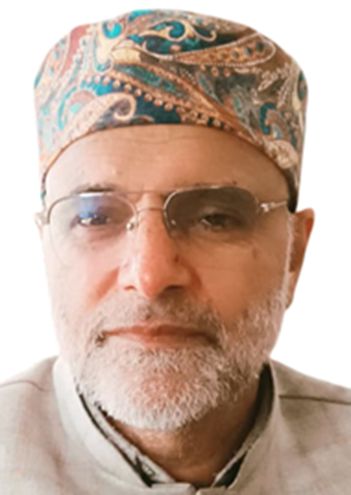
(The author a veteran academician is a former Professor and Head Department of Islamic Studies, Kashmir University. The views, opinions and conclusions expressed in this article are those of the author and aren’t necessarily in accord with the views of “Kashmir Horizon”)
[email protected]