India’s National Education Policy (NEP) 2020 promised to transform higher education by promoting multidisciplinary learning, research, innovation, critical thinking and academic excellence. Yet, six years after its announcement, an uncomfortable question deserves serious attention: are our universities moving towards intellectual excellence, or are their professors becoming increasingly trapped in paperwork, online reporting and administrative compliance? The irony is striking. A policy that seeks to make India a global knowledge powerhouse risks leaving its most important knowledge creators with less time to create knowledge. Professors are expected to teach, mentor students, publish research, secure funding, develop innovative curricula and contribute to institutional development. At the same time, they must often navigate multiple reports, documentation requirements, accreditation exercises, data-entry assignments and other administrative responsibilities. When paperwork begins to dominate academic life, educational reform loses sight of its central purpose.
The Gap Between Vision And Reality: NEP 2020 articulates several important objectives: improving the quality of higher education, encouraging research, promoting flexibility in learning and developing graduates equipped for the demands of a changing economy. These aspirations are relevant and necessary. However, announcing ambitious reforms is easier than implementing them effectively across institutions with widely differing resources, staffing levels and administrative capacities. The real test of an education policy lies not in the language of its recommendations but in the experience of teachers and students. Are classrooms becoming more intellectually stimulating? Are faculty members receiving greater opportunities to undertake meaningful research? Are students developing stronger analytical and practical skills? Are institutions reducing unnecessary administrative hurdles?
From Scholars To Paper-Pushers: A professor’s primary responsibilities are teaching, research, and mentoring and knowledge creation. Yet, in many institutional settings, academic professionals face expanding administrative expectations. They may be required to prepare repetitive reports, upload similar information onto different platforms, compile evidence for inspections, complete compliance documents and participate in numerous meetings. A professor spending hours entering information that has already been submitted elsewhere is not necessarily improving educational quality. A researcher repeatedly compiling evidence of academic activity is losing time that could have been spent designing experiments, analyzing data, writing papers or guiding doctoral scholars. When evidence of academic work becomes more important than academic work itself, the system has confused compliance with excellence.
The Hidden Cost To Research: Research requires concentration, continuity, intellectual curiosity and sustained engagement with complex problems. High-quality research rarely emerges from fragmented periods between administrative assignments. It requires time to read, reflect, formulate questions, collect evidence, test hypotheses and revise conclusions. India aspires to strengthen its research ecosystem and increase its contribution to global knowledge. These ambitions cannot be achieved merely by asking faculty members to publish more papers or participate in more research-related activities. Institutions must create conditions in which serious scholarship is possible. There is also a risk that academics will priorities activities that produce quick documentary evidence over difficult, long-term research that may take years to yield meaningful results. Such incentives can encourage quantity over quality—the very tendency that higher education reform should seek to correct.
“NEP 2020 must move beyond policy declarations and administrative compliance to deliver measurable educational improvement. If professors spend more time preparing files than preparing students, the system needs urgent correction. India does not need professors who are experts in paperwork; it needs professors who are free to create knowledge, nurture talent and shape the nation’s intellectual future. The ultimate measure of educational reform is not how much documentation institutions produce, but how much learning, research and innovation they deliver.”
Accountability Without Administrative Overload: Supporters of institutional accountability rightly argue that higher education cannot operate without standards, assessment and transparent reporting. Public resources must be used responsibly, academic programmes must meet appropriate requirements, and institutions must demonstrate that they are delivering educational value. First, regulatory and accreditation bodies should identify overlapping reporting requirements and establish a common digital reporting system. Information submitted once should be reusable wherever appropriate, reducing duplication across institutional platforms. Second, institutions should employ adequately trained administrative personnel to handle routine documentation, data compilation and compliance processes. Professors should not routinely be expected to perform tasks that can be completed more efficiently by dedicated administrative teams. Third, academic evaluation should give greater weight to teaching effectiveness, research originality, student learning, mentoring and meaningful innovation. The number of forms completed or meetings attended should never become a substitute for educational contribution. Fourth, institutions should protect dedicated periods for teaching preparation and research. Faculty workload policies must recognize that research is not an activity that can always be squeezed into leftover hours. Finally, the implementation of NEP 2020 should be independently evaluated through transparent indicators and regular feedback from faculty members, students, researchers and institutional leaders. The objective must be to identify what is working, what is failing and what needs correction.
Reform The System, Not Just The Syllabus: India does not suffer merely from a shortage of educational policies. It also faces the challenge of translating policy intentions into workable institutional practices. Meaningful reform requires coordination among governments, regulators, universities and college managements. It also requires trust in the academic professionals who understand the realities of classrooms and laboratories. Professors must be accountable for their responsibilities, but accountability should not mean endless surveillance through paperwork. Digital technology should reduce routine work, not multiply reporting obligations. Institutional leaders should ask whether every administrative requirement improves teaching, research, student welfare or governance. If it does not, its necessity should be reconsidered.
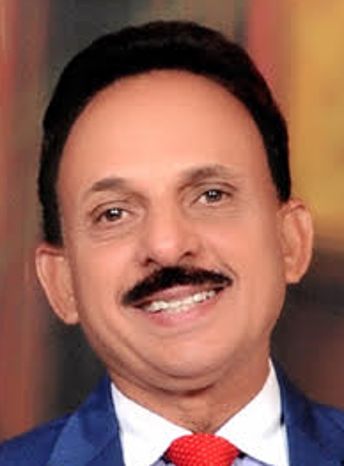
(The author is Principal, Guru Gobind Singh College of Management and Technology, Gidderbaha, Punjab. The views, opinions and conclusions expressed in this article are those of the author and aren’t necessarily in accord with the views of “Kashmir Horizon”)
[email protected]