“Government will introduce a stringent anti-paper leak law in Parliament, establish fast-track courts for speedy disposal of examination fraud cases and further strengthen the legal framework to deter organised examination malpractices…”
Mohammad Irfan
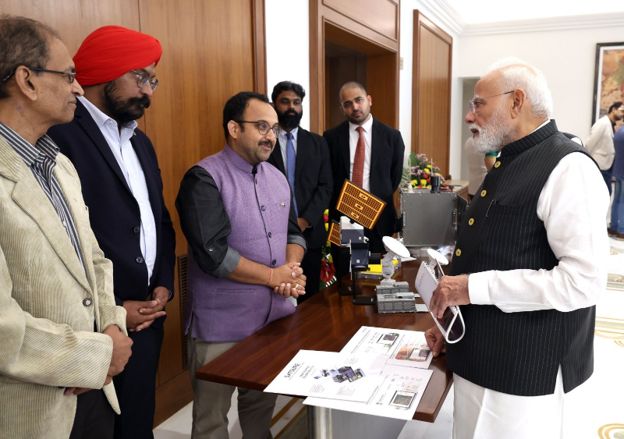 India’s space story is entering a new phase, and Prime Minister Narendra Modi’s interaction with the founders and chief executives of 20 space startups has underscored where the government wants that journey to go next: beyond launches and satellites, towards a wider space economy that can attract global talent, investment and technology while solving problems on Earth. At Seva Teerth, Prime Minister Modi met entrepreneurs working across almost every emerging segment of the private space industry—from rockets, reusable launch vehicles and advanced propulsion to satellites, avionics, space intelligence, debris removal and artificial intelligence-driven weather and climate services. The meeting was significant not merely because of the number of companies represented, but because of the range of technologies being developed by Indian startups. The companies involved are building capabilities that only a few years ago were largely associated with government-led space programmes and large international corporations.
From Government Monopoly To Startup Opportunity: For decades, India’s space sector was dominated by public institutions, with the Indian Space Research Organisation at the centre of the country’s space programme. The opening of the sector to private participation changed that equation. The startup founders who met Modi recalled the decision to open the sector to private participation as a turning point that created new opportunities for entrepreneurs, engineers and investors. Their message was clear: the policy shift did not simply allow private companies to enter an existing industry. It created the possibility of an entirely new space ecosystem in India. For young companies, that meant an opportunity to develop rockets, satellites, propulsion systems, sensors, artificial intelligence applications and other technologies within the country. Many of the entrepreneurs told the Prime Minister that they had invested significant time and effort in developing capabilities and technologies indigenously. Their success also reflects the changing confidence around India’s ability to build complex space technologies through private enterprise.
The Entrepreneurs Behind The New Space Economy: The interaction brought together founders and CEOs of 20 companies working in different areas of the space economy. Among them were Skyroot Aerospace and Agnikul Cosmos, which are developing launch technologies; Pixxel and Dhruva Space, which are working on satellite capabilities; and Bellatrix Aerospace, focused on advanced propulsion. Other companies represented the newer frontiers of the industry. GalaxEye, PierSight and SatSure are working with space-based data and intelligence, while Digantara is developing capabilities linked to space situational awareness. Manastu Space is working on space debris-related technologies, while companies such as Suhora Technologies are developing satellite-data applications. The presence of companies working in AI, weather, climate intelligence, space debris, defence intelligence and other applications demonstrated how quickly the definition of the “space sector” is expanding. Space is no longer simply about sending a rocket into orbit. It is increasingly about collecting information, analysing it and converting it into services that can be used by governments, businesses, farmers, industries and ordinary citizens.
A Global Market Is Beginning To Open : One of the strongest signals emerging from the interaction was the growing international interest in technologies being developed by Indian space companies. The startup leaders highlighted interest from several countries and companies in adopting and leveraging technologies developed by India’s emerging private space industry. That development could prove important for India’s ambitions in the global space economy. The domestic market can provide startups with an initial base, but global customers are essential if Indian companies are to scale into major space businesses. The Prime Minister’s message appeared to recognise this opportunity. He said that many countries either cannot invest in the space sector or do not wish to make such investments. For India, he argued, this creates an opportunity to strengthen its position in the global space industry. The opportunity is not limited to launching Indian satellites. It extends to exporting technologies, services, data and expertise.
The World Looking For New Space Partners: The global space industry is undergoing its own transformation. The rise of private launch companies, satellite constellations, commercial Earth observation, space-based communications and new applications of artificial intelligence has created demand for companies capable of delivering specialised technologies at competitive costs. India enters this market with several advantages: an established scientific and engineering base, experience in cost-efficient space missions, a large technology workforce and a growing domestic startup ecosystem. The challenge is to convert these advantages into globally competitive companies. Modi’s interaction with startup founders reflected an attempt to position India not only as a country that uses space technology, but as a country capable of supplying it to the world. Modi’s Message|Think Beyond The Launchpad: Perhaps the most important part of the Prime Minister’s interaction was his call to startups to look beyond their existing applications. Modi encouraged space companies to explore wider uses of their technologies and ask a basic question: how can space technology make people’s lives easier? That question could shape the next phase of India’s space startup story. A satellite capable of capturing high-resolution images, for example, is not valuable only because it operates in orbit. Its real value may lie in helping farmers assess crops, governments monitor infrastructure, insurers evaluate damage or disaster agencies respond to floods and landslides. Similarly, weather and climate intelligence can become useful far beyond the scientific community if it reaches farmers, local administrations and businesses in an accessible form. Space debris may exist hundreds of kilometres above Earth, but the broader principle is similar to environmental management on the ground: prevention, monitoring, removal and responsible use of resources. As India’s space industry expands, its ability to address the sustainability of the orbital environment will become increasingly important.
AI And The New Space Economy: Artificial intelligence is also changing the nature of space technology. Among the startups participating in the interaction were companies working on AI-powered weather and climate intelligence. The combination of satellite data and AI can dramatically increase the amount of information that can be extracted from images and other observations. Instead of simply collecting data, companies can process it in near real time and generate insights for specific users. This could make space-based services more accessible to sectors that traditionally had little direct connection with the space industry. For India, the intersection of space and AI could become one of the most promising areas for future startups.
“India’s space startup ecosystem has generated considerable enthusiasm, but the next challenge is scale.Building a prototype is one thing. Developing a commercially viable product, obtaining customers, raising capital and competing internationally is another.”
India As A Global Space Hub: Prime Minister Modi called for the creation of an ecosystem in which the world begins to look towards India when it thinks of space. That ambition goes beyond launching missions. It involves attracting international companies, engineers, researchers, investors and entrepreneurs. The Prime Minister said India’s space sector could become a magnet for global talent, companies and investment. That would mark a significant evolution from India’s traditional role as a space technology user and service provider. A successful space hub requires more than rockets and launchpads. It needs universities, laboratories, suppliers, venture capital, skilled workers, regulatory support and international partnerships. It also requires companies capable of scaling. The presence of 20 startups at the Prime Minister’s interaction suggests that the foundation of such an ecosystem is already developing.
The Startup Challenge| Scaling Up: India’s space startup ecosystem has generated considerable enthusiasm, but the next challenge is scale. Building a prototype is one thing. Developing a commercially viable product, obtaining customers, raising capital and competing internationally is another. Space businesses are typically capital intensive and involve long development cycles. Launch vehicles, satellites and propulsion systems require extensive testing and regulatory clearances. Startups therefore need sustained access to capital and infrastructure. They also need predictable policies and opportunities to work with government agencies as anchor customers. The Government’s role in this ecosystem will increasingly be judged by whether companies can move smoothly from experimentation to commercial scale. Why private participation matters. The founders at the meeting credited the decision to open the space sector to private participation with creating multiple new opportunities. That policy shift has changed the culture around space entrepreneurship in India. Engineers who once might have considered careers only in established institutions can now build companies around specialised technologies. Investors can participate in a new high-technology sector. Universities can work more closely with startups. Manufacturers can become part of domestic supply chains. And Indian companies can seek customers outside the country. The result is a broader ecosystem in which space technology becomes an industry rather than an activity confined to a few institutions. A new generation needs to look at the stars. Prime Minister Modi also turned attention towards schools and young minds. He called for closer collaboration between space companies and Atal Tinkering Labs. The objective, he said, should be to nurture curiosity and interest in space among children from an early age. That may appear like a long-term investment, but it could prove critical. The space industry of the 2030s and 2040s will need scientists, engineers, programmers, designers, entrepreneurs and technicians. The talent pipeline for that industry must therefore begin much earlier. Atal Tinkering Labs can potentially provide school students with exposure to experimentation, robotics, electronics and problem-solving. If space startups begin engaging with these laboratories, students could get an opportunity to see how classroom concepts translate into real technologies.
Making Space Aspirational: India has already demonstrated that space can inspire millions of people. Major missions have generated public interest and encouraged young students to consider careers in science and engineering. The private space industry can add another dimension to that aspiration. Instead of students seeing space careers as limited to a handful of government organisations, they can now imagine becoming entrepreneurs, building satellites, designing propulsion systems or developing AI applications. That change in perception may ultimately prove as important as any single technological breakthrough.
A Meeting With A Larger Message: The interaction at Seva Teerth was therefore about more than a meeting between the Prime Minister and startup founders. It represented the government’s attempt to define the next stage of India’s space journey. The first phase was about establishing national capability. The next phase is increasingly about creating a commercial ecosystem. The phase after that could be about making India a global centre for space technology, services and talent. For that to happen, Indian startups will have to demonstrate that they can build world-class products, attract international customers and compete in a market where technology changes rapidly.
From Indian Capability To Global Leadership: The startup founders who met Modi are working across a remarkably broad technological spectrum. Rockets and launch systems remain important, but they are only one part of the picture. Satellites can monitor the Earth. AI can interpret the data. Weather platforms can help communities prepare for extreme events. Space intelligence can support security. Debris-removal technologies can protect the orbital environment. Together, these technologies represent a new space economy. India’s opportunity lies in connecting these capabilities to both domestic needs and global markets. The bigger opportunity is on Earth. The Prime Minister’s emphasis on applications for ordinary people may ultimately be the most important part of the government’s space strategy. The success of the private space sector cannot be measured only by the number of launches or satellites. It will also be measured by how many farmers receive better weather information, how effectively disasters are monitored, how infrastructure is mapped, how climate risks are understood and how new jobs are created. The space industry becomes truly transformative when technology developed for orbit begins improving life on the ground. That is the direction Modi’s interaction with the startup founders appeared to underline.
Kashmir Horizon View: India’s space startup ecosystem is still young, but the ambitions being articulated around it are already global. Twenty companies from different parts of the emerging industry sat across the table from the Prime Minister, representing a generation of entrepreneurs that has entered a field once considered too complex and capital-intensive for startups. Their presence is itself a sign of how much the sector has changed. The next challenge is to sustain that momentum. India will need investment, talent, research partnerships, manufacturing capacity, regulatory certainty and international market access. It will also need to ensure that the benefits of the space economy spread beyond the technology industry. If those pieces come together, India could move from being a major space-faring nation to becoming a major global space industry hub. That is the larger ambition emerging from the government’s engagement with private space companies: a future in which India does not merely reach space, but builds the technologies, businesses and human capital that make space work for the world.
(“Team Kashmir Horizon” is committed to continuous improvement and invites feedback and suggestions from readers and its followers on social media sites. Reader insights are considered vital for enhancing content quality and empowering the community. The team encourages open communication and values the thoughts and ideas of its audience, believing that such input will enable them to serve the public more effectively. The initiative aims to ensure that readers have the best possible experience with “Kashmir Horizon”. Interested individuals can reach out to us via email at [email protected].)