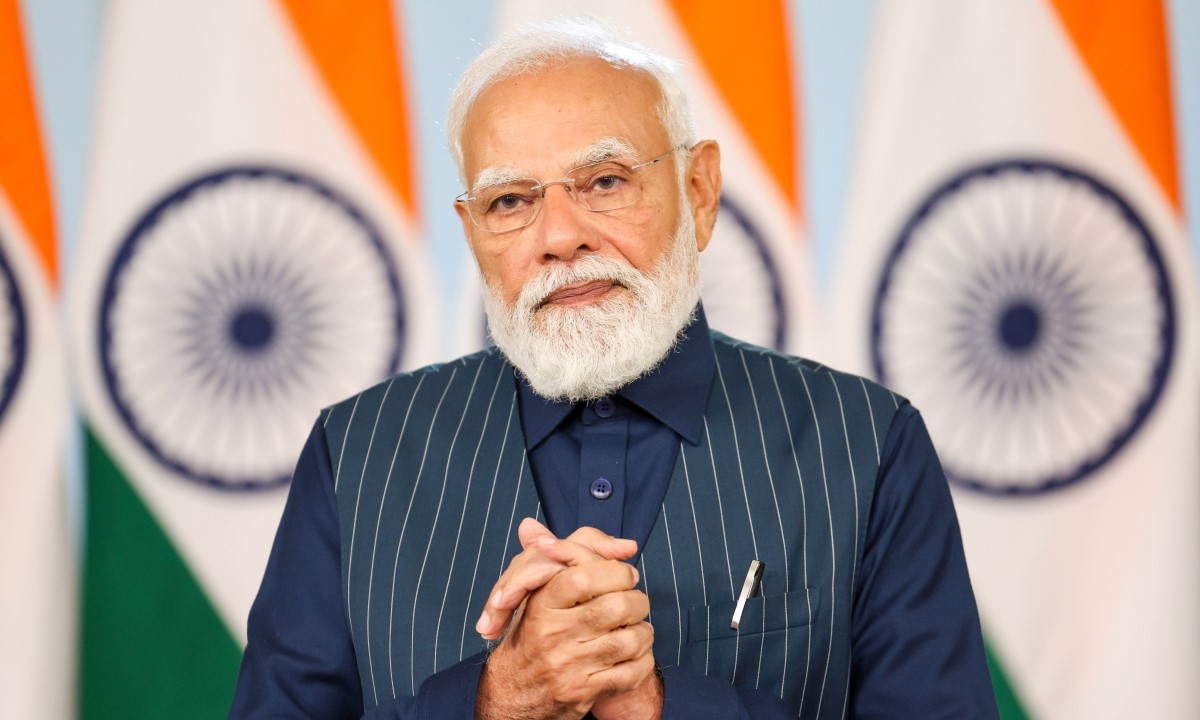
“Seven years ago, on this day, Articles 370 and 35(A) became history, marking a decisive new chapter in the journey of Jammu and Kashmir as well as Ladakh,” the Prime Minister said in a post on X….”
 Prime Minister Narendra Modi on Wednesday marked seven years of the abrogation of Articles 370 and 35(A), describing August 5, 2019 as a “defining milestone” in India’s journey towards inclusive development and asserting that Jammu and Kashmir and Ladakh have witnessed wide-ranging transformation across infrastructure, education, healthcare, entrepreneurship and sports since the constitutional changes. In a message marking the seventh anniversary, Modi said the lives of people in Jammu and Kashmir and Ladakh had changed across multiple sectors over the past seven years, with infrastructure expanding and new avenues of opportunity emerging. He particularly highlighted the empowerment of women and marginalised communities, saying that sections deprived of several constitutional rights for decades had benefited from the full application of the Constitution of India. “Seven years ago, on this day, Articles 370 and 35(A) became history, marking a decisive new chapter in the journey of Jammu and Kashmir as well as Ladakh,” the Prime Minister said in a post on X. The anniversary message comes at a time when the Centre is presenting the post-2019 period as one marked by increased infrastructure investment, expanded access to government schemes, greater economic opportunity and the integration of Jammu and Kashmir and Ladakh into the wider national development framework. Modi said the government’s commitment remained focused on ensuring that every citizen in Jammu and Kashmir and Ladakh had the opportunity to aspire, achieve and contribute to the making of a “Viksit Bharat”.
‘Defining Milestone’ in Inclusive Development: The Prime Minister’s statement placed the constitutional changes of August 2019 within a larger development narrative. Rather than limiting the significance of August 5 to its constitutional dimension, Modi highlighted the changes that he said had followed across sectors affecting the daily lives of people. Infrastructure expansion, education, healthcare, entrepreneurship and sports were among the areas specifically mentioned by him. The emphasis reflects the Centre’s argument that the impact of the 2019 decision should be assessed not only in terms of constitutional and administrative restructuring but also through the opportunities and rights available to citizens. Modi said women and marginalised communities had been empowered through the full application of the Constitution. The statement also placed particular emphasis on those who, according to the government, had been denied certain constitutional rights for decades.
Seven Years Of Infrastructure Expansion: Infrastructure has been one of the most visible components of the post-2019 development narrative. The Government has increasingly focused on improving road, rail and air connectivity, expanding urban infrastructure and accelerating major strategic and economic projects across the Union Territories. Prime Minister Modi’s reference to infrastructure expansion in his anniversary message comes against the backdrop of several major projects that have either been completed, advanced or taken forward during the period. Connectivity has been a particularly important focus in Jammu and Kashmir because of its difficult terrain and the historical challenges associated with movement between different regions. The expansion of railway connectivity has been one of the most significant developments, with the Kashmir Valley increasingly linked to the national railway network. Improved road connectivity, major highway projects, tunnels and bridges have also been changing the physical connectivity landscape. Air connectivity has expanded as well, with the government highlighting infrastructure upgrades at airports in Jammu and Srinagar. The development push is aimed not only at facilitating passenger movement but also at supporting tourism, trade, agriculture, industry and investment. For the Centre, infrastructure is also a critical component of integrating remote and mountainous areas into the wider economic system.
Education A Major Opportunity Area: The Prime Minister specifically cited education among the sectors where opportunities have expanded over the past seven years. Jammu and Kashmir has witnessed continued expansion of higher education infrastructure, technical education, medical institutions and skill-development initiatives. The Government has placed considerable emphasis on creating educational opportunities within the region so that students can access professional and technical education closer to home. The expansion of universities, colleges, medical institutions and research facilities has been presented as part of a wider effort to build human capital. The focus is increasingly moving towards linking education with employability, innovation and entrepreneurship. For young people in Jammu and Kashmir, this development has particular significance given the region’s large youth population.
Healthcare Expansion Adds Another Dimension: Healthcare was another area specifically mentioned by the Prime Minister. Over the past several years, Jammu and Kashmir has seen expansion of medical education and healthcare infrastructure, including the strengthening of government medical colleges and tertiary healthcare facilities. The expansion of medical education has also increased opportunities for students seeking professional careers within the region. The Government has sought to improve healthcare access through new institutions, upgraded facilities and expanded coverage of national health programmes. The post-2019 development narrative increasingly presents healthcare not only as a welfare issue but also as an area of infrastructure and human-capital development. Improved healthcare facilities can reduce the need for patients to travel outside the region for treatment while simultaneously generating employment for doctors, nurses, technicians and other healthcare professionals.
Women , Marginalised Communities At The Centre: One of the strongest points in Modi’s anniversary message was the reference to women and marginalised communities. The Prime Minister said those who had been deprived of several basic constitutional rights for decades had been empowered through the full application of the Constitution. The government has consistently presented the extension of constitutional provisions as a mechanism for bringing Jammu and Kashmir’s citizens under the same rights and legal framework applicable elsewhere in the country. Women have been a particular focus of this narrative, with the government highlighting their increased access to welfare programmes, political participation, property rights and economic opportunities. Marginalised communities, including tribal populations and other groups that the government says faced historical disadvantages, have also featured prominently in the Centre’s post-2019 policy messaging. The emphasis is that development must extend beyond traditional centres of power and reach communities that remained economically and socially disadvantaged. The Prime Minister’s reference to these groups on the seventh anniversary reinforces that argument.
“By connecting the seventh anniversary with Mookerjee’s 125th birth anniversary, the PM Modi placed the 2019 decision within a much longer historical narrative. It has consistently presented August 5, 2019 as the culmination of a decades-long process of national integration……”
Dr Syama Prasad Mookerjee’s Legacy Gets Renewed Focus: This year’s anniversary, Modi noted, carries additional significance because the nation is commemorating the 125th birth anniversary of Dr Syama Prasad Mookerjee. The Prime Minister said Mookerjee’s lifelong commitment to national unity continued to inspire generations. He described the constitutional changes of August 5, 2019 as the historic fulfilment of a vision that Mookerjee had championed decades earlier. The reference to Mookerjee adds a historical dimension to the anniversary. His political legacy has long been associated with the demand for greater constitutional integration of Jammu and Kashmir and opposition to the special constitutional provisions governing the erstwhile state. By connecting the seventh anniversary with Mookerjee’s 125th birth anniversary, the Prime Minister placed the 2019 decision within a much longer historical narrative. The Government has consistently presented August 5, 2019 as the culmination of a decades-long process of national integration.
Entrepreneurship, New Economic Opportunities: Prime Minister Modi also identified entrepreneurship as an area where opportunities have expanded. The emphasis on entrepreneurship reflects the government’s broader strategy of reducing dependence on traditional government employment and encouraging young people to build enterprises. Jammu and Kashmir has significant potential in tourism, handicrafts, horticulture, agriculture, information technology, food processing and services. Entrepreneurship programmes, start-up initiatives, self-help groups and credit-linked schemes have increasingly been positioned as mechanisms for creating livelihoods. The focus is particularly relevant for the region’s youth, many of whom seek employment opportunities beyond conventional government jobs. By highlighting entrepreneurship alongside education and healthcare, Modi’s message points towards a broader economic transition in which young people are expected to become job creators as well as job seekers. The development of local enterprises can also strengthen rural economies and create opportunities closer to home.
Sports A New Avenue For Youth : Sports was another sector specifically mentioned by the Prime Minister. Jammu and Kashmir has a strong sporting tradition, and the government has been investing in sports infrastructure, training facilities and competitions as part of a broader youth-engagement strategy. The expansion of sports opportunities has implications beyond competition. For young people, sports can provide career pathways, scholarships, coaching opportunities and exposure at national and international levels. The Government has increasingly linked sports infrastructure with youth development and social engagement. The emphasis also forms part of a wider effort to provide young people with constructive avenues for talent development and personal achievement. Prime Minister Modi’s inclusion of sports in his anniversary message signals that the post-2019 development narrative extends beyond traditional infrastructure and welfare indicators.
Ladakh’s Separate Development Trajectory: The Prime Minister’s message repeatedly referred to both Jammu and Kashmir and Ladakh. The constitutional changes of 2019 resulted in the reorganisation of the erstwhile state into two Union Territories — Jammu and Kashmir and Ladakh. Since then, the Centre has developed separate administrative and development priorities for the two regions. Ladakh’s strategic location, fragile ecology, tourism potential and infrastructure requirements have made connectivity and basic services important areas of focus. Road connectivity, telecommunications, healthcare, education and tourism infrastructure have been among the key development concerns. By including Ladakh in the seventh-anniversary message, Modi reaffirmed the Centre’s commitment to development in both Union Territories. The Government’s stated objective is to ensure that residents in geographically remote and strategically important areas are not left outside the national development process.
From Rights To Opportunities: At the heart of Modi’s message was the idea that constitutional rights must ultimately translate into opportunities. The Prime Minister’s reference to women and marginalised communities was followed by his emphasis on education, healthcare, entrepreneurship and sports. Together, these areas form a framework through which the government is seeking to demonstrate the practical impact of the post-2019 changes. The narrative is that constitutional integration has created a foundation on which social and economic development can expand. For citizens, however, the impact of such changes is ultimately experienced through access to education, jobs, healthcare, mobility, financial services and opportunities to improve household incomes. The Centre’s anniversary messaging therefore focuses increasingly on these tangible outcomes.
Development Linked To Viksit Bharat: Prime Minister Modi concluded his message by reaffirming the government’s commitment to the progress of Jammu and Kashmir and Ladakh and linking that progress to the national goal of building a “Viksit Bharat”. The vision is that citizens in Jammu and Kashmir and Ladakh should have the same opportunity to dream, achieve and contribute as citizens elsewhere in the country. “Every citizen has the opportunity to dream big, achieve and contribute to the making of a Viksit Bharat,” the Prime Minister said. The statement places the two Union Territories within the broader national development agenda. The emphasis on contribution is important because it moves the narrative beyond government delivery to citizen participation. The Government wants local entrepreneurs, students, farmers, professionals, workers, athletes and women to become active participants in the country’s economic growth.
Kashmir Horizon View: Seven years after Articles 370 and 35(A) were abrogated, the Centre is seeking to frame the moment not merely as a constitutional turning point but as the beginning of a wider transformation. The Prime Minister’s message combines history with a forward-looking development agenda. The historical reference is to Dr Syama Prasad Mookerjee and his vision of national unity. The present-day reference is to the expansion of rights and opportunities. The future reference is to a Jammu and Kashmir and Ladakh that contribute fully to the making of a Viksit Bharat. Prime Minister Modi said the government remained committed to ensuring that every citizen had the opportunity to “dream big, achieve and contribute”. That aspiration now sits at the centre of the government’s post-2019 narrative. The seven-year milestone is consequently being presented as a point to take stock of the changes already undertaken and reaffirm the commitment to the next stage of development. From infrastructure and connectivity to education, healthcare, entrepreneurship and sports, the Centre’s message is that Jammu and Kashmir and Ladakh are moving into a phase in which opportunity and development are expected to define their future. For the government, August 5, 2019 was the beginning of a “decisive new chapter”. Seven years later, the Prime Minister’s message seeks to underline that the next chapter will be measured by how effectively the region’s people — particularly its youth, women and marginalised communities — are enabled to participate in and benefit from India’s wider growth story.
(“Team Kashmir Horizon” is committed to continuous improvement and invites feedback and suggestions from readers and its followers on social media sites. Reader insights are considered vital for enhancing content quality and empowering the community. The team encourages open communication and values the thoughts and ideas of its audience, believing that such input will enable them to serve the public more effectively. The initiative aims to ensure that readers have the best possible experience with “Kashmir Horizon”. Interested individuals can reach out to us via email at [email protected].)