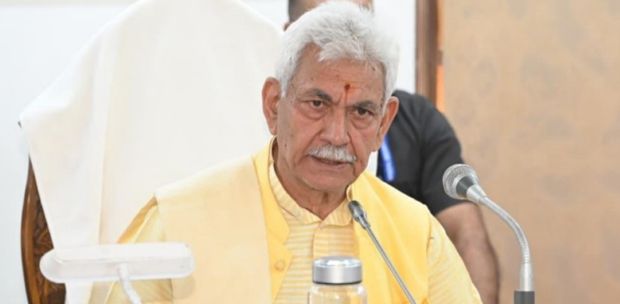
“The transformation in Jammu and Kashmir over the past six years is the result of a sustained commitment to rebuilding trust, enabling citizens to lead lives of their own choosing and restoring the dignity that had long been overshadowed by instability,” the LG Sinha said….”
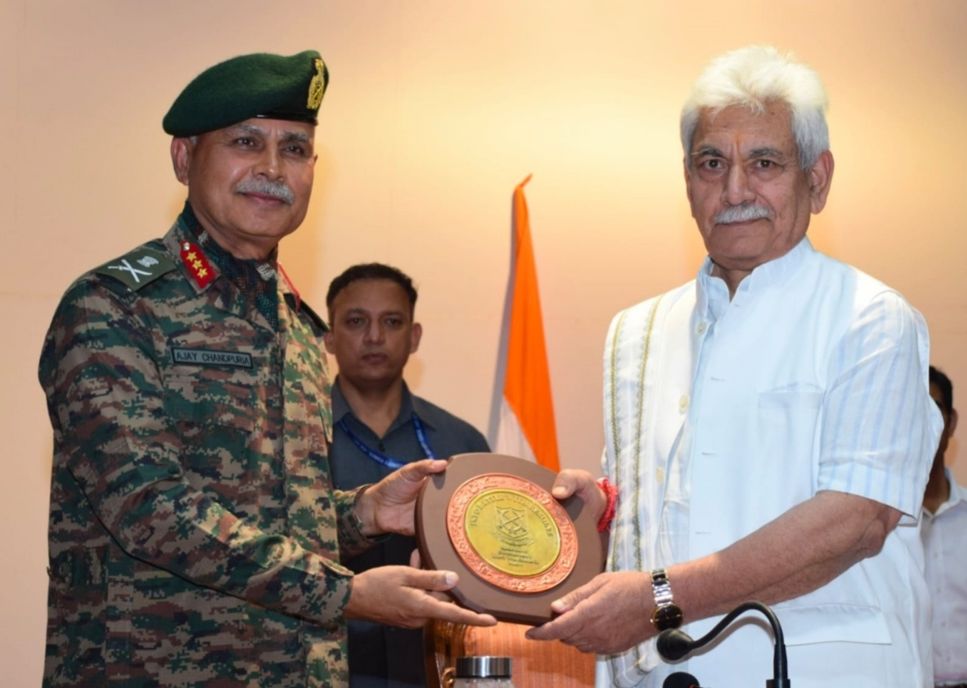 Emphasising that Jammu and Kashmir’s transformation over the past six years has been driven by a sustained commitment to restoring public trust, strengthening governance and taking decisive action against terrorism, Lieutenant Governor Manoj Sinha on Friday said the Union Territory has witnessed a significant shift from an era of instability to one focused on development, dignity and citizen-centric administration. Addressing officers attending the Higher Command Course-55 from the Army War College, Mhow, at Lok Bhavan in Srinagar, the Lieutenant Governor outlined the evolving security landscape and highlighted the importance of adopting a comprehensive “whole-of-government approach” to combat terrorism and emerging security challenges. Interacting with senior military officers and faculty members of the prestigious Army War College, Sinha said modern conflicts are increasingly characterised by hybrid threats and asymmetric warfare, making it imperative for India’s armed forces to remain technologically equipped, strategically agile and operationally prepared. “The transformation in Jammu and Kashmir over the past six years is the result of a sustained commitment to rebuilding trust, enabling citizens to lead lives of their own choosing and restoring the dignity that had long been overshadowed by instability,” the Lieutenant Governor said. He observed that the government’s approach in Jammu and Kashmir has moved beyond merely responding to security challenges and has instead focused on creating conditions where ordinary citizens can live peacefully, access opportunities and participate actively in the region’s development. According to the Lieutenant Governor, governance must not remain confined to administrative offices or headquarters but should reach every household, particularly those living in remote and underserved areas. “I have consistently emphasised that governance cannot be managed from a distance. Effective administration must reach out to every household in the most remote village and serve the most marginalised citizen with unwavering dedication and responsibility,” he said. The Lieutenant Governor said strengthening grassroots governance and ensuring efficient public service delivery have played an important role in rebuilding public confidence across Jammu and Kashmir. He noted that development initiatives, improved infrastructure, better access to welfare schemes and transparent governance mechanisms have collectively contributed to improving the lives of people while reinforcing their faith in democratic institutions.
Changing Nature Of Warfare: Highlighting the rapidly evolving nature of global conflicts, Sinha said conventional military capabilities alone are no longer sufficient to deal with contemporary security threats. “Our forces must be ready to tackle the challenges of asymmetric warfare,” he said, stressing that modern battlefields increasingly involve cyber operations, information warfare, technological disruptions and non-traditional methods employed by adversaries. He underlined that future military preparedness would require greater integration of technology, artificial intelligence and data-driven decision-making alongside conventional military operations. “The strategic value of data analysis and algorithmic precision is as important as conventional kinetic operations today,” he remarked. The Lieutenant Governor said technological advancements are transforming defence planning across the world and called for continuous adaptation to emerging threats. According to him, armed forces must remain ahead of adversaries by embracing innovation, strengthening intelligence capabilities and integrating advanced analytical tools into operational planning.
Whole-Of-Government Approach Against Terror: A significant part of the Lieutenant Governor’s address focused on counter-terrorism efforts in Jammu and Kashmir. He said the government has adopted a comprehensive strategy involving coordinated efforts of multiple agencies to dismantle terrorism and its supporting ecosystem. Sinha described the strategy as a “whole-of-government approach,” under which security agencies, civil administration, intelligence networks and governance institutions work together to eliminate terrorism and prevent its resurgence. He asserted that decisive measures have been taken not only against terrorists operating on the ground but also against those who have sustained the ecosystem that enabled terrorism to survive for decades. “Strong action has been taken with surgical firmness against the terror ecosystem and the conflict entrepreneurs who were working to keep terrorism alive in Jammu and Kashmir,” the Lieutenant Governor said. He observed that dismantling the support structures of terrorism remains essential for ensuring long-term peace and stability in the Union Territory. According to him, the government’s efforts have focused on targeting financial networks, logistical support systems and institutional structures that indirectly facilitated terrorist activities.
Zero Tolerance Policy: Reiterating the government’s zero-tolerance approach towards terrorism, Sinha said firm action has been taken against individuals who had allegedly infiltrated public institutions while working against national interests. “The systematic infiltration of terrorist sympathisers into government machinery over the past 30 years was decisively dismantled, delivering an unambiguous message of zero tolerance to terror,” he said. He added that public resources would no longer be allowed to support those working against the interests of the nation. “Public money will no longer sustain those quietly subverting the nation from within,” he said. The Lieutenant Governor said these measures were aimed at strengthening institutional integrity while ensuring that government systems function solely in the interest of citizens and national security. He maintained that governance and security reforms must go hand in hand to create an environment where peace and development reinforce each other.
Need For Integrated National Security: Speaking on broader geopolitical developments, the Lieutenant Governor said the global strategic environment is undergoing rapid transformation, presenting new challenges for national security. He observed that geopolitical rivalries, technological disruptions and unconventional threats require nations to rethink traditional security frameworks. He stressed the importance of integrated planning involving defence forces, civil administration, intelligence agencies and policymakers. According to him, effective national security in the present era requires seamless coordination between various arms of the government while ensuring timely responses to emerging threats. He also highlighted the importance of institutional resilience and adaptive leadership in managing complex security situations.
Lessons For Senior Military Leadership : The Higher Command Course is among the Indian Army’s premier professional military education programmes, attended by senior officers preparing for higher leadership responsibilities. Addressing the officers, the Lieutenant Governor spoke about the importance of strategic thinking, decisive leadership and close coordination between civil and military institutions. He said officers occupying leadership positions must be capable of understanding not only military dimensions of conflict but also governance, social dynamics and technological transformations influencing modern warfare. He noted that future military leaders would increasingly operate in environments where security challenges overlap with humanitarian concerns, information warfare and developmental issues. He encouraged the officers to adopt a holistic understanding of conflict management while remaining committed to the constitutional values and national interest.
“Strong action has been taken with surgical firmness against the terror ecosystem and the conflict entrepreneurs who were working to keep terrorism alive in Jammu and Kashmir,” the LG Sinha said…..”
Governance, Development: The Lieutenant Governor said the experience of Jammu and Kashmir demonstrates that effective governance and sustained development can significantly contribute to improving the security environment. He observed that expanding infrastructure, improving public services and ensuring inclusive growth have helped strengthen public participation in governance. According to him, citizens today increasingly seek better educational opportunities, employment, healthcare and infrastructure, and responsive governance remains central to addressing these aspirations. He said the administration continues to focus on transparent governance, accountability and efficient implementation of developmental programmes across Jammu and Kashmir. The Lieutenant Governor reiterated that long-term peace can only be sustained when governance remains accessible, responsive and inclusive.
Civil-Military Cooperation: Sinha also acknowledged the continued contribution of the armed forces and security agencies in maintaining peace and stability in Jammu and Kashmir. He said effective cooperation between civil administration and security forces has played a critical role in addressing both security and developmental challenges. He noted that the armed forces have consistently supported civilian authorities during natural disasters, infrastructure development and humanitarian operations in addition to performing their primary security responsibilities. Such cooperation, he observed, reflects the broader objective of ensuring both national security and public welfare.
Senior Officers Present: The interaction was attended by Lieutenant General Ajay Chandpuria, Commandant of the Army War College, along with faculty members of the institution and senior officers from various security forces. The session provided officers participating in the Higher Command Course with an opportunity to gain insights into governance, security management and counter-terrorism strategies being implemented in Jammu and Kashmir. The Lieutenant Governor’s address concluded with a call for continued vigilance, innovation and coordinated action to address future security challenges while sustaining the momentum of peace, stability and development in the Union Territory. His remarks underscored the government’s emphasis on combining robust security measures with inclusive governance, technological preparedness and institutional reforms to secure lasting peace in Jammu and Kashmir.
Kashmir Horizon View: The Lieutenant Governor’s address to officers of the Higher Command Course-55 offers an important perspective on the evolving security and governance framework in Jammu and Kashmir. While significant gains have been made in restoring stability and improving governance over the past several years, sustaining these achievements will require a balanced strategy that combines robust security measures with inclusive development, institutional accountability and public participation. A key priority must remain strengthening the whole-of-government approach to counter-terrorism. Terrorism today extends beyond armed violence, encompassing online radicalisation, financial networks, misinformation campaigns and cross-border influence operations. Enhanced coordination among security agencies, intelligence units, financial enforcement bodies and civil administration will be essential to identify and neutralise emerging threats before they escalate. Equally important is preparing the armed forces and security agencies for the realities of asymmetric and hybrid warfare. Investments in artificial intelligence, cyber security, data analytics, drone technologies and intelligence-driven operations should complement conventional military capabilities. Continuous training, joint exercises and technology integration will improve operational readiness in an increasingly complex security environment. However, long-term peace cannot rest on security interventions alone. Governance must continue to reach the last mile by ensuring timely delivery of public services, transparent administration and responsive institutions. Strengthening Panchayati Raj Institutions, improving grievance redressal systems and enhancing digital governance can further deepen public trust and reinforce democratic participation. Economic opportunities must also remain central to the region’s future. Expanding employment through tourism, horticulture, agriculture, handicrafts, renewable energy and entrepreneurship can reduce socio-economic vulnerabilities and offer meaningful opportunities to the youth. Skill development programmes aligned with emerging industries and technology sectors will help create sustainable livelihoods. Education and community engagement should play a larger role in preventing radicalisation. Schools, colleges, civil society organisations and local leaders can contribute by promoting constitutional values, critical thinking and social cohesion. Encouraging constructive dialogue and community participation will strengthen resilience against divisive narratives. Infrastructure development must continue alongside environmental sustainability. Improved road connectivity, healthcare, education, digital infrastructure and disaster-resilient planning will enhance both quality of life and economic growth, particularly in remote and border areas. Ultimately, the future of Jammu and Kashmir depends on maintaining the delicate balance between security, development and democratic governance. A secure environment, supported by transparent institutions, inclusive economic growth and citizen-centric administration, can create the conditions necessary for lasting peace and prosperity. The continued partnership between civil administration, security forces and local communities will remain the cornerstone of building a stable, resilient and forward-looking Jammu and Kashmir.
(“Team Kashmir Horizon” is committed to continuous improvement and invites feedback and suggestions from readers and its followers on social media sites. Reader insights are considered vital for enhancing content quality and empowering the community. The team encourages open communication and values the thoughts and ideas of its audience, believing that such input will enable them to serve the public more effectively. The initiative aims to ensure that readers have the best possible experience with “Kashmir Horizon”. Interested individuals can reach out to us via email at [email protected].)