“Zojila project has been undertaken at elevations ranging from 2,900 metres to more than 3,300 metres above sea level. Engineers have confronted unstable geology, severe winters, limited working seasons, and logistical difficulties that would be daunting even by global standards.”
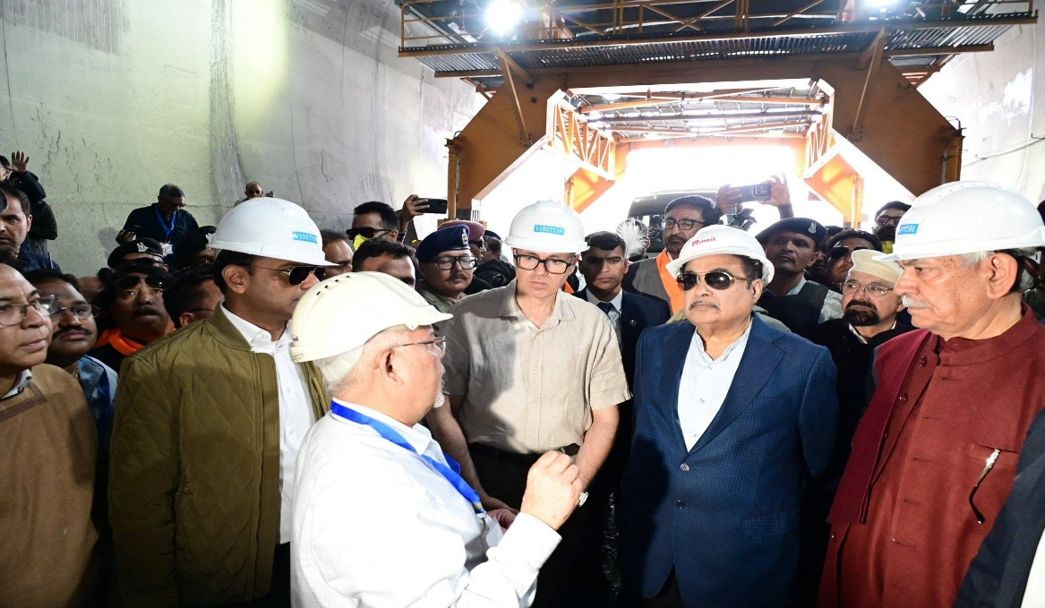
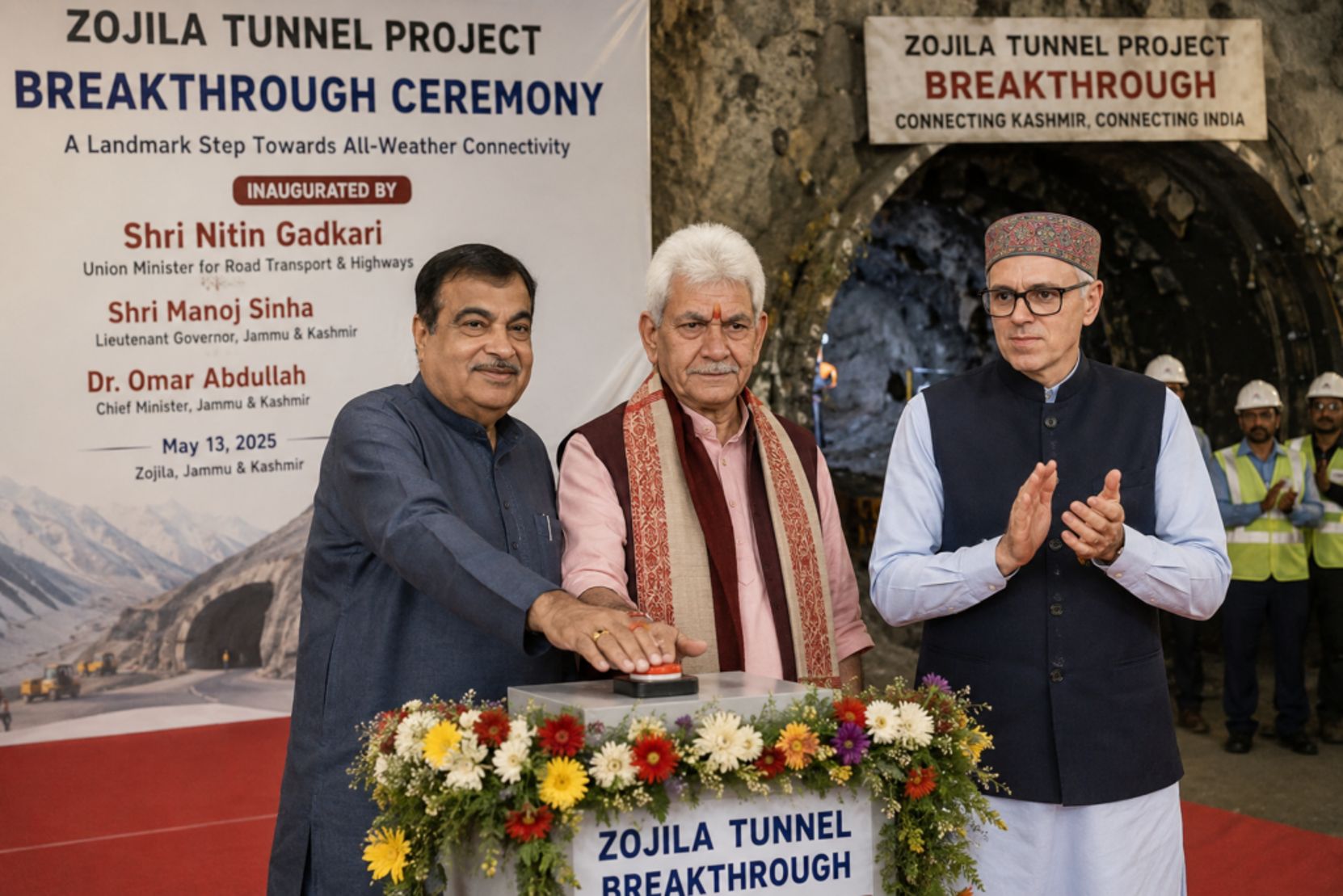
The breakthrough of the Zojila Tunnel this week marks far more than a technical milestone in the construction of a road project. It represents a transformative moment in India’s Himalayan infrastructure strategy, promising to reshape connectivity, economic activity, tourism, and national security across Jammu and Kashmir and Ladakh. When Union Minister for Road Transport and Highways Nitin Gadkari stood at the eastern portal near Minamarg and witnessed the meeting of excavation fronts advancing from opposite ends, he was witnessing the culmination of years of engineering effort under some of the harshest working conditions in the world. For the people of Ladakh, however, the breakthrough symbolized something even more significant—the gradual end of a decades-old cycle of winter isolation.
A Dream Decades In The Making: For generations, the Zojila Pass has been both a gateway and a barrier. Situated on the Srinagar-Leh highway, the pass serves as the only road link connecting Ladakh with the Kashmir Valley and the rest of India. Yet every winter, heavy snowfall, avalanches, and extreme weather force the closure of the route for nearly six months, effectively cutting off Ladakh from the outside world. During these months, supplies have traditionally depended on stockpiling, air transport, and weather-dependent logistical arrangements. Communities in Drass, Kargil, and Ladakh have long faced disruptions in the movement of goods, medical supplies, construction materials, and essential services. The Zojila Tunnel seeks to permanently address this challenge. Once operational, the nearly 14-kilometre bi-directional tunnel will provide uninterrupted connectivity between Sonamarg and Minamarg throughout the year, regardless of snowfall or avalanche threats. The tunnel, built under the aegis of National Highways & Infrastructure Development Corporation Limited, is expected to be completed by February 2028.
Engineering Against the Himalayas: Infrastructure development in the Himalayas is rarely straightforward. The Zojila project has been undertaken at elevations ranging from 2,900 metres to more than 3,300 metres above sea level. Engineers have confronted unstable geology, severe winters, limited working seasons, and logistical difficulties that would be daunting even by global standards. Workers have operated in temperatures dropping well below freezing, while excavation teams navigated varying rock formations and difficult mountain conditions. The breakthrough demonstrates the successful completion of one of the most critical stages of tunnelling—the meeting of excavation drives from opposite ends with engineering precision. The project also showcases how Indian tunnel engineering has evolved significantly over the past decade. From the Chenani-Nashri Tunnel to the Atal Tunnel and now Zojila, India has steadily expanded its capability to execute large-scale underground infrastructure in complex mountain environments. The tunnel will eventually feature advanced ventilation systems, automated fire detection mechanisms, CCTV monitoring, emergency communication facilities, pedestrian escape routes, snow galleries, avalanche protection structures, bridges, culverts, and approach roads designed to ensure operational safety.
Economic Transformation Beyond Connectivity: The most immediate impact of the tunnel will be felt in the economy. Road connectivity forms the foundation of economic integration, particularly in mountainous regions where transportation costs often determine the viability of businesses and livelihoods. At present, the 38-kilometre Sonamarg-Minamarg stretch takes approximately 90 minutes under normal conditions and becomes impassable during winter. The tunnel is expected to reduce travel time to around 45 minutes while eliminating seasonal closures. For businesses in Ladakh and Kargil, this translates into lower transportation costs and more reliable supply chains. Agricultural products, handicrafts, construction materials, fuel, and consumer goods will move with greater efficiency. Reduced disruptions are likely to improve market access for local producers and create opportunities for entrepreneurship. The tunnel’s impact could be particularly significant for Kargil district, which often finds itself geographically and economically constrained due to seasonal road closures. Improved accessibility may encourage investment in sectors such as hospitality, logistics, retail, and agro-processing. Furthermore, year-round connectivity will reduce the economic uncertainty associated with winter isolation, allowing businesses to plan operations with greater confidence.
A Tourism Revolution Waiting To Happen: Tourism may emerge as one of the largest beneficiaries of the project. The Kashmir-Ladakh corridor is among India’s most spectacular tourism routes, traversing breathtaking landscapes from the green meadows of Sonamarg to the rugged mountains of Drass, Kargil, and Ladakh. However, tourism has traditionally been constrained by seasonal accessibility. The tunnel promises to extend tourist seasons, improve travel reliability, and enhance visitor safety. Tour operators will gain greater flexibility in planning itineraries, while tourists may increasingly view Ladakh as a destination accessible beyond the traditional summer window. Winter tourism, in particular, could witness substantial growth. Regions such as Drass and Kargil possess significant potential for adventure tourism, snow-based activities, cultural tourism, and eco-tourism. The project also complements broader efforts to strengthen tourism infrastructure across Jammu and Kashmir and Ladakh, potentially creating thousands of direct and indirect employment opportunities.
Strategic Significance Cannot Be Overstated: While economic and tourism benefits are substantial, the tunnel’s strategic importance remains perhaps its most consequential dimension. Ladakh occupies a highly sensitive geographical position bordering both China and Pakistan. Maintaining reliable logistics and troop mobility in the region has long been a strategic imperative. Historically, winter closures of Zojila have complicated military logistics, requiring extensive planning and resource allocation to maintain operational readiness. The tunnel fundamentally changes this equation. Year-round road access will facilitate the movement of troops, equipment, fuel, and supplies irrespective of weather conditions. Enhanced logistical efficiency strengthens India’s ability to maintain military preparedness in border regions and respond swiftly to contingencies. In recent years, infrastructure development has emerged as a key element of India’s border management strategy. Roads, bridges, tunnels, and airfields are increasingly viewed as force multipliers that improve both civilian development and national security. The Zojila Tunnel fits squarely within this framework.
The Broader Infrastructure Vision : The breakthrough also reflects a wider transformation underway in Jammu and Kashmir’s infrastructure landscape. According to the Ministry of Road Transport and Highways, projects worth approximately ₹1.35 lakh crore are completed, under construction, or planned across the Union Territory. These include major corridors such as:
- Jammu-Udhampur-Srinagar Corridor
- Jammu-Chenani-Anantnag Corridor
- Srinagar-Baramulla-Uri Corridor
- Jammu-Akhnoor-Poonch Corridor
Strategic projects including the Katra-Srinagar High-Speed Corridor, Srinagar-Sonamarg-Gumri road network, and border-area roads are also progressing. Tunnel construction has become central to this vision. Officials note that 25 tunnels have been approved between Jammu and Srinagar alone, with 20 already completed. Nationwide, dozens of tunnels have been completed during the past decade, reflecting a policy shift toward overcoming geographical constraints through engineering solutions. The emphasis is clear: difficult terrain should no longer dictate developmental outcomes.
Political Leadership, Symbolism: The breakthrough ceremony also carried strong political symbolism. Jammu and Kashmir Lieutenant Governor Manoj Sinha described the event as a historic day for both Jammu and Kashmir and Ladakh, emphasizing that connectivity remains the foundation of economic prosperity. Chief Minister Omar Abdullah similarly highlighted the project’s transformative potential for education, healthcare, trade, and tourism. Their remarks underscored a broader consensus that infrastructure development has become a critical driver of regional integration and growth. Both leaders also acknowledged the extraordinary efforts of engineers and workers who persevered through challenging weather and high-altitude conditions to achieve the breakthrough.
Beyond Roads| Social Impact: The tunnel’s significance extends beyond economics and strategy. Improved connectivity directly affects quality of life. Reliable road access can improve healthcare outcomes by enabling faster transportation of patients and medical supplies. Students gain easier access to educational institutions. Families separated by weather-related closures can maintain stronger social connections. Government services become easier to deliver, while emergency response capabilities improve substantially. For residents of remote mountain regions, connectivity is not merely about transportation—it is about opportunity, inclusion, and access. The tunnel could therefore contribute to reducing regional disparities and strengthening integration between distant communities and larger economic centres.
“LG Sinha described the event as a historic day for both Jammu and Kashmir and Ladakh, emphasizing that connectivity remains the foundation of economic prosperity.
CM Omar similarly highlighted the project’s transformative potential for education, healthcare, trade, and tourism,”.
A Remaining Challenge: Despite the celebratory atmosphere surrounding the breakthrough, significant work remains. Tunnel breakthrough marks the completion of excavation but not the completion of the project itself. Engineers must still undertake lining works, installation of safety systems, electrical infrastructure, ventilation equipment, communication networks, drainage systems, and finishing activities. Approach roads and associated infrastructure also require completion. Maintaining timelines in the Himalayan environment remains challenging, particularly given weather uncertainties and technical complexities. The target of February 2028 appears achievable, but continued coordination among contractors, engineers, government agencies, and local stakeholders will be essential. Additionally, infrastructure alone cannot unlock the full developmental potential of the region. Complementary investments in tourism facilities, logistics networks, skill development, healthcare, and digital connectivity will be necessary to maximize benefits.
A Turning Point For Ladakh : Perhaps the most profound significance of the Zojila Tunnel lies in what it represents psychologically. For decades, winter isolation has shaped life in Ladakh. Communities adapted to seasonal disconnection as an unavoidable reality imposed by geography.
The Tunnel Challenges That Reality: It signals a future where weather no longer dictates access, where economic activity can continue throughout the year, and where remote mountain communities become more closely integrated with national growth trajectories. When future generations travel seamlessly between Srinagar and Ladakh during winter months, they may view such connectivity as normal. Yet the breakthrough achieved this week serves as a reminder of the immense effort required to make that future possible. The Zojila Tunnel is therefore not merely a transportation project. It is an engineering statement, a strategic asset, an economic catalyst, and a symbol of India’s determination to overcome one of the Himalayas’ most formidable barriers. For Jammu and Kashmir and Ladakh, the breakthrough marks the beginning of a new chapter—one in which geography becomes less of a constraint and more of an opportunity.
Kashmir Horizon View: The breakthrough of the Zojila Tunnel marks a defining moment in the history of infrastructure development in the Himalayas and represents a significant step towards transforming the socio-economic landscape of Jammu and Kashmir and Ladakh. While the project is still under construction and several phases remain before it becomes operational, the successful meeting of the excavation fronts symbolizes the overcoming of one of the most formidable engineering challenges in the region. For decades, the Zojila Pass has been synonymous with seasonal isolation, cutting off Ladakh from the rest of the country for nearly half the year. The tunnel promises to fundamentally alter this reality by providing a reliable, all-weather route through one of the most challenging mountain corridors in the world. In doing so, it is expected to strengthen connectivity, reduce travel time, improve safety, and ensure uninterrupted movement of people and goods throughout the year. The project’s significance extends far beyond transportation. Improved connectivity is likely to stimulate tourism, facilitate trade, reduce logistical costs, and create new economic opportunities for communities across Sonamarg, Drass, Kargil, and Ladakh. Better access to healthcare, education, markets, and government services could enhance the quality of life for thousands of residents living in remote and mountainous areas. The tunnel also has the potential to encourage investment and support long-term regional development by integrating these regions more closely with national economic networks. Equally important is the tunnel’s strategic value. As Ladakh occupies a sensitive position along India’s northern borders, year-round road connectivity will strengthen logistical capabilities and support faster movement of personnel, equipment, and supplies. In this context, the Zojila Tunnel serves not only as a developmental project but also as a critical component of India’s broader infrastructure and security strategy. The breakthrough also reflects the growing confidence and capability of Indian engineering in executing complex projects under extreme geographical and climatic conditions. It stands as a tribute to the thousands of engineers, technicians, and workers who endured harsh winters, high altitudes, and difficult terrain to turn a long-held vision into reality. As the project moves toward its targeted completion in 2028, expectations among the people of Jammu and Kashmir and Ladakh remain high. The Zojila Tunnel will not merely connect two regions separated by mountains; it will connect communities to new opportunities, strengthen national integration, and help unlock the immense economic and strategic potential of India’s Himalayan frontier. In many ways, the tunnel is more than a passage through rock, it is a gateway to a more connected and prosperous future.
(“Team Kashmir Horizon” is committed to continuous improvement and invites feedback and suggestions from readers and its followers on social media sites. Reader insights are considered vital for enhancing content quality and empowering the community. The team encourages open communication and values the thoughts and ideas of its audience, believing that such input will enable them to serve the public more effectively. The initiative aims to ensure that readers have the best possible experience with “Kashmir Horizon”. Interested individuals can reach out to us via email at [email protected].)