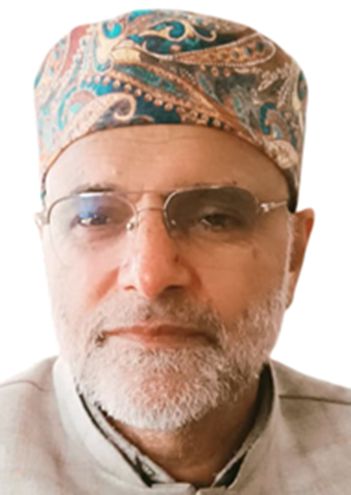
Prof. Hamid Naseem Rafiabadi
One of the recurring debates in contemporary Muslim intellectual discourse concerns the status of religious and worldly knowledge. Questions are often raised regarding whether Islamic sciences are superior to modern disciplines, whether medicine, engineering, economics, and technology fall within the sphere of Islamic learning, and whether all forms of knowledge enjoy the same status in Islam. The confusion is further compounded by the widespread use of the term “knowledge” for every form of learning without recognizing the distinctions carefully developed by classical Muslim scholars. As a result, some people reduce all knowledge to one category and argue that there is no difference between the study of Qur’an and Hadith and the study of medicine or engineering. Others move to the opposite extreme and assume that worldly sciences possess little or no religious value.
Both approaches fail to represent the balanced position of Islam. Islam is a religion that places extraordinary emphasis on knowledge. The first revelation began with the command “Read,” and the Qur’an repeatedly praises those who possess knowledge. The Prophet Muhammad (SAW) described scholars as the heirs of the Prophets and declared the pursuit of knowledge to be an obligation upon every Muslim. However, the fundamental question remains: what kind of knowledge is being praised in these texts? Is every discipline equal in rank and purpose, or does Islam establish a hierarchy among different forms of learning? To answer this question, it is necessary to understand the distinction between the concepts of ʿilm and fann.
In contemporary usage, both are often translated simply as “knowledge,” but classical Muslim scholarship differentiated between them. The term ʿilm in its highest and most original sense referred to knowledge that guides human beings to Allah, enables them to understand revelation, and teaches them how to fulfill their obligations toward their Creator. This includes the sciences of the Qur’an, Hadith, Fiqh, Aqidah, Usul al-Fiqh, Arabic language as the vehicle of revelation, and the various branches of Islamic scholarship that derive from divine guidance. These sciences are often called ʿUlum al-Nubuwwah (the Sciences of Prophethood) because their ultimate source is revelation transmitted through the Prophets. When the Qur’an says, “Only those among His servants who possess knowledge truly fear Allah” (35:28), the knowledge being referred to is not merely technical expertise or information. Rather, it is knowledge that produces reverence for Allah, strengthens faith, and transforms human conduct. Similarly, when the Prophet ﷺ spoke of the virtues of knowledge and scholars, the primary reference was to the knowledge that leads people toward guidance and salvation. This explains why classical Muslim scholars often regarded religious knowledge as the noblest of all sciences, for it concerns humanity’s relationship with its Creator and its eternal destiny.
Alongside ʿilm, Muslim scholars employed another term: fann (plural: funun), meaning art, discipline, skill, craft, or technical specialization. Disciplines such as medicine, engineering, architecture, agriculture, commerce, mathematics, astronomy, economics, information technology, and military sciences generally fall within this category. These disciplines are essential for the functioning of human society and have been highly valued throughout Islamic civilization. However, they differ from revealed knowledge in their source, objective, and function. They are primarily acquired through human observation, experimentation, and intellectual effort rather than through revelation. Their principal aim is to organize and improve worldly life rather than to provide direct guidance concerning faith, worship, morality, and salvation. This distinction does not imply hostility between religion and worldly sciences. Nor does it suggest that worldly disciplines are unimportant. Rather, it establishes conceptual clarity. Religious knowledge addresses ultimate questions: Who created us? Why are we here? What is right and wrong? What happens after death? How can we attain salvation? Worldly sciences address practical questions: How can diseases be treated?
How can buildings be constructed safely? How can economies function efficiently? How can communication and transportation be improved? Both are valuable, but they serve different purposes. Islam therefore establishes a hierarchy of knowledge rather than a conflict between forms of knowledge. At the summit stands the knowledge of Allah, revelation, faith, worship, and moral guidance because it determines the purpose of human existence and the path to eternal success. Below it stand the various sciences and skills that facilitate human welfare in this world. The distinction is not between valuable and worthless knowledge but between ends and means.
Religious knowledge provides purpose, direction, and moral guidance, while worldly sciences provide the tools necessary to implement those purposes within society. A proper understanding of this hierarchy requires examining the concepts of Farḍ al-ʿAyn and Farḍ al-Kifāyah. In Islamic jurisprudence, obligations are divided into those that every individual must personally fulfill and those that must be fulfilled collectively by the Muslim community. Farḍ al-ʿAyn refers to obligations binding upon every Muslim. In the sphere of knowledge, this includes everything necessary for a person to fulfill his or her religious duties correctly. Every Muslim must know the basic tenets of faith, the rules of purification, prayer, fasting, zakah, and the principles governing lawful and unlawful conduct. A merchant must know the rules of commerce, a husband and wife must know the laws governing marriage, and every believer must possess sufficient knowledge to worship Allah correctly. This is the knowledge intended by the famous prophetic statement, “Seeking knowledge is obligatory upon every Muslim.” The scholars unanimously agreed that the hadith does not require every Muslim to become a jurist, theologian, or hadith specialist. Rather, it obligates each person to learn whatever is necessary for fulfilling his or her religious responsibilities.
“Islam views religious and worldly knowledge as complementary rather than conflicting. While religious knowledge holds a higher rank by providing moral direction and eternal purpose, worldly sciences are practically indispensable for fulfilling human responsibilities on Earth. The ultimate Islamic ideal is a balanced civilization where divine guidance illuminates human expertise, and all beneficial knowledge serves to worship Allah and benefit humanity.”
Beyond this individual obligation lies the sphere of Farḍ al-Kifāyah, the collective obligations of the Muslim community. Certain sciences and professions are required for the welfare and survival of society. If a sufficient number of people undertake them, the obligation is lifted from the rest. However, if no one fulfills them, the entire community bears responsibility. Advanced Islamic sciences such as Tafsir, Hadith, Fiqh, Fatwa, judiciary, and scholarly research belong to this category. Every Muslim is not required to become a mufti or a scholar, but the community must produce scholars capable of preserving and interpreting the religion.
Interestingly, many worldly sciences also fall under Farḍ al-Kifāyah. Medicine is a collective obligation because communities require physicians. Engineering is a collective obligation because societies require infrastructure and technology. Agriculture is a collective obligation because people require food. Military sciences, economics, administration, education, and numerous other disciplines are similarly necessary for communal well-being. If a Muslim society neglects these fields entirely, it becomes blameworthy before Allah because it has failed to fulfill its collective responsibilities.
This point is crucial because it corrects a widespread misunderstanding. Some people assume that because medicine, engineering, and similar fields are Farḍ al-Kifāyah, they must therefore possess exactly the same rank as religious sciences. Others assume that because religious sciences are superior in rank, worldly sciences possess little value. Both conclusions are mistaken. The correct position is that religious sciences and worldly sciences may both be obligatory, but their obligations arise from different considerations. Religious sciences preserve faith, while worldly sciences preserve worldly welfare. The objectives of Shari’ah include the preservation of religion, life, intellect, lineage, and property. Different sciences contribute to the realization of these objectives in different ways. The reason religious knowledge retains a unique status is that it originates from revelation and addresses humanity’s ultimate concerns. Medicine may preserve physical life, but it cannot explain the purpose of life. Engineering may build cities, but it cannot determine the moral principles by which those cities should be governed.
Economics may increase prosperity, but it cannot define justice independent of ethical guidance. Worldly sciences excel in explaining how things function, but revelation explains why human beings exist and how they ought to live. This is why classical Muslim scholars consistently regarded the sciences of revelation as superior in rank while simultaneously recognizing the necessity of worldly disciplines. Islamic civilization itself provides the best evidence of this balanced approach. Historically, Muslims did not separate religion from worldly knowledge. Many great physicians, mathematicians, astronomers, and scientists were deeply grounded in Islamic learning. Likewise, many jurists and scholars were engaged in commerce, agriculture, administration, and public affairs. The Islamic worldview did not divide existence into isolated sacred and secular realms. Rather, all beneficial activities were understood within the broader framework of worship and service to Allah.
A physician healing the sick could earn divine reward. An engineer constructing beneficial infrastructure could earn divine reward. A teacher educating children could earn divine reward. However, these activities derived their ethical direction and ultimate purpose from religious guidance.
The ideal Islamic model is therefore not competition between religious and worldly knowledge but integration between them. Religious scholars require scientifically literate societies capable of meeting human needs, while scientists and professionals require ethical and spiritual guidance to ensure that their expertise serves beneficial ends. The scholar provides vision and moral direction, while the professional provides implementation and practical solutions. One explains what ought to be done; the other often explains how it can be done. Civilization flourishes when both work together in harmony.
The confusion surrounding religious and worldly knowledge can thus be resolved through a few fundamental principles.
Not all knowledge is identical in purpose or rank. Islam distinguishes between revealed knowledge (ʿilm) and acquired technical disciplines (funun). Religious knowledge possesses a unique and superior status because it originates from revelation and guides humanity toward Allah and eternal salvation. At the same time, worldly sciences are not insignificant; many are indispensable and constitute Farḍ al-Kifāyah. Every Muslim must acquire sufficient religious knowledge to fulfill personal obligations, while the Muslim community must collectively produce scholars, physicians, engineers, scientists, economists, educators, and administrators. The ideal Muslim society does not choose between religious and worldly knowledge but combines both within a framework guided by revelation.
The final verdict of Islam is therefore not the glorification of worldly sciences at the expense of religious knowledge nor the neglect of worldly sciences in the name of religion. Religious knowledge remains superior in rank because it concerns humanity’s relationship with Allah and its eternal destiny. Worldly sciences remain indispensable in function because they enable human beings to fulfill their responsibilities on earth. One provides purpose, meaning, and moral direction; the other provides tools, methods, and practical solutions. The highest Islamic ideal is not the scholar who knows nothing of the world, nor the professional who knows nothing of religion. Rather, it is a civilization in which revealed guidance illuminates human expertise, where scholars and specialists work together, and where all beneficial knowledge ultimately serves the worship of Allah, the welfare of humanity, and the realization of the divine purpose for which mankind was created.
(The author a veteran academician is a former Professor and Head Department of Islamic Studies, Kashmir University. The views, opinions and conclusions expressed in this article are those of the author and aren’t necessarily in accord with the views of “Kashmir Horizon”)