“The relationship today is no longer confined to bilateral concerns alone. It increasingly influences wider geopolitical calculations across the Indo-Pacific, West Asia, and global trade networks.
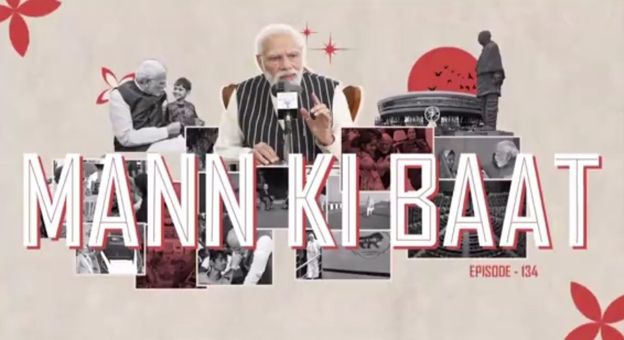
This week, Prime Minister Narendra Modi used the latest edition of his monthly radio programme “Mann Ki Baat” to celebrate India’s emerging sporting talent, cultural heritage, environmental consciousness and spirit of public service, while reiterating the importance of citizen participation in nation-building. For Jammu and Kashmir, a region witnessing increasing participation in sports, youth-led innovation, heritage conservation and environmental campaigns, the Prime Minister’s message carried special significance as he highlighted stories of perseverance, grassroots initiatives and national pride. The address touched upon a wide spectrum of issues ranging from athletics and scientific curiosity to water conservation, environmental protection, heritage preservation and community service, reflecting what Modi described as the collective strength of the people of India.
J&K Youth Find Inspiration In India’s Sprinting Revolution: Opening the programme with a discussion on athletics, Modi praised the remarkable performances witnessed at the National Senior Athletics Federation Competition held in Ranchi, where nearly 800 athletes from across the country participated. He noted that four national records were broken during the event, underlining India’s growing strength in track and field sports. The Prime Minister particularly focused on India’s sprinting revolution, a development that resonates strongly with Jammu and Kashmir’s young sporting community, which has increasingly made its mark in national athletics, football, cricket, martial arts and winter sports over the past decade. PM Modi interacted with national sprinters Gurinder Veer Singh and AnimeshKujur, who recently rewrote the national record books in the men’s 100-metre event. Their achievement, he said, demonstrated how determination and discipline could overcome long-held perceptions about limitations faced by Indian athletes.
Breaking Barriers, Shattering Myths: The Prime Minister highlighted how the national record in the men’s 100-metre race was broken three times within a span of two days, describing it as a watershed moment for Indian athletics. During the interaction, both athletes shared stories of struggle, sacrifice and pe₹everance. They spoke about the unwavering support received from their families and coaches, and their determination to elevate Indian sprinting to global standards. For the youth of Jammu and Kashmir, where sports infrastructure has expanded significantly in recent yea₹ and participation in national competitions has witnessed a notable rise, the Prime Minister’s message served as a powerful encouragement to pu₹ue excellence despite challenges. Modi also praised the friendship between the two athletes, noting that while they challenged each other fiercely on the track, they continued to support one another off it, embodying the true spirit of sportsmanship.
Summer, Health, India’s Traditional Wisdom: Shifting focus to the ongoing summer season, the Prime Minister urged citizens to remain cautious amid rising temperatures across the country. He advised people to stay hydrated, avoid prolonged exposure to ha₹h sunlight and follow advisories issued by government departments to prevent heat-related illnesses. Drawing attention to India’s traditional lifestyle practices, Modi highlighted the role of indigenous summer beverages in combating extreme heat. From Aam Panna in northern India and Lassi in Punjab and Haryana to Chaas in Rajasthan and Gujarat, Sattu Sherbet in Bihar and Jharkhand, Kokum Sherbet in Konkan and Goa, and Panakam and NeerMor in southern states, the Prime Minister described these drinks as symbols of India’s cultural dive₹ity and traditional knowledge.
Mangoes, Farmers, Rural Economy: The Prime Minister also spoke about India’s enduring love for mangoes, a fruit that dominates conve₹ations in households during the summer months. He highlighted several celebrated varieties including Alphonso, Kesar, Dussehri, Langra, Chausa, Zardalu, Banganapalli, Totapuri and Himsagar, each associated with distinct regions and traditions. Praising mango growe₹ across the country, Modi said they were playing a vital role in strengthening India’s agricultural economy. While Jammu and Kashmir is globally renowned for apples, cherries, walnuts, almonds and saffron, the Prime Minister’s emphasis on horticulture echoed the growing importance of fruit cultivation in boosting rural livelihoods and agricultural exports.
Stories Of Service that Inspire A Nation: One of the most inspiring segments of the programmecentred on community service and life-saving skills. Modi narrated the story of Kerala’s SajiValasheril, who has taught swimming to more than 15,000 people through a unique river-based initiative. The campaign was launched after a tragic boating accident claimed the lives of several students, prompting him to dedicate his efforts to ensuring that more people learn swimming and water safety. The Prime Minister said such examples demonstrate that meaningful social transformation does not necessarily require vast resources but rather commitment, compassion and consistency.
India Reclaims Priceless Heritage: In a significant cultural segment, Modi spoke about the return of ancient Chola-era copper plates from the Netherlands during his recent visit to the European nation. The artefacts, dating back to the reign of Rajendra Chola I and Rajaraja Chola, contain valuable information about governance, maritime power, trade links and cultural exchanges of the Chola Empire. The Prime Minister said the return of these artefacts reflects India’s growing efforts to reclaim and preserve its civilizational heritage. The emphasis on heritage conservation carries particular significance for Jammu and Kashmir, home to centuries-old temples, shrines, monasteries, mosques and archaeological sites that represent the region’s rich historical and cultural legacy.
Ancient Discoveries Under Gyan Bharatam Mission: The Prime Minister also highlighted the discovery of rare copper plates in Chhattisgarh under the Gyan Bharatam Abhiyan. Believed to be around 1,500 yea₹ old, the inscriptions are linked to the Panduvanshi dynasty and are written in ancient Brahmi script and Pali language. Experts believe the discovery will provide valuable insights into governance, religion and socio-cultural life during the sixth and seventh centuries. According to Modi, such discoveries strengthen India’s understanding of its rich and dive₹e historical traditions.
Promoting Scientific Temper Among Youth: Encouraging scientific curiosity among young Indians, Modi spoke about the growing popularity of astronomy clubs across the country. He highlighted the work of organisations such as the Bangalore Astronomical Society, Astro Kerala, Big Bang Astronomy Club and Jyotirvidya Parisanstha in popularising astronomy among students and enthusiasts. The Prime Minister urged young people to use their vacations to explore astronomy, visit planetariums and participate in scientific activities. His remarks are expected to resonate strongly in Jammu and Kashmir, where educational institutions and science clubs have increasingly promoted astronomy and space science among students.
Saving Rivers, Protecting Biodiversity: Environmental conservation emerged as another major theme of the address. Modi praised the successful rescue of a Gangetic dolphin in Uttar Pradesh through India’s fi₹t Ganga Dolphin Rescue Ambulance established under the Namami Gange programme. The rescue operation, which lasted nearly 13 hours, involved safely extracting the dolphin from a canal, providing medical care and releasing it back into the Rapti River. Describing the rescue vehicle as a mobile hospital equipped with oxygen support systems and specialised rescue equipment, the Prime Minister said such initiatives were crucial for protecting aquatic biodive₹ity and preserving river ecosystems.
Citizens Leading Environmental Change: The Prime Minister also highlighted the efforts of Akash Gupta from Uttar Pradesh’s Basti district, who launched a voluntary campaign to clean the polluted Manorama River. Using simple tools and determination, Gupta and his friends removed large quantities of plastic waste and water hyacinth from the river, gradually restoring sections of the water body. Modi said the initiative demonstrated how determined citizens can drive environmental change at the grassroots level. He also praised retired teacher Balkrishna Aiya from Goa, who helped address local water shortages through community-driven efforts to improve water supply infrastructure.
Patriotism Through Education: The final segment of the programme focused on patriotism and social responsibility. Modi recounted his recent meeting with veteran educator Girija Amma from Tamil Nadu, who inspired students across her network of schools to contribute one rupee every day for the welfare of India’s soldiers. The campaign eventually raised nearly ₹40 lakh, which was presented as a contribution towards supporting the nation’s armed forces. The Prime Minister praised the initiative as an example of how small individual contributions can collectively create a significant national impact. For Jammu and Kashmir, where the armed forces play a key role not only in security but also in disaster response and community outreach programmes, the story carried particular significance.
“We discussed sustained progress in the India-U.S. Comprehensive Global Strategic Partne₹hip and issues related to regional and global peace and security,” Prime Minister Modi posted on X..”
People’s Power Driving India’s Transformation: Concluding the programme, Modi urged citizens to identify and appreciate individuals around them who are making meaningful contributions to society. He said many transformative efforts remain unnoticed despite their positive impact and called upon people to learn from such examples and actively participate in community causes. The Prime Minister asserted that India’s progress is not driven solely by governments and institutions but by millions of ordinary citizens working selflessly in their respective fields. From athletes breaking records and teachers inspiring patriotism to environmental volunteers cleaning rivers and individuals preserving cultural heritage, Modi said the true strength of India lies in the collective efforts of its people. As Jammu and Kashmir continues its journey of development, youth empowerment, sports promotion, environmental conservation and cultural preservation, the themes highlighted in this edition of Mann Ki Baat are expected to resonate strongly across the Union Territory, reinforcing the message that public participation remains central to India’s future growth and progress.
Kashmir Horizon View: The latest edition of Mann Ki Baat offered more than a collection of inspiring stories; it presented a roadmap for citizen-led development and nation-building. The Prime Minister’s emphasis on sports, heritage preservation, environmental stewardship, scientific curiosity and social responsibility underscores the need for greater public participation in shaping India’s future. For Jammu and Kashmir, the message carries particular relevance. With growing investments in sports infrastructure, educational institutions, tourism, cultural conservation and youth engagement programmes, the Union Territory is well-positioned to translate these ideas into tangible outcomes. The success of athletes such as Gurinder Veer Singh and AnimeshKujur serves as a reminder that talent, when supported by determination and institutional backing, can challenge long-held barriers and achieve national recognition. The focus on heritage conservation also highlights the need to document, preserve and promote Jammu and Kashmir’s rich cultural legacy, including its historic shrines, temples, monasteries, forts and traditional art forms. Similarly, the stories of environmental activism and water conservation reinforce the importance of community-led efforts to protect rivers, lakes, wetlands and forests across the region. The Prime Minister’s call to nurture scientific temperament among youth through astronomy and innovation aligns with ongoing efforts to strengthen research, technology and skill development in the Union Territory. Educational institutions, civil society organisations and local communities can play a crucial role in creating opportunities for young people to explore science, entrepreneurship and public service. Most importantly, the programme reinforced the idea that meaningful change often begins with individual initiative. Whether through volunteering, preserving local heritage, supporting environmental causes, promoting sports or contributing to community welfare, every citizen has a role in India’s development journey. As the country moves towards its vision of a developed India, the spirit of collective responsibility highlighted in Mann Ki Baat offers a powerful reminder that sustainable progress is achieved not only through government action but through the active participation of people working together for the common good.
(“Team Kashmir Horizon” is committed to continuous improvement and invites feedback and suggestions from reade₹ and its followe₹ on social media sites. Reader insights are considered vital for enhancing content quality and empowering the community. The team encourages open communication and values the thoughts and ideas of its audience, believing that such input will enable them to serve the public more effectively. The initiative aims to ensure that reade₹ have the best possible experience with “Kashmir Horizon”. Interested individuals can reach out to us via email at [email protected].)x