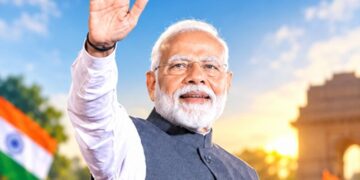
“World is excited about India’s youth and technological progress, with global leaders and companies keen to partner in the country’s growth journey. Addressing the Rozgar Mela. India’s rising strength in semiconductors, AI, and advanced technologies is creating new opportunities for youth,” PM Modi.
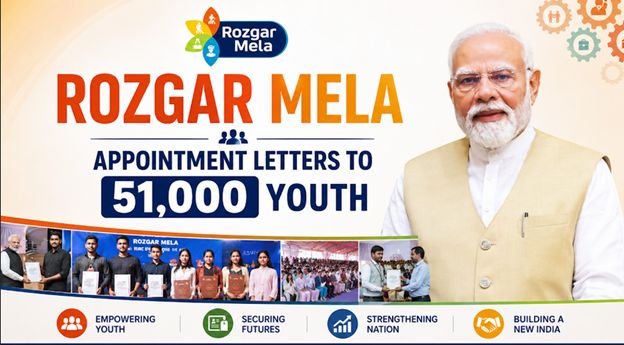
Prime Minister Narendra Modi on Saturday projected a strong and optimistic vision of India’s future, asserting that the world today is highly enthusiastic about the country’s youth power, technological progress, and rapidly expanding economic capabilities. Addressing the 19th edition of the Rozgar Mela after returning from a five-nation diplomatic tour, the Prime Minister said global leaders, investors, and major corporations increasingly view India as a trusted partner in innovation, manufacturing, and next-generation technologies. The remarks came during the distribution of more than 51,000 appointment letters to newly recruited youth across various government departments. However, the significance of Modi’s address extended far beyond a recruitment drive. His speech reflected the government’s broader narrative that India is entering a defining phase of economic transformation driven by technology, industrial growth, global partnerships, and the immense potential of its young population. The Prime Minister said his recent interactions with world leaders and heads of global corporations revealed a common sentiment — growing excitement and confidence about India’s rise as a major economic and technological power. According to Modi, the world no longer sees India merely as a large consumer market but increasingly as a nation capable of leading innovation, manufacturing at scale, and contributing significantly to the future global economy.
India’s Growing Global Standing: India’s international profile has witnessed a remarkable rise over the last decade. Rapid economic growth, expanding digital infrastructure, strong diplomatic engagement, and policy reforms have significantly enhanced the country’s strategic and economic importance. The Prime Minister emphasised that nations around the world are eager to become partners in India’s development journey. This shift in perception reflects how India is emerging as one of the most influential growth centres in the global economy at a time when countries are seeking reliable and resilient economic partners. Global economic realignments, supply chain diversification, and technological competition among major powers have further strengthened India’s position. As companies look to reduce dependence on limited manufacturing destinations, India is increasingly being viewed as a stable, scalable, and innovation-driven alternative. The country’s democratic institutions, expanding infrastructure, growing middle class, and vast domestic market have collectively strengthened investor confidence. India’s rise in sectors such as digital technology, pharmaceuticals, renewable energy, electronics manufacturing, and startups has further reinforced its image as a future-ready economy.
Youth Power Driving India’s Transformation: One of the central themes of Modi’s speech was the transformative role of India’s youth. With one of the world’s youngest populations, India possesses a demographic advantage that few nations currently enjoy. More than 65 per cent of India’s population is below the age of 35, creating enormous opportunities for economic growth, innovation, and productivity. The Prime Minister stated that India’s youth are now becoming the driving force behind the country’s rise in sectors ranging from artificial intelligence and semiconductors to renewable energy and advanced manufacturing. He said the world’s excitement about India is directly linked to the confidence global industries and governments have in the talent and capabilities of Indian youth. Government programmes focused on skill development, digital literacy, entrepreneurship, startup promotion, and innovation have played a major role in preparing young Indians for emerging industries. India’s startup ecosystem has already become one of the largest in the world, with thousands of technology-driven enterprises contributing to innovation, employment generation, and global competitiveness. Young Indian entrepreneurs are increasingly building solutions in fintech, healthcare, artificial intelligence, education technology, and clean energy. This growing innovation culture has enhanced India’s reputation as a hub of talent, creativity, and technological capability. The Prime Minister said that as India expands its global partnerships, young Indians will gain greater exposure to international expertise, advanced technologies, and new opportunities in global markets.
India’s Digital Revolution Inspiring World: India’s remarkable digital transformation has become one of the strongest pillars of the country’s global image. Over the past decade, India has built one of the world’s largest digital public infrastructures through initiatives aimed at financial inclusion, governance reform, and technology-driven public services. The rapid rise of digital payment systems, particularly the Unified Payments Interface (UPI), has attracted global recognition for demonstrating how technology can empower millions of people efficiently and transparently. India’s digital governance platforms have significantly improved service delivery while strengthening transparency and accountability. The Prime Minister highlighted how India’s achievements in digital technology are now inspiring countries across the world. Several nations are exploring partnerships with India in areas such as digital payments, fintech innovation, artificial intelligence, cybersecurity, and e-governance. India’s ability to combine innovation with scale has become one of its biggest strengths. Unlike many countries where technology adoption remains limited to urban centres, India has successfully expanded digital services across rural and semi-urban areas, creating one of the largest digitally connected populations globally. This digital revolution has also become a major driver of employment, entrepreneurship, and economic participation. From small businesses and startups to students and professionals, millions of Indians are benefiting from expanding digital access and technology-based opportunities.
Semiconductor Push Marks Historic Industrial Shift: A major focus of Modi’s speech was India’s rapidly growing semiconductor mission. The Prime Minister announced that a complete semiconductor supply chain is being established in the country and asserted that 10 major semiconductor units from India would soon make a global mark. Semiconductors are among the world’s most strategically important industries because they power nearly every modern technology, including smartphones, computers, automobiles, defence systems, telecommunications, and artificial intelligence tools. The global shortage of semiconductors during the pandemic highlighted the importance of secure and diversified chip manufacturing ecosystems. India’s entry into semiconductor manufacturing represents a historic industrial transformation. The government has introduced policy incentives, infrastructure support, and investment schemes aimed at attracting global semiconductor companies and creating a robust domestic ecosystem. The Prime Minister referred specifically to the agreement between Dutch semiconductor equipment company ASML and India’s Tata Group. This partnership is seen as a major milestone because ASML is globally recognised for producing advanced chip-making equipment essential for semiconductor fabrication. Such collaborations are expected to strengthen India’s manufacturing ecosystem while generating high-skilled employment opportunities in engineering, electronics, design, logistics, and research. Experts believe the semiconductor sector could become one of the key pillars of India’s future industrial growth. The government also sees semiconductor manufacturing as critical for strengthening India’s technological sovereignty and reducing dependence on imports in strategic sectors.
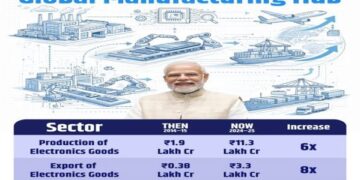
“India is rapidly emerging as a global technology and manufacturing hub, with a complete semiconductor supply chain being developed in the country. He added that investments in clean energy, shipbuilding, aviation, and sustainable manufacturing are generating large-scale employment and strengthening India’s global position.”
Global Technology Partnerships Expanding Opportunities:
The Prime Minister also highlighted India’s growing collaborations with countries such as Sweden, Norway, Italy, and the UAE in sectors including artificial intelligence, supercomputing, clean technology, and sustainable manufacturing. These partnerships are expected to provide Indian industries and professionals with access to advanced technologies, research capabilities, and global markets. Modi said international cooperation in emerging sectors will strengthen India’s technological capabilities while creating new employment opportunities for youth. India’s strategic partnerships in technology and innovation are also contributing to stronger diplomatic and economic ties with major global economies. As the world moves towards digitalisation, automation, and clean energy transitions, India is positioning itself as a reliable and future-oriented partner. The Prime Minister stressed that global partnerships are not merely limited to investments but are helping create ecosystems of innovation, research, manufacturing, and knowledge exchange.
Green Economy Creating Future Opportunities: Another major highlight of Modi’s address was India’s rapid progress in clean energy and sustainable industries. The Prime Minister said sectors related to green hydrogen, clean energy, sustainable manufacturing, and critical minerals are witnessing unprecedented growth and opening doors to vast opportunities in the new economy. India has emerged as one of the world’s fastest-growing renewable energy markets, with massive investments being made in solar power, wind energy, electric mobility, battery technology, and green hydrogen. Green hydrogen is being viewed as one of the most transformative sectors for the future global economy. It has the potential to reduce carbon emissions, strengthen energy security, and create large-scale industrial opportunities. India’s efforts to become a major producer and exporter of green hydrogen are expected to strengthen its position in the global clean energy transition. The Prime Minister highlighted that partnerships with European nations and Gulf countries are helping India accelerate its transition towards sustainable growth. These collaborations are expected to support research, manufacturing, technology transfer, and skill development in green industries. The expansion of renewable energy and sustainable manufacturing sectors is also creating significant employment opportunities for engineers, technicians, researchers, and entrepreneurs across the country.
Maritime , Aviation Sectors Set For Expansion: The Prime Minister also underlined the government’s focus on strengthening India’s maritime and aviation infrastructure. Modi announced that nearly Rs 75,000 crore is being invested in developing India’s shipbuilding, refitting, and overhaul ecosystem. India’s strategic location along major global trade routes gives the maritime sector enormous potential for growth. Investments in shipbuilding and port infrastructure are expected to strengthen trade, logistics, manufacturing, and employment generation. Similarly, the government’s efforts to establish a domestic Maintenance, Repair, and Overhaul (MRO) ecosystem for aviation are aimed at transforming India into a regional aviation hub. As India’s aviation sector expands rapidly, the development of local MRO facilities will reduce dependence on overseas maintenance services while creating skilled technical jobs. The Prime Minister said these initiatives reflect the government’s broader strategy of developing advanced industrial capabilities within the country and creating opportunities for Indian youth in high-growth sectors.
Rozgar Mela Reflects Focus On Employment, Inclusion: The distribution of more than 51,000 appointment letters during the Rozgar Mela reflected the government’s continued emphasis on employment generation and youth empowerment. The appointments span sectors such as railways, banking, defence, health, and education, all of which play a crucial role in strengthening public service delivery and national development. The Prime Minister said the newly recruited employees would become responsible partners in India’s journey towards becoming a developed nation by 2047. He added that the youth will play a decisive role in fulfilling the vision of “Viksit Bharat 2047.” The Rozgar Mela initiative also seeks to ensure inclusive participation by accommodating candidates from diverse educational backgrounds, including school graduates, diploma holders, ITI-trained youth, and university graduates. Government officials say the programme is designed to accelerate recruitment processes while strengthening employment outreach through workshops, digital campaigns, and educational institutions.
Kashmir Horizon View: The Prime Minister’s address ultimately projected an image of a confident and ambitious India preparing itself for a future shaped by innovation, manufacturing, digital transformation, and global cooperation. The emphasis on semiconductors, artificial intelligence, clean energy, maritime infrastructure, and aviation ecosystems reflects the government’s long-term strategy of building a strong and technologically advanced economy capable of competing globally. India’s expanding international partnerships, growing industrial capabilities, and demographic strength are increasingly positioning the country as one of the most promising engines of global growth. As the world undergoes major technological and economic changes, India’s focus on youth empowerment, innovation, and sustainable development is expected to play a defining role in shaping its future trajectory. The optimism expressed by Prime Minister Modi at the Rozgar Mela reflects a larger belief that India’s youth and technological progress will not only transform the country internally but also contribute significantly to global economic growth and technological advancement in the decades ahead.
(“Team Kashmir Horizon” is committed to continuous improvement and invites feedback and suggestions from readers and its followers on social media sites. Reader insights are considered vital for enhancing content quality and empowering the community. The team encourages open communication and values the thoughts and ideas of its audience, believing that such input will enable them to serve the public more effectively. The initiative aims to ensure that readers have the best possible experience with “Kashmir Horizon”. Interested individuals can reach out to us via email at [email protected].)