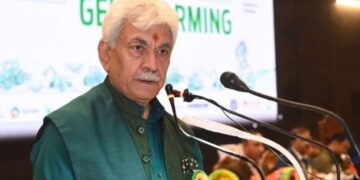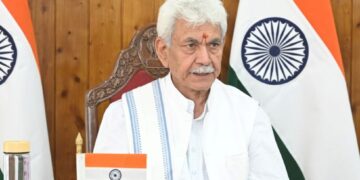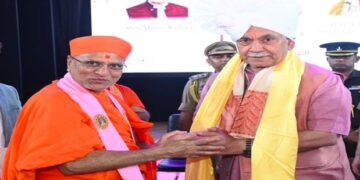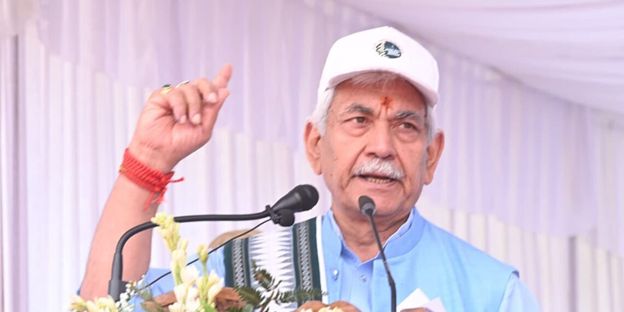
“The anti-drug campaign in Jammu and Kashmir has become a people’s movement with active participation from communities, schools, religious institutions and families. Launching the “Community Immunization Program” and “Family Fortress Initiative,” urged citizens to strengthen awareness and protect youth from addiction,” LG Sinha
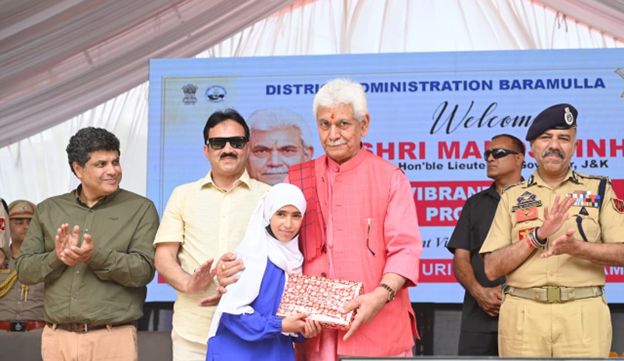
The anti-drug campaign launched across Jammu and Kashmir under Lieutenant Governor Manoj Sinha is gradually evolving from a law-and-order operation into a large-scale social movement. With the introduction of two new pillars — the “Community Immunization Program” and the “Family Fortress Initiative” the administration is now attempting something far more ambitious than police crackdowns or awareness drives. It is trying to reshape society’s collective response to narcotics by turning families, religious institutions, schools, and communities into active participants in the fight against addiction. Announced during the Lieutenant Governor’s visit to Baramulla and later reinforced during the “Nasha-Mukt Jammu Kashmir Abhiyan” padyatra in Kupwara, the initiative signals a strategic shift in the administration’s anti-drug policy. The message is clear: the narcotics crisis in Jammu and Kashmir can no longer be treated merely as a criminal issue; it has become a social, psychological, economic, and even national security challenge. The campaign’s framework reflects a growing recognition that addiction is not defeated solely through arrests and seizures. It requires a transformation in public consciousness, community vigilance, and family intervention mechanisms. In many ways, the administration is trying to create a “whole-of-society” response to narcotics — a model that combines policing, rehabilitation, social mobilisation, religious outreach, and grassroots participation.
The Shift From Enforcement To Social Resistance: Over the last several years, Jammu and Kashmir has witnessed increasing concern over drug abuse, particularly among youth. What was once viewed as a sporadic social problem has evolved into a major crisis affecting urban centres, border districts, educational institutions, and even rural communities. The administration’s recent statistics underline the scale of the operation underway. According to official figures shared by the Lieutenant Governor, more than 730 drug smugglers and peddlers have been arrested, crores worth of properties seized, over 3,300 drug stores inspected, and more than 150 licenses suspended for violations. Nearly 3,000 CCTV cameras have also been installed at pharmacies across the Union Territory. These numbers indicate an aggressive enforcement campaign aimed at dismantling supply chains and narco-financial networks. But despite these actions, the administration appears to understand that supply-side crackdowns alone cannot eliminate addiction. Drug abuse survives because of demand, social silence, and community disconnect. This is where the newly announced “Community Immunization Program” becomes significant. The use of the term “immunization” is particularly strategic and symbolic. Traditionally associated with vaccines against diseases, the phrase attempts to frame drug addiction as a social epidemic requiring preventive community protection. The administration wants localities to develop social resistance mechanisms before addiction spreads deeply into neighbourhoods and families. Under this initiative, religious leaders, NGOs, schools, temples, mosques, and gurdwaras will participate in awareness campaigns in identified hotspot zones. The idea resembles a community surveillance and behavioural intervention system where early warning signs are identified before addiction turns into organised criminal dependency. The model reflects lessons drawn from public health strategies where prevention is considered more effective than cure.
The Role Of Religious Institutions: One of the most striking aspects of the campaign is the central role assigned to religious institutions. In Kashmir’s social structure, mosques, shrines, temples, and gurdwaras are not merely places of worship; they are centres of moral influence and community mobilisation. By urging religious institutions to dedicate one hour every week for anti-drug awareness, the administration is attempting to integrate moral authority into the campaign. This is significant because addiction often thrives in silence, stigma, and social denial. Religious spaces can potentially break that silence by making conversations around drugs socially acceptable and morally urgent. Historically, religious institutions in Kashmir have played major roles during social crises, whether related to conflict, natural disasters, or humanitarian relief. The administration now appears to be harnessing that same grassroots influence against narcotics. However, the effectiveness of this approach will depend on consistency and credibility. Occasional speeches or symbolic events may not be enough. Religious leaders will need training, psychological awareness, and sustained engagement to ensure the message reaches vulnerable youth meaningfully rather than becoming ritualistic.
Family The First Line Of Defence : The second pillar, the “Family Fortress Initiative” — may ultimately prove even more important. The concept is based on a simple but powerful reality: addiction often begins quietly inside homes long before it becomes visible in society. Families usually notice behavioural changes first — emotional withdrawal, aggression, financial irregularities, declining academic performance, or social isolation. Yet many families hesitate to intervene due to fear, shame, denial, or lack of awareness. The administration’s attempt to institutionalise weekly family dialogues on drugs is therefore an effort to normalise uncomfortable conversations that are often avoided in conservative societies. The idea of turning families into “fortresses” against addiction reflects a sociological understanding that strong emotional bonds and communication systems can act as preventive barriers. In many communities across Jammu and Kashmir, family structures remain relatively strong compared to many urbanised societies. The administration appears to believe this cultural strength can become a strategic asset. If implemented effectively, the initiative could help reduce stigma around counseling and rehabilitation. Instead of viewing addiction as moral failure or criminal deviance alone, families may begin seeing it as a health and social crisis requiring intervention and support.
Drugs, Terror|The Security Narrative: Perhaps the most politically and strategically significant aspect of the Lieutenant Governor’s speeches was the repeated linking of narcotics with terrorism. The administration has consistently argued that drugs and terrorism are “two heads of the same snake,” with narcotics financing militant networks and destabilising society simultaneously. According to the Lieutenant Governor, cross-border drug smuggling is being used as a tool to fund terrorism and weaken Kashmiri society from within. This narrative transforms the anti-drug campaign from a social reform movement into a national security operation. In border districts like Kupwara and Handwara, this argument carries particular significance. Security agencies have repeatedly highlighted attempts to smuggle narcotics across the Line of Control alongside weapons and ammunition. By framing drug trafficking as narco-terrorism, the administration is building public support for stricter enforcement measures, including property seizures, passport cancellations, and action under stringent laws like the PIT-NDPS Act. At the same time, this framing may also help mobilise communities emotionally. In conflict-affected regions, linking drugs with terrorism creates a stronger moral and political urgency against narcotics than treating them merely as criminal substances. However, experts caution that while the narco-terror connection is real in some cases, addiction should not be reduced solely to a security discourse. Excessive securitisation may risk overshadowing rehabilitation and mental health dimensions.
“LG Sinha also said drug smuggling and terrorism are closely linked, alleging that narcotics networks help finance terror activities. He highlighted the ongoing crackdown against smugglers and stressed that while traffickers will face strict action, addicts must be treated with compassion, counseling and rehabilitation support.”
Rehabilitation Versus Punishment : Interestingly, despite the hardline rhetoric against smugglers, the Lieutenant Governor has simultaneously advocated compassion toward addicts. This dual approach — ruthless against traffickers but empathetic toward victims — is becoming the central philosophy of the campaign. The administration has repeatedly stressed that addicts should not be stigmatised but rehabilitated with dignity. This distinction is crucial. For decades, many anti-drug campaigns globally failed because they treated addicts only as criminals rather than patients needing support. Fear-based approaches often pushed users further underground instead of helping recovery. The emphasis on Tele-MANAS counseling, rehabilitation, and reintegration suggests the administration is trying to adopt a more balanced framework combining enforcement with psychological intervention. The reported 3,000 counseling calls in just over a month indicate that many people are willing to seek help if safe and confidential systems exist. Still, Jammu and Kashmir faces major challenges in rehabilitation infrastructure. Counseling centres, trained psychiatrists, de-addiction facilities, and mental health professionals remain limited compared to the scale of the crisis. Unless institutional capacity expands significantly, awareness campaigns alone may struggle to translate into long-term recovery outcomes.
Why The Campaign Is Different This Time: Anti-drug campaigns are not new in Jammu and Kashmir. Previous governments and agencies have launched awareness drives, arrests, and rehabilitation programs before. Yet this campaign appears different for several reasons. First, the scale of public participation is unprecedented. The administration claims over 2,35,000 outreach events have been conducted within a month. Schools, colleges, sports activities, padyatras, and local awareness drives have created visible social momentum. Second, the campaign combines symbolism with enforcement. Public marches, trophy unveilings, reel-making competitions, and village participation are being used alongside financial crackdowns and policing operations. This creates both emotional engagement and deterrence. Third, the administration is trying to decentralise responsibility. Instead of placing the entire burden on police or government departments, the campaign distributes accountability across families, religious institutions, educational bodies, and local communities. This decentralised approach increases social ownership of the movement.
The Political Dimension: The campaign also carries political implications. Lieutenant Governor Manoj Sinha’s repeated public engagements, padyatras, and speeches position the administration as actively responsive to public anxieties around youth addiction. In a region where political narratives often revolve around security and governance legitimacy, the anti-drug campaign provides an issue with broad social consensus. Drug abuse cuts across political, religious, and regional lines. By aggressively targeting narcotics, the administration taps into a universally sensitive issue affecting almost every section of society. The campaign’s rhetoric also aligns with the Union Government’s broader narrative of combining development, security, and social reform in Jammu and Kashmir after the constitutional changes of 2019. At the same time, critics may question whether statistics and symbolic campaigns are enough without addressing deeper socio-economic issues contributing to addiction — including unemployment, psychological distress, conflict trauma, and lack of recreational opportunities for youth.
The Border Reality: The administration’s special focus on border districts is also noteworthy. Areas close to the Line of Control are vulnerable not only because of infiltration routes but also because of socio-economic vulnerabilities and trafficking networks. The repeated emphasis on Kupwara and Handwara indicates the government views these districts as strategically critical in the anti-narcotics campaign. By directing every police station to identify active peddlers within a fixed timeline, the administration is imposing measurable accountability mechanisms. However, border policing alone cannot fully solve the issue. Smuggling networks often adapt quickly, using digital transactions, local couriers, and cross-regional supply chains. Sustained intelligence coordination and financial surveillance will therefore remain essential.
Can Community Mobilisation Succeed? The ultimate success of the campaign will depend on whether community participation remains sustained beyond the initial momentum. Public campaigns often begin with enthusiasm but gradually lose intensity once media attention fades. The challenge for the administration will be to convert temporary mobilisation into long-term behavioural change.
Kashmir Horizon View: Despite the challenges, the campaign represents one of the most comprehensive anti-drug mobilisation efforts seen in Jammu and Kashmir in recent years. By combining enforcement with social psychology, family engagement, religious participation, rehabilitation, and public accountability, the administration is attempting to redefine how society confronts narcotics. The repeated phrase used by the Lieutenant Governor — “people’s movement” — is central to understanding the campaign’s ambition. The administration wants the fight against drugs to become socially internalised rather than government-driven alone. In many ways, this is not merely a war against narcotics. It is a battle over the social future of Jammu and Kashmir’s youth.If the “Community Immunization Program” and “Family Fortress Initiative” succeed even partially, they could establish a new model of anti-drug governance rooted in collective responsibility. But if public participation weakens, rehabilitation gaps persist, or socio-economic realities remain unaddressed, the crisis may continue evolving despite strong enforcement. For now, however, Jammu and Kashmir appears to be witnessing the emergence of a rare social consensus: that the drug crisis is no longer somebody else’s problem. It is a collective emergency demanding collective action.
(“Team Kashmir Horizon” is committed to continuous improvement and invites feedback and suggestions from readers and its followers on social media sites. Reader insights are considered vital for enhancing content quality and empowering the community. The team encourages open communication and values the thoughts and ideas of its audience, believing that such input will enable them to serve the public more effectively. The initiative aims to ensure that readers have the best possible experience with “Kashmir Horizon”. Interested individuals can reach out to us via email at [email protected].)