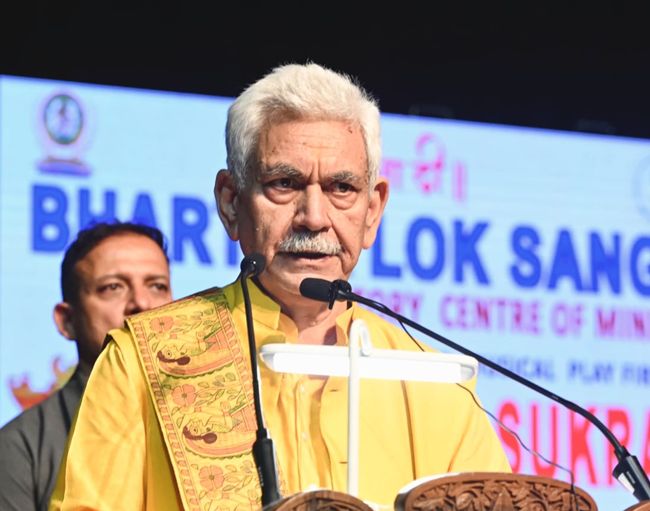
“The 100-day “NashaMukt Jammu & Kashmir” is a campaign, calling for a united, people-led fight against the growing drug menace. Warned of strict action against drug traffickers and stressed that society must join hands with the administration to tackle the issue.,” LG Sinha
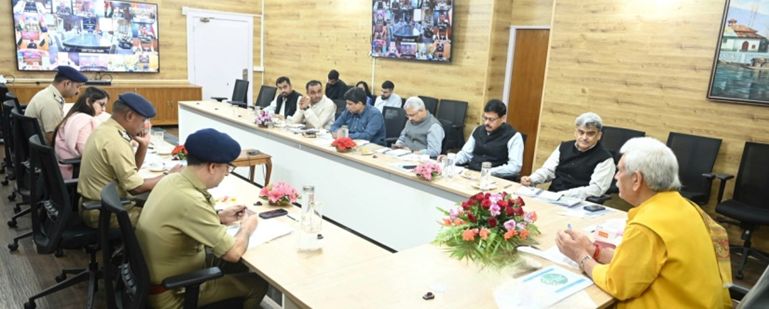
This week, in a high-level review meeting chaired by Manoj Sinha, marks a decisive administrative intervention to tackle the escalating menace of drug abuse in Jammu and Kashmir. The proposed 100-day intensive campaign under the NashaMukt Jammu Kashmir Abhiyaan is not merely a routine governmental exercise but a strategic, multi-dimensional response to a crisis that has steadily deepened over the past decade. Drug abuse in the Union Territory has evolved into a complex socio-economic and public health issue, cutting across class, geography, and age groups. The administration’s latest initiative signals an attempt to move beyond fragmented responses toward a coordinated, mission-mode approach that integrates enforcement, awareness, rehabilitation, and community participation.
Understanding The Magnitude Of The Drug Problem: The drug menace in Jammu and Kashmir has witnessed a disturbing rise, with increasing reports of substance abuse among youth, including students. Traditionally known for its strong social fabric and cultural resilience, the region is now grappling with a silent epidemic that threatens to erode its demographic dividend. Several factors contribute to this surge. The Union Territory’s geographical location, with proximity to international borders, makes it vulnerable to cross-border drug trafficking. Additionally, socio-economic challenges such as unemployment, psychological stress, and limited recreational opportunities have created fertile ground for substance abuse. The Lieutenant Governor’s observation that the influx of drugs is part of a broader “international conspiracy” underscores the seriousness of the issue. While this highlights the role of external networks in fueling the supply chain, it also draws attention to the need for robust internal mechanisms to counter both supply and demand.
Strategic Framework Of The 100-Day Campaign: The 100-day campaign is designed as an intensive, time-bound intervention aimed at achieving measurable outcomes. Unlike sporadic awareness drives, this initiative seeks to create sustained momentum through a structured framework. A key feature of the campaign is the integration of multiple stakeholders, including government departments, law enforcement agencies, educational institutions, and civil society organizations. The preparation of a department-wise activity calendar indicates a systematic approach to implementation, ensuring that responsibilities are clearly defined and monitored. The constitution of Union Territory and Divisional Level Committees further strengthens the institutional backbone of the campaign. These committees are expected to coordinate efforts, track progress, and address challenges in real time, thereby minimizing bureaucratic delays and inefficiencies.
Mass Mobilization| Turning Policy Into A People’s Movement: One of the most significant aspects of the campaign is the emphasis on mass public participation. The administration aims to transform the anti-drug initiative into a people’s movement that transcends administrative boundaries. The planned mega padyatra from MA Stadium in Jammu, followed by a similar launch in Srinagar, is emblematic of this approach. Such large-scale public events serve as catalysts for awareness and engagement, bringing together diverse sections of society under a common cause. The involvement of youth organizations such as NCC, NSS, and Scouts & Guides is particularly crucial. Young people are both the most vulnerable to drug abuse and the most powerful agents of change. By mobilizing them as ambassadors of the campaign, the administration seeks to create a ripple effect that extends into communities and households.
Law Enforcement| Cracking Down On Supply Chains: A central pillar of the campaign is the strengthening of law enforcement efforts to dismantle drug trafficking networks. The Lieutenant Governor’s directive for continuous and intensive drives reflects a zero-tolerance approach toward those involved in the drug trade. The policy stance—“Don’t Touch the Innocent and Don’t Spare the Culprit”—captures the dual objective of protecting victims while ensuring strict action against perpetrators. This balanced approach is essential for maintaining public trust and encouraging cooperation with enforcement agencies. However, dismantling drug networks is a complex task that requires advanced intelligence, inter-agency coordination, and technological support. Traffickers often operate through sophisticated networks that adapt quickly to enforcement measures. Therefore, the success of this component will depend on the ability of agencies to stay ahead of evolving tactics.
Rehabilitation, Victim-Centric Approach: While enforcement addresses the supply side, the campaign also places significant emphasis on rehabilitation and recovery. Recognizing drug users as victims rather than criminals is a progressive step that aligns with global best practices. The identification of individuals affected by drug abuse must be followed by accessible and effective rehabilitation services. This includes not only medical treatment but also psychological counseling, social support, and skill development. Rehabilitation centers in the region need to be strengthened in terms of infrastructure, staffing, and outreach. Without adequate facilities, the campaign risks identifying more victims than it can effectively support. Moreover, efforts must be made to reduce the stigma associated with seeking help, as social stigma often acts as a barrier to recovery.
Role Of Education, Awareness: Educational institutions are at the frontline of the fight against drug abuse. Schools and colleges provide a platform for early intervention, awareness generation, and peer-driven initiatives. The campaign’s focus on awareness programs is critical in addressing misconceptions and educating young people about the dangers of substance abuse. However, awareness must go beyond one-time events and be integrated into the curriculum and campus culture. Interactive sessions, workshops, and peer counseling programs can be effective in creating a supportive environment where students feel empowered to make informed choices. Teachers and faculty members also need to be trained to identify early signs of substance abuse and provide guidance.
“The strategy combining tough enforcement with rehabilitation and awareness, emphasising support for victims and zero tolerance for culprits. Calling the next 100 days crucial, he urged community participation, especially from youth and families, to curb drug abuse and protect the future generation”
Community Participation, Civil Society Engagement: The involvement of civil society organizations, political representatives, and the general public is essential for the success of the campaign. Drug abuse is not just a law enforcement issue; it is a societal challenge that requires collective action. Encouraging the public to report cases of drug abuse can significantly enhance the reach of the campaign. However, this must be accompanied by safeguards to ensure confidentiality and prevent misuse. A robust feedback mechanism can help in refining strategies and addressing ground-level challenges. Community leaders, religious institutions, and local influencers can play a pivotal role in shaping public opinion and mobilizing support. Their involvement can lend credibility to the campaign and facilitate deeper penetration into communities.
Governance, Institutional Coordination: The presence of senior officials, including Atal Dulloo, at the review meeting highlights the importance of high-level coordination. Effective governance is critical in ensuring that the campaign’s objectives are translated into tangible outcomes. Inter-departmental coordination often poses a challenge in large-scale initiatives. The success of the campaign will depend on the ability of different departments to work in synergy, share information, and align their efforts. Regular monitoring, data collection, and performance evaluation are essential components of effective governance. The use of technology for tracking progress and identifying gaps can enhance efficiency and accountability.
Socio-Economic Dimensions Of Drug Abuse: Drug abuse cannot be viewed in isolation from the broader socio-economic context. High unemployment rates, particularly among youth, contribute to feelings of frustration and hopelessness, making individuals more susceptible to substance abuse. Addressing these underlying issues is crucial for the long-term success of the campaign. Initiatives aimed at employment generation, skill development, and entrepreneurship can provide constructive alternatives for young people. Similarly, promoting sports, cultural activities, and community engagement can help channel energy into positive pursuits. Such initiatives not only reduce vulnerability to drug abuse but also strengthen social cohesion.
Challenges, Potential Pitfalls: Despite its comprehensive design, the campaign faces several challenges. Sustaining momentum over 100 days requires consistent effort, resource allocation, and monitoring. There is a risk that initial enthusiasm may wane over time, reducing the effectiveness of interventions. Another challenge is ensuring that awareness campaigns translate into behavioral change. Changing attitudes and habits is a gradual process that requires sustained engagement and reinforcement. The capacity of rehabilitation centers and enforcement agencies may also be tested as the campaign progresses. Without adequate resources and infrastructure, the system may struggle to cope with increased demand.
Media, Communication Strategy: Effective communication is key to the success of any public campaign. The use of traditional media, social media, and grassroots communication channels can amplify the campaign’s message and reach a wider audience. However, messaging must be carefully crafted to avoid fear-based narratives that can alienate individuals. Instead, the focus should be on empowerment, hope, and recovery. Highlighting success stories of individuals who have overcome addiction can inspire others and reduce stigma. Media can also play a watchdog role by tracking progress and highlighting gaps.
Kashmir Horizon View: The 100-day intensive campaign under the NashaMukt Jammu Kashmir Abhiyaan represents a significant step toward addressing the drug menace in Jammu and Kashmir. With strong leadership from Manoj Sinha and active involvement of stakeholders at all levels, the initiative has the potential to create meaningful impact. However, the success of the campaign will depend on its ability to sustain momentum, integrate diverse strategies, and adapt to evolving challenges. Drug abuse is a complex issue that requires long-term commitment and continuous effort. If implemented effectively, the campaign can serve as a model for other regions facing similar challenges. More importantly, it can safeguard the future of the youth, strengthen communities, and pave the way for a healthier, more resilient Jammu and Kashmir.
(“Team Kashmir Horizon” is committed to continuous improvement and invites feedback and suggestions from readers and its followers on social media sites. Reader insights are considered vital for enhancing content quality and empowering the community. The team encourages open communication and values the thoughts and ideas of its audience, believing that such input will enable them to serve the public more effectively. The initiative aims to ensure that readers have the best possible experience with “Kashmir Horizon”. Interested individuals can reach out to us via email at [email protected].)