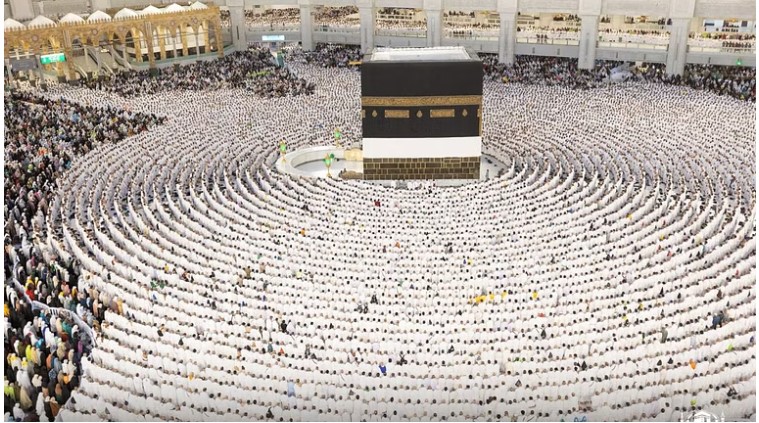
The twin holy cities of Mecca and Medina — the sacred cradle of Islam — were not only the launchpad of a revolutionary monotheistic faith but also the moral heartland of a civilization rooted in justice, humility, and submission to divine command. Yet today, as skyscrapers rise above the Kaaba and pop concerts echo through the sands of Arabia, one is compelled to ask: Do these holy cities still hold the ethical water of their origin? Or have their custodians betrayed the legacy they were entrusted with? This is not an indictment born of nostalgia. It is a cry drawn from the prophetic tradition, from the hearts of believers who remember that Mecca was once a valley where idols were broken, not reinstalled in subtler forms under the guise of modernization. Islam does not reduce leadership to power or control. It spiritualizes it. The Quran commands:”Indeed, Allah commands you to render trusts to whom they are due and when you judge between people, judge with justice.”(Surah An-Nisa, 4:58). The Prophet Muhammad (PBUH) declared:“Each of you is a shepherd, and each of you is responsible for his flock.”(Bukhari, Muslim). Rulers in Islamic tradition are Amīn (trustees), not kings by divine right. They are supposed to embody justice (‘adl), mercy (rahmah), and moral clarity — values that are tragically absent in the political architecture of today’s Saudi regime. Saudi Arabia has entered a whirlwind of economic and social reforms — lauded in the West as “progressive” and “visionary.” Women can now drive, cinemas are open, music festivals abound, and tourist visas are granted for secular attractions. But behind this glossy rebranding lies a darker contradiction: the imprisonment of sincere scholars, the silencing of dissent, and the marginalization of Islamic ethos from public life. Scholars like Sheikh Salman al-Ouda, known for his wisdom and global moderation, have been detained, reportedly tortured, and threatened with execution — for doing nothing more than expressing hope for reconciliation in the Gulf. Meanwhile, religious police have been disempowered, public morality laws relaxed, and commercial consumerism given full rein. The same land that gave us Imam Malik and the Prophet’s companions now echoes with the beats of Western pop stars, often right beside sites where Qur’anic revelation was received.
What the Scholars Warned Us: Great Islamic scholars of the past were not blind to the spiritual decay that often accompanied Arab political power. Imam Abu Hanifa (d. 767 CE) famously refused a judgeship under the Umayyad caliphs because he feared becoming a tool of injustice. He was imprisoned and beaten for this stand. Imam Malik (d. 795 CE) declared that “the Sunnah of Madinah” — meaning the lived Islamic ethics of the city — was as important as textual rulings. How far we have fallen when the Sunnah of Madinah is now buried under glitzy hotel chains and theme parks. Imam Ibn Taymiyyah (d. 1328 CE), who lived under Mamluk rule, openly said:“The people of falsehood rule over others only because the people of truth abandon their responsibilities.”
“Mecca and Medina may be geographically situated in Saudi Arabia, but they belong to no throne but Allah’s, and no flag but Islam’s. Let us not confuse the shine of marble with the light of guidance. Let us not be silent while unholy ones defile holy cities.Let us rise — in voice, in dua, and in dignity — to reclaim the sanctity of the land where the final Prophet (PBUH) walked, wept, and won.”
In more recent times, Syed Qutb in his Milestones wrote with anguish about how Muslim societies had returned to a form of modern Jahiliyyah, wherein the symbols of Islam were preserved, but the spirit of divine sovereignty had been replaced by the whims of rulers. Even Allama Iqbal, while deeply spiritual, lamented in Zarb-e-Kaleem:”Arab ki zameen hai na paida kunanda,Magar is zamīn se hai rooh-e-Mohammad (saw)”(The land of the Arabs no longer produces the spirit,But from this land once rose the soul of Muhammad). It is easy to blame rulers, but Islam also holds the ummah accountable. The Qur’an warns:“And do not incline toward those who do wrong, lest you be touched by the Fire.”(Surah Hud, 11:113). When people choose comfort over conscience, nationalism over brotherhood, and consumerism over character, they become accomplices in the erosion of Islam’s ethical fabric. Today, many Muslims in Saudi Arabia — like elsewhere — are caught in the paradox of material wealth and spiritual emptiness. The moral courage to speak truth to power is fading, and a generation is being raised on social media dopamine, not the legacy of Bilal, Aisha, and Umar. Despite the disheartening reality, Mecca and Medina remain sacred in essence. Their sand has cradled prophets, their skies have echoed with revelation. But just as Jerusalem suffered under unjust custodians, so too can Mecca and Medina be temporarily veiled by tyranny. The Kaaba is not owned by kings. The Prophet is not a tool for state tourism. These holy sites are an Amanah (trust) upon the global ummah — not the private estate of a royal family. As Muslims, our hearts break when these sacred sites are used for political gain while scholars rot in cells, and the Sunnah is packaged for commerce. And yet, our hearts also hope — because revival has always come from unexpected quarters. We must remember that the early Muslims triumphed not through armies or oil, but through truth, justice, and moral conviction. That legacy can be reclaimed — but only if we stop glorifying unjust rulers and start reforming ourselves, our communities, and our understanding of power. Mecca and Medina may be geographically situated in Saudi Arabia, but they belong to no throne but Allah’s, and no flag but Islam’s. Let us not confuse the shine of marble with the light of guidance. Let us not be silent while unholy ones defile holy cities.Let us rise — in voice, in dua, and in dignity — to reclaim the sanctity of the land where the final Prophet (PBUH) walked, wept, and won.
(The author a freelancer a teacher and a researcher based in Gowhar Pora Chadoora is also Advisor at The Nature University Kashmir. The views, opinions and conclusions expressed in this article are those of the author and aren’t necessarily in accord with the views of “Kashmir Horizon”)
Dr. Ashraf Zainabi
[email protected]