

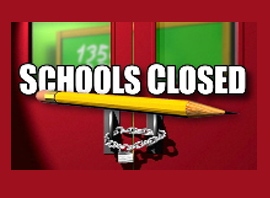
The closure of schools is not merely a disruption in routine, it is a profound setback for the nation’s progress. Education is the backbone of any society, shaping the future of its youth and, by extension, the destiny of the country. The prolonged closure of schools in Jammu and Kashmir (J&K), compounded by historical challenges like the COVID-19 pandemic and regional shutdowns, has created a crisis that threatens the future of students and the nation at large. The government must act decisively to either reopen schools with robust safety measures or provide effective alternatives, such as virtual learning, to ensure uninterrupted education.The closure of schools in J&K has been a recurring issue, driven by factors like political unrest, security concerns, and the global pandemic. These disruptions have led to significant learning losses, particularly for students in remote and underprivileged areas. According to UNESCO, prolonged school closures can result in a “generational catastrophe,” with students losing critical skills and knowledge that are difficult to recover. In J&K, the impact is even more pronounced due to the region’s unique challenges, including limited access to technology and infrastructure for online learning.The loss of education translates into a loss for the nation. Students are the future workforce, innovators, and leaders. When their learning is disrupted, the nation risks a less skilled, less competitive population. This can lead to higher unemployment rates, reduced economic growth, and increased social inequalities. For J&K, where education has already been hampered by years of conflict and the 2010-2019 shutdowns following the abrogation of Article 370, further closures exacerbate an already dire situation.The consequences of school closures are multifaceted, affecting students’ academic, social, and emotional development. Students in J&K have faced significant gaps in learning due to prolonged closures. Subjects like mathematics and science, which require consistent instruction, are particularly affected. A 2021 study by the National Council of Educational Research and Training (NCERT) found that students in rural areas, including parts of J&K, showed a marked decline in foundational literacy and numeracy skills during the pandemic. These gaps can hinder students’ ability to pursue higher education or secure meaningful employment. School is not just a place for learning, it is a space for socialization and emotional growth. Prolonged closures have led to increased anxiety, depression, and feelings of isolation among students. In J&K, where many children already face trauma due to conflict, the absence of school as a safe space has worsened mental health challenges. Not all students have equal access to alternatives like online education. In J&K, internet connectivity is often unreliable, and many families cannot afford smartphones or computers. This digital divide disproportionately affects marginalized communities, deepening educational and socio-economic inequalities. Education is a key driver of economic mobility. When students miss out on quality education, they are less likely to secure well-paying jobs, perpetuating cycles of poverty. For a region like J&K, which is striving for stability and development, this could hinder progress for decades. J&K has faced unique challenges that amplify the impact of school closures.
“The closure of schools in Jammu and Kashmir is a national loss that demands urgent action. The government must recognize that education is not an expense but an investment in the future. By reopening schools safely or providing effective alternatives like virtual learning, the government can safeguard the dreams of J&K’s students and secure the nation’s progress. The time to act is now every day of delay is a day stolen from the future.”
The region’s education system was already strained by the 2010-2019 political upheavals, which led to extended shutdowns and curfews. The COVID-19 pandemic further disrupted learning, with schools closed for nearly two years. Even after the pandemic, sporadic closures due to security concerns have continued to disrupt education. These interruptions have created a cumulative learning deficit that could take years to address.Moreover, the digital divide in J&K is stark. According to a 2020 report by the Ministry of Electronics and Information Technology, only 12% of households in rural J&K have access to the internet. This made online learning during the pandemic inaccessible for many students, leaving them without any form of education. The lack of infrastructure, coupled with socio-economic challenges, has put J&K’s students at a significant disadvantage compared to their peers in other parts of India. The government has a moral and strategic obligation to prioritize education, especially in a region as critical as J&K. While safety concerns are valid, indefinite school closures are not a sustainable solution. The government must adopt a two-pronged approach safely reopen schools where feasible and provide robust alternatives where physical reopening is not possible. Schools can be reopened with strict safety protocols, such as staggered classes, mandatory masks, and regular sanitization. The success of school reopenings in other parts of India, such as Kerala and Tamil Nadu, demonstrates that it is possible to balance safety and education. The government should invest in upgrading school infrastructure in J&K to ensure compliance with safety standards. Where physical reopening is not viable, the government must strengthen virtual learning systems. This includes improving internet connectivity, distributing low-cost devices to students, and training teachers in digital pedagogy. Initiatives like the National Digital Education Architecture (NDEAR) could be tailored to address J&K’s specific needs, ensuring that no student is left behind. In areas with limited internet access, the government can explore alternative models, such as community learning centers or radio-based education. During the pandemic, countries like Nigeria used radio broadcasts to deliver lessons to remote areas. Similar innovations could be adapted for J&K to bridge the gap. Teachers are the backbone of the education system. The government should invest in training teachers to adapt to hybrid or virtual teaching methods while providing them with the resources needed to engage students effectively.Education as the Nation’s FutureThe adage that “the children are the future” is not a cliché but a reality. A nation’s progress depends on the knowledge, skills, and values instilled in its youth. For J&K, education is not just a pathway to individual success but a tool for peace, stability, and development. The region’s youth deserve the opportunity to rise above their circumstances and contribute to the nation’s growth.The government’s inaction or delay in addressing school closures risks creating a lost generation one that is undereducated, underserved, and unable to compete in an increasingly globalized world. By prioritizing education through safe reopenings and innovative alternatives, the government can ensure that J&K’s students are not left behind. The cost of inaction is too high, not just for the students but for the nation as a whole. The closure of schools in Jammu and Kashmir is a national loss that demands urgent action. The government must recognize that education is not an expense but an investment in the future. By reopening schools safely or providing effective alternatives like virtual learning, the government can safeguard the dreams of J&K’s students and secure the nation’s progress. The time to act is now every day of delay is a day stolen from the future.
(The author a lawyer by profession is a freelancer. The views, opinions and conclusions expressed in this article are those of the author and aren’t necessarily in accord with the views of “Kashmir Horizon”)
Advocate Sajad Paul
[email protected]







