CM Says “Just because we have mentioned ‘Union Territory’ here does not change our reality. Our reality is that we aspire for statehood, and until Parliament restores it, we remain a Union Territory. Let us not politicize this,” he stated. Abdullah reiterated that dialogue and sustained efforts, rather than walkouts, would further the cause of statehood.”
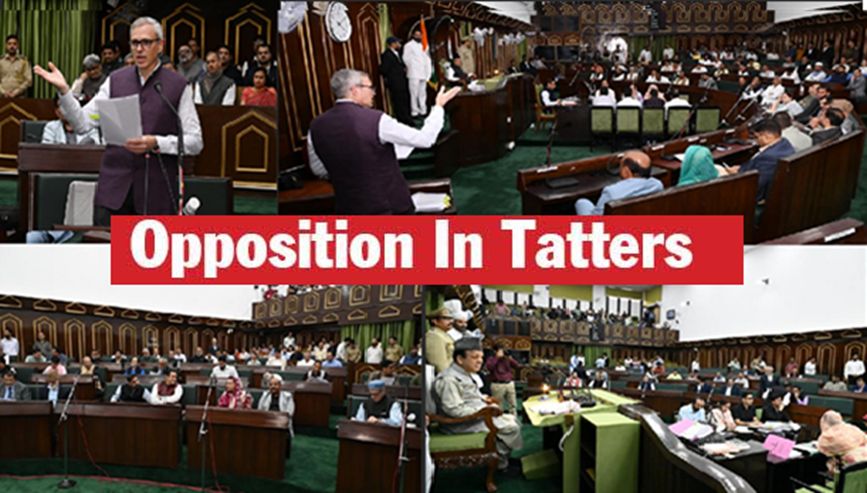
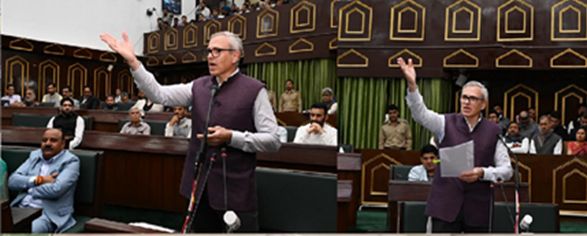 In a fervent display of democratic discourse, Chief Minister Omar Abdullah this week reaffirmed his Government’s unwavering commitment to the restoration of Jammu and Kashmir’s statehood. Speaking during a legislative session that saw opposition members stage a walkout over the use of the term “Union Territory,” Abdullah emphasized that the current status is a temporary reality that does not diminish the region’s aspirations.
Legislative Dynamics And Call for Statehood: The session gained significance as the Assembly passed a bill to amend the Jammu and Kashmir Goods and Services Tax (GST) Act, 2017. Opposition leader Sajad Gani Lone of the People’s Conference expressed his dissent, contending that the bill’s passage under the “Union Territory” designation seemed to endorse the current status. Lone’s passionate walkout was a symbolic gesture, as he declared, “I will not be a part of this sin.” However, CM Omar Abdullah provided a constructive perspective, underscoring the importance of realistic political engagement. The Chief Minister said “Just because we have mentioned ‘Union Territory’ here does not change our reality. Our reality is that we aspire for statehood, and until Parliament restores it, we remain a Union Territory. Let us not politicize this,” he stated. Abdullah reiterated that dialogue and sustained efforts, rather than walkouts, would further the cause of statehood.
A Government Functioning With Purpose: The Chief Minister highlighted the constitutional framework within which his Government operates. “We have taken an oath as representatives of a Union Territory. We contested elections for the Union Territory Assembly. We are passing the budget of a Union Territory,” he reminded the House, emphasizing transparency and governance despite the status. Leaders from various parties, including Peoples Democratic Party (PDP) representative Wahid Para, expressed concern over the implications of passing bills under the Union Territory designation. Abdullah acknowledged these concerns while advocating for a pragmatic approach.
Consistent Advocacy For Statehood: CM Abdullah detailed the continuous efforts his Government has undertaken to restore statehood. “We passed a resolution in our first cabinet meeting and submitted it to the Prime Minister. I raised this issue during the Prime Minister’s visit to Sonamarg. Every time I visit Delhi, I reiterate that the people of Jammu and Kashmir do not accept the UT status,” he affirmed. The passage of the GST amendment bill marked the first legislation of the ongoing Budget session, with support from the National Conference (NC), Congress, and their allies. Abdullah expressed hope that constructive legislative dialogue would pave the way for meaningful change.
A Vision for J&K’s Future: CM Omar Abdullah underscored that the journey towards statehood is a shared commitment. He acknowledged the importance of peace, governance, and collaboration among all stakeholders to achieve this goal. “Our strength lies in resilience. We will continue to engage, advocate, and work towards a future where Jammu and Kashmir regains its rightful status,” he declared. The positive tone of the session reflects a deep-seated belief that change is achievable through persistence and unity. As the statehood debate continues, the Government’s proactive approach promises a hopeful future for Jammu and Kashmir.
J&K Statehood: CM Omar’s Vision for J&K: Statehood is not just a political designation; it represents identity, and dignity. In the context of Jammu and Kashmir, this sentiment resonates deeply with its people and leaders alike. At the forefront of this advocacy is Chief Minister Omar Abdullah, who has consistently highlighted the importance of restoring statehood to the region. His vision is rooted in fostering self-governance, preserving cultural identity, and ensuring long-term socio-economic stability.
Preserving J&K’s Unique Identity: For centuries, Jammu and Kashmir have held a distinct cultural, historical, and geographical identity. CM Omar Abdullah emphasizes that statehood is essential to preserving this uniqueness. “Jammu and Kashmir are not just about territorial boundaries; it is about our heritage, our culture, and our collective pride,” he asserts. Under the current Union Territory status, many residents feel that the region’s identity is diluted. Statehood offers a sense of belonging and control over regional matters, allowing policies to reflect the cultural ethos and the aspirations of the people. Omar Abdullah’s vision is to ensure that this identity is safeguarded while embracing modernization and development.
Empowering Local Governance: Statehood brings with it greater administrative autonomy. CM Omar Abdullah has reiterated that local governance is best managed by those who understand the ground realities of the region. As a Union Territory, Jammu and Kashmir face limitations in legislative powers, with several crucial decisions dependent on the central Government. “Decentralization is key to effective governance,” Abdullah insists. Statehood would empower local legislators to frame policies tailored to the region’s specific needs, from land rights to employment policies. This empowerment ensures that governance is responsive, efficient, and accountable to the people it serves.
Boosting Socio-Economic Development: Economic stability is another critical aspect tied to statehood. As a Union Territory, Jammu and Kashmir have faced financial dependency and reduced bargaining power for central funds. CM Omar Abdullah has pointed out that statehood could facilitate better financial autonomy and resource allocation. “With statehood, we can prioritize sectors that matter most to our people — agriculture, tourism, and small enterprises. We can build infrastructure that supports sustainable economic growth,” Abdullah emphasizes. A state Government, with its own financial blueprint, can address unemployment, enhance healthcare, and improve education more effectively.
Restoring Democratic Confidence: The transition to a Union Territory in 2019 marked a significant shift in the democratic landscape of Jammu and Kashmir. Many residents perceived it as a downgrade, leading to feelings of disempowerment and political alienation. CM Omar Abdullah argues that restoring statehood is pivotal to rebuilding trust in democratic institutions.”Statehood is not just about governance; it is about hope and confidence in democracy. Our people need to feel that their voices matter and that they have a stake in shaping their future,” he stated.
“As Jammu and Kashmir progress on this journey, the pursuit of statehood is not just about a political status; it is about creating a future where the region thrives on its own terms. With the combined will of its people and Abdullah’s steadfast leadership, the dream of statehood remains an achievable and inspiring goal. It stands as a testament to the region’s enduring spirit and its commitment to unity, dignity, and progress.”
Consistent Advocacy, Constructive Dialogue: CM Omar Abdullah has consistently maintained that the path to statehood lies in constructive engagement rather than political theatrics. He has underscored the importance of sustained dialogue with the central Government while maintaining a cooperative approach within the legislative framework. From passing resolutions in the cabinet to raising the issue with the Prime Minister, Abdullah’s efforts reflect a steady commitment. He has also encouraged opposition members to participate actively in dialogue rather than resorting to symbolic gestures.
Kashmir Horizon View: Omar Abdullah envisions a resilient Jammu and Kashmir where statehood is not just a status but a symbol of progress and unity. “Our future is bright because our resolve is strong. Statehood will not just be restored; it will be redefined with greater strength and purpose,” he concluded. Statehood for Jammu and Kashmir is more than a political goal; it is a collective aspiration. Under the leadership of CM Omar Abdullah, this vision continues to inspire hope for a future where the region thrives with dignity and prosperity. The journey towards the restoration of statehood for Jammu and Kashmir represents a collective aspiration rooted in the region’s unique identity and heritage. CM Omar Abdullah’s consistent efforts reflect a leadership committed to empowering the region through self-governance, economic, and democratic confidence. His vision is anchored in constructive dialogue, resilience, and a commitment to local empowerment, offering a hopeful path forward. Statehood symbolizes more than administrative autonomy; it stands for dignity, unity, and a sense of belonging for the people of Jammu and Kashmir. The region has a long history of cultural richness and diversity. The desire for statehood is about preserving this legacy while ensuring that the voices of the people are adequately represented in governance. Economic autonomy is a fundamental component of this vision. As a Union Territory, Jammu and Kashmir face constraints in financial decision-making and resource allocation. Statehood would provide a stronger economic framework where local governance can prioritize sectors like agriculture, tourism, and small enterprises—pillars of the region’s economy. Abdullah has consistently highlighted that greater financial autonomy can lead to better infrastructure, improved healthcare, and enhanced educational opportunities. Rebuilding democratic confidence is equally essential. Since the change in Jammu and Kashmir’s status, there has been a sense of political alienation. Restoring statehood is seen as a way to rebuild trust in democratic institutions by empowering elected representatives with greater legislative authority. Abdullah has emphasized that meaningful engagement and representation are key to shaping a prosperous future. Constructive dialogue remains a cornerstone of Abdullah’s approach. He has engaged in discussions with central leadership, passed resolutions in the cabinet, and advocated for democratic processes. This commitment to dialogue reflects the belief that sustainable solutions come from continued engagement rather than confrontation. Despite challenges, the resilience of the people of Jammu and Kashmir continues to inspire hope. Abdullah’s leadership serves as a focal point for this collective effort, bringing together diverse voices to work towards a common goal. As Jammu and Kashmir progress on this journey, the pursuit of statehood is not just about a political status; it is about creating a future where the region thrives on its own terms. With the combined will of its people and Abdullah’s steadfast leadership, the dream of statehood remains an achievable and inspiring goal. It stands as a testament to the region’s enduring spirit and its commitment to unity, dignity, and progress.
(In commitment to continuous improvement the “Team Kashmir Horizon” invites it’s valuable readers to share their valuable feedback and suggestions with the “Team Kashmir Horizon”. The insights of readers will surely play a vital role in improving the content quality of “Kashmir Horizon” and contribute more for the empowerment of people. Please feel free to reach out to us at editor@ thekashmirhorizon.com. Team “Kashmir Horizon” eagerly anticipates thoughts and ideas of it’s readers, which will help us serve people and even more effectively. The inputs of valuable readers are highly valued as “Kashmir Horizon” strives to provide it’s readers the best possible experience.)