“The disparity between Open Merit and Reserved Categories has left many candidates disheartened, raising questions about whether the system needs reform to offer fairer opportunities to all.”
The Jammu and Kashmir Public Service Commission (JKPSC) has officially declared the results of the Combined Competitive Examinations (CCE) – 2023, highlighting the remarkable journeys of many candidates, but also sparking debates over the current reservation system.
Top Performers And Their Journey: In the recently released selection list by JKPSC, Sanjeev Kumar from Jammu secured the first position with an impressive score of 1089 marks, followed closely by Iqra Farooq from Srinagar, who secured the second position with 1078 marks. Vasudha Sharma ranked third with 1075 marks, completing the top three. The achievement of these qualifiers showcases the determination, hard work, and resilience needed to succeed in such a highly competitive exam.
Sanjeev Kumar;A Journey Of Persistence: Sanjeev Kumar, the top performer, hails from Samba district in Jammu told Kashmir Horizon that it was his third attempt at the examination, demonstrating his persistence and dedication. He emphasized the importance of consistent effort and hard work, sharing that his success was a result of strict discipline in his study routine. “I followed a disciplined approach and frequently reviewed past exam papers for guidance. I wasn’t expecting to rank first, as no one can predict the results, but I believe it’s all due to the grace of Almighty,” Kumar shared in an interview with Kashmir Horizon. He further explained that he never counted his study hours but made sure to visit the library every day, keeping his focus on the goal. Kumar credited his success to the support of his family, teachers, and mentors. “This achievement is not just mine; it belongs to everyone who stood by me throughout this journey,” he remarked. He encouraged those who didn’t make it this year to stay hopeful and persistent, adding, “It’s essential to stay focused and consistent, regardless of the setbacks.” Beyond his own studies, Kumar also taught at an academy in Jammu, helping students prepare for similar exams.
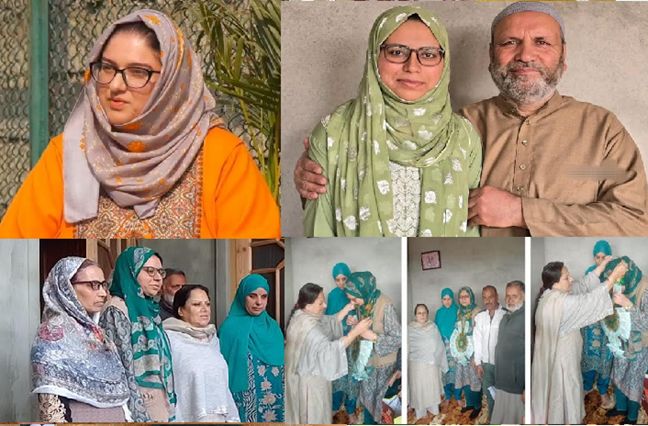
Iqra Farooq; A Story Of Self-Reliance, Determination: Iqra Farooq, the second-ranked candidate, hails from Zakura, Srinagar. Her journey to success is one of perseverance against financial difficulties and societal expectations. The daughter of a tailor, Iqra worked tirelessly for three years to prepare for the JKAS exam. Her dedication paid off as she topped the exam in the Kashmir region and ranked second across Jammu and Kashmir. “I have always wanted to reach a position where I can make a positive difference in the Valley,” Iqra said. Despite the financial constraints faced by her family, Iqra remained focused, relying solely on self-study and online resources, rather than attending coaching centers. “I didn’t take any coaching, nor do I think it’s necessary if one can effectively use the internet. The internet guided me in everything I needed,” she explained. Iqra’s parents were her unwavering supporters throughout her journey. “My mother and father never let me feel that we were financially struggling. They always believed it could be done, and that kept me motivated,” she shared. Upon hearing about her success, Iqra expressed gratitude, saying, “I wasn’t sure I’d rank so high, but I am grateful to Allah for this blessing.” Her father, Farooq Ahmed, also expressed his pride, saying, “Every parent does their best for their children. My daughter worked hard, and God has blessed her with success.” Iqra emphasized the importance of parental support, stating, “If children don’t clear exams, parents should encourage them to work harder rather than pushing them too much. Every child has potential.”
Ritika Bhan; Breaking Barriers as a Kashmiri Pandit: Among the other top performers is Ritika Bhan, a Kashmiri Pandit originally from Shopian in South Kashmir. Ritika secured the 17th rank in her very first attempt at the JKAS exam. Currently residing in Jammu, Ritika’s success is celebrated not only by her family and friends but also by the Kashmiri Pandit community. Ritika’s preparation involved self-study and guidance from YouTube “Topper Talks,” which helped her compile a personalized booklist. “I put in a lot of hard work. Success requires dedication, perseverance, and a disciplined approach,” she shared in an interview with Rising Kashmir. Avoiding distractions like social media, Ritika dedicated fixed hours to her studies and relied on her family’s support. Her father, Ramesh Chander Bhan, expressed immense joy at her achievement. “There were no limits to my happiness when I heard the news at 4:00 a.m.,” he shared. Ritika’s connection to Shopian remains strong, and she credits her uncle for being a key source of support. Ritika aspires to work in the health sector, hoping to make a meaningful impact on society.
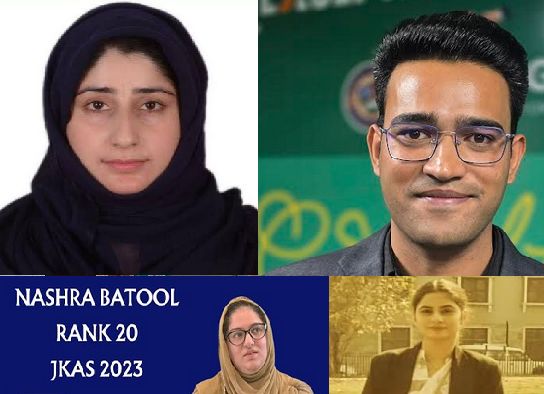
Nashra Batool; A Mother’s Determined Pursuit: Nashra’s journey is particularly inspiring, as she balanced the responsibilities of motherhood and family life while preparing for the exam. Hailing from Kishtwar, she graduated with a degree in electrical engineering and began preparing for the JKAS exam in 2014. Her path to success was not without obstacles. She attempted the exam multiple times, failing in her first three tries before succeeding on her fourth attempt. Nashra’s story is a testament to perseverance. “I never accepted failure; I always believed that success was waiting for me, no matter how many attempts it took,” she shared. Nashra credited her husband and family for their unwavering support. “Alhamdulillah, my husband has been a key player among my supporters,” she said. Despite the challenges of balancing her duties as a mother with her studies, her children encouraged her to keep pursuing her dreams. “My kids told me, ‘Mom, don’t give up, keep going and fight for your dreams,’” Nashra shared, reflecting on the motivation her family provided. Her message to aspiring candidates is simple: “Never give up. Maintain consistency, keep trying. Failure is part of the journey, but hard work always pays off.”
“Striking a balance between meritocracy and inclusion, providing equitable resources for all aspirants, and ensuring that the selection process reflects the true potential of Jammu and Kashmir’s youth will be crucial steps in shaping the region’s administrative services in the years to come.”
The Competition; Open Merit vs. Reserved Categories: While these success stories are heartening, the JKPSC’s CCE-2023 results have also stirred competition over the reservation system. Out of the 71 candidates selected, only 29 (40%) are from the Open Merit category, despite this group constituting over 70% of the population. This imbalance has sparked concerns about the fairness of the system. Critics argue that the current reservation policies compromise long-term quality and competence by not reflecting the true population proportions. PDP leader and Pulwama MLA Waheed Para voiced these concerns, stating, “The government must scrap this unjust policy against merit and ensure that reservations reflect true population proportions. J&K’s youth deserves inclusion, not exclusion.” The disparity between Open Merit and Reserved Categories has left many candidates disheartened, raising questions about whether the system needs reform to offer fairer opportunities to all.
Kashmir Horizon View: While the JKAS results reflect incredible personal achievements, the debate over the reservation system remains a pressing issue. As the region continues to rebuild its administrative structure, there must be a concerted effort to balance merit and representation. Moving forward, policymakers will need to examine how best to ensure that all deserving candidates have an equal opportunity to succeed, while also addressing the need for social justice and affirmative action. This balancing act will shape the future of competitive examinations in Jammu and Kashmir. The results of the Jammu and Kashmir Public Service Commission (JKPSC) Combined Competitive Examinations (CCE) – 2023 have brought forward a mix of emotions, showcasing individual success stories of perseverance, hard work, and determination while also sparking debate on issues of meritocracy and reservation policies. From Sanjeev Kumar’s third attempt victory to Iqra Farooq’s journey of overcoming financial challenges, and the inspiring tales of Ritika Bhan and Nashra Batool, the stories of these candidates reflect not only their personal achievements but also the diversity of backgrounds and experiences they represent. Their journeys highlight that success is not bound by circumstance or the number of attempts but is driven by consistent effort, support systems, and the ability to learn from failures. In the broader perspective, these stories serve as an inspiration for thousands of aspirants across the Union Territory of Jammu and Kashmir, encouraging them to strive harder for their dreams despite challenges. The candidates have collectively demonstrated that while the path to success may be difficult, it is not impossible, and their achievements underscore the importance of hard work, persistence, and the value of education in changing lives. However, as much as these success stories are celebrated, the competition surrounding the reservation policy in the selection process cannot be ignored. With only 40% of the selected candidates being from the Open Merit category, despite it constituting a larger portion of the population, concerns about merit-based selections have been raised. Leaders and the public alike are calling for a reassessment of these policies to ensure a more balanced and fair system that does not compromise quality or competence in the long term. Going forward, the JKPSC and the government need to address these concerns, perhaps by revisiting the current reservation framework to make it more reflective of population proportions, as argued by some stakeholders. Such reforms could help foster a more inclusive system, one that recognizes both the importance of providing opportunities to historically disadvantaged groups and the need to maintain high standards of merit and competence in public service roles. In addition, the broader support systems for aspirants, especially those coming from disadvantaged backgrounds, should be strengthened. This could include providing better access to quality education, affordable coaching facilities, and other resources that could level the playing field for all candidates, regardless of their socio-economic background. The stories of individuals like Iqra Farooq, who prepared using online resources, also highlight the need for increased digital literacy and access to reliable internet services, especially in remote areas. Striking a balance between meritocracy and inclusion, providing equitable resources for all aspirants, and ensuring that the selection process reflects the true potential of Jammu and Kashmir’s youth will be crucial steps in shaping the region’s administrative services in the years to come.
(In commitment to continuous improvement the “Team Kashmir Horizon” invites it’s valuable readers to share their valuable feedback and suggestions with the “Team Kashmir Horizon”. The insights of readers will surely play a vital role in improving the content quality of “Kashmir Horizon” and contribute more for the empowerment of people. Please feel free to reach out to us at editor@ thekashmirhorizon.com. Team “Kashmir Horizon” eagerly anticipates thoughts and ideas of it’s readers, which will help us serve people and even more effectively. The inputs of valuable readers are highly valued as “Kashmir Horizon” strives to provide it’s readers the best possible experience. Thank you for being a part of the reader community!)