“Govt cannot lose sight of the Kashmir Valley but, at the same time, we need to secure the Jammu region also”
“2 battalions of BSF, or Border Security Force, troops comprising of 2,000 personnel have been airlifted from Odisha. They will be in Samba sector, plug gaps on the Jammu-Punjab border”
“Highways, adjoining areas being mapped,drones being used to locate movements of militants and/or sympathisers”
“Govt wants an airtight security grid.Any movement detected in any sector in the area be reported, met with a swift response. Better cooperation can also reduce casualties”
“There will be regular patrolling of far-flung areas , Primary focus will be on intelligence-based covert Ops”
“Assam Rifles are to be deployed in Jammu,1,500 troops will be deployed under operational control of Army to “secure peaks, upper reaches”
“Govt has sanctioned the use of 200 APVs, or armour-protected vehicles. This comes after a July 5 attack in Kathua district in which 5 soldiers were killed”
“SOG can co-opt Village Defence Guards to enhance local security grids”
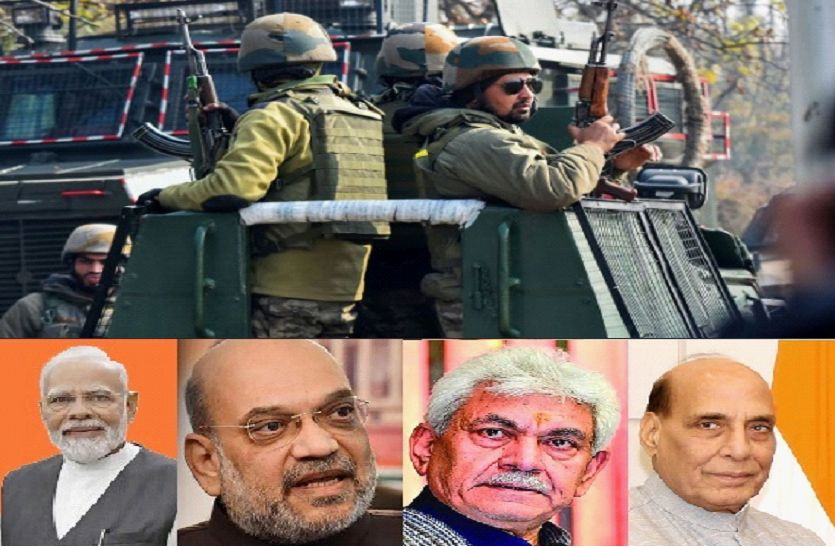
New Delhi, Srinagar: The Central Government is rolling out a new security matrix for Jammu and Kashmir to counter targeting of civilians and military personnel and camps by militants in recent weeks and months, including an attack on an Army camp in Rajouri last week, in which one soldier was injured.
In a report the National New Channel “NDTV” said that “In the past two months attacks and ambushes have become regular events, particularly in the southern reaches of Pir Panjal, an area in which the spectre of militancy had lain dormant for a long time”, adding therein that “Among recent scares there was an operation in which two Army officers were killed and two Pakistani militants, one of them a Lashkar-e-Taiba sniper and explosives expert, eliminated. The news report further says that overall, casualties among security forces have doubled this year compared to the past three. Quoting a data the news report further said 17 security personnel, and as many civilians, have been killed this year. A senior official has been quoted in the report as saying that the increased number of military casualties is the forces’ “primary concern” and this is why deployment in the area is being rationalised with new combinations. “A senior Home Ministry official said the Government “cannot lose sight of the Kashmir Valley but, at the same time, we need to secure the Jammu region also”. This is why, the official explained, forces were being mobilised for deployment”, the report said. Further detailed of the report are mentioned below:-
Primary Goal: Plug Infiltration:- Security audits by various agencies indicates militants- with help from guides, some of whom are locals – use different routes to cross the Line of Control in the valley and the International Border in Jammu sector. Around two dozen sectors where infiltration has been recorded have been identified. Also, weapons are being smuggled in or dropped via drones. The Government has begun a project to fence borders but, so far in Jammu, only 70 of 180 km have been fenced, while flood lightning has been completed for only 40 km. The challenge includes the fact it is difficult to patrol areas marked as riverine with elephant grass in the rainy season. Now, two battalions of BSF, or Border Security Force, troops comprising of 2,000 personnel have been airlifted from Odisha. They will be in Samba sector and plug gaps on the Jammu-Punjab border. Incidentally, this comes after R R Swain, the Director-General of J&K Police, identified Punjab as one of the main routes of infiltration into Jammu and Kashmir.
Keeping Highways Secure: The latest intelligence suggests militants might also conduct attacks on highways – described as “lifelines” – and this is why the Government has decided to deploy CRPF, or Central Reserve Police Force, with local cops. All troop movement normally takes place on highways. An official said highways and adjoining areas are being mapped and drones are being used to locate movements of militants and/or sympathisers.
Focus On Capacity-Building: Improved communications and logistics is also a priority area for the Government. At meetings held at the Home Ministry, on-ground security agencies have been asked to enhance these systems. The Government wants an airtight security grid and that any movement detected in any sector in the area be reported and met with a swift response. Better cooperation can also reduce casualties, the officer said.
Troops Deployed For Enhanced Tactical Efficiency: The new grid will ensure a ‘surprise’ element that is essential for any counter-militancy operation to succeed. As per the new matrix, the term ‘operations’ will include combination of all tactics. Till now movement of forces was being marked by militants, and they were attacking and laying ambushes. Now, with a new grid in place, security forces are certain they will ‘smoke them out’. There will be regular patrolling of far-flung areas and the primary focus will be on intelligence-based covert ops, officials explained, adding smaller teams would enjoy better coordination.
Assam Rifles In Jammu: The Assam Rifles are to be deployed in Jammu; this is not the first time this elite force will operate in J&K as they were included in security arrangements during the Amarnath Yatra. Now, however, they will also be involved in new deployments and be active players in the new security grid. As many as 1,500 troops will be deployed under the operational control of the Army, with the focus of these assets to “secure peaks and upper reaches”.
Para-Commandos Deployed Also: Redeployment of the Army is also aimed at tackling foreign-origin militants who are battle-hardened. As per estimates, a group of about 80 such militants are moving around, in small groups, in the upper reaches of Pir Panjal. The Government has sanctioned the use of 200 APVs, or armour-protected vehicles. This comes after a July 5 attack in Kathua district in which five soldiers were killed, and five others injured, after twin attacks on a military convoy.
SOG Camps In Strategic Areas: The Special Operations Group is technically part of J&K Police but the way they handle militancy-related situations is different. They can launch ops on short notice and hold fort till reinforcements arrive. Their main task now will be to “generate intelligence” since many are locals and can mix with the population. This will allow the government to strengthen the security grid. The presence of SOG troops will also instill confidence among the local population, the government believes. The SOG can also co-opt Village Defence Guards to enhance local security grids.
Focus On Human Intelligence: Over the past five years most successful counter-insurgency ops were due to technological intelligence-based information. However, the NIA believes militants are now using encrypted apps to mislead security agencies. This reinforces the need for human intelligence to complement tech. All of this comes days after Prime Minister Narendra Modi chaired a meeting of the Cabinet Committee on Security – which also includes Home Minister Amit Shah and Defence Minister Rajnath Singh. Last month Prime Minister Narendra Modi chaired a meet to assess the J&K security situation. Sources said that Prime Minister has directed full deployment of armed forces’ counter-militancy capabilities.