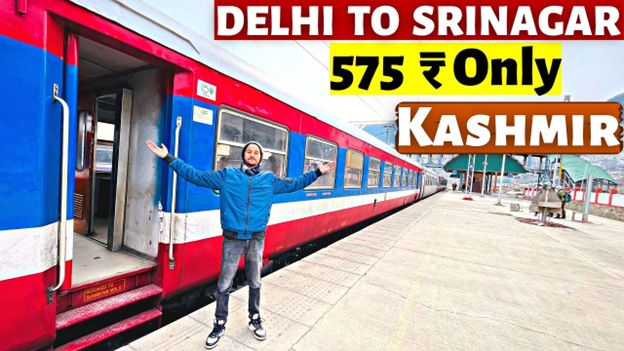
In a historic development, Kashmir is set to be connected to the rest of the Country through the railway network by the year 2024. For that all necessary arrangements for this ambitious project are currently in the final stages. Northern Railways Spokesman told Kashmir Horizon that the railway link connecting Kashmir to the rest of the country is on track for completion in 2024. He revealed that significant redevelopment work is underway in Budgam, with the refurbishment of train tracks and the enhancement of facilities at Budgam station to accommodate long-distance trains. “People will soon witness the integration of Kashmir’s railway network with other parts of the country. Upgrades in facilities such as Food Courts, Parking slots, VVIP waiting rooms, and more are in progress at the Budgam railway station,” the spokesman said. A senior railway officer announced the imminent inauguration of a new 14.869-kilometer line in the Banihal-Khari section of Firozpur Division. Electrified train services on this route are expected to commence soon, marking a significant advancement in the region’s transportation infrastructure. As part of the Amrit Mahotsav celebrations, a high-speed trial for the Banihal-Khari section is scheduled for January 3, 2024.
The initial phase was completed in 2009, followed by the second phase in 2013, and the third phase in 2014. This noteworthy achievement is a testament to the unwavering commitment to the project, even in the face of the challenging geographical landscape of the region”
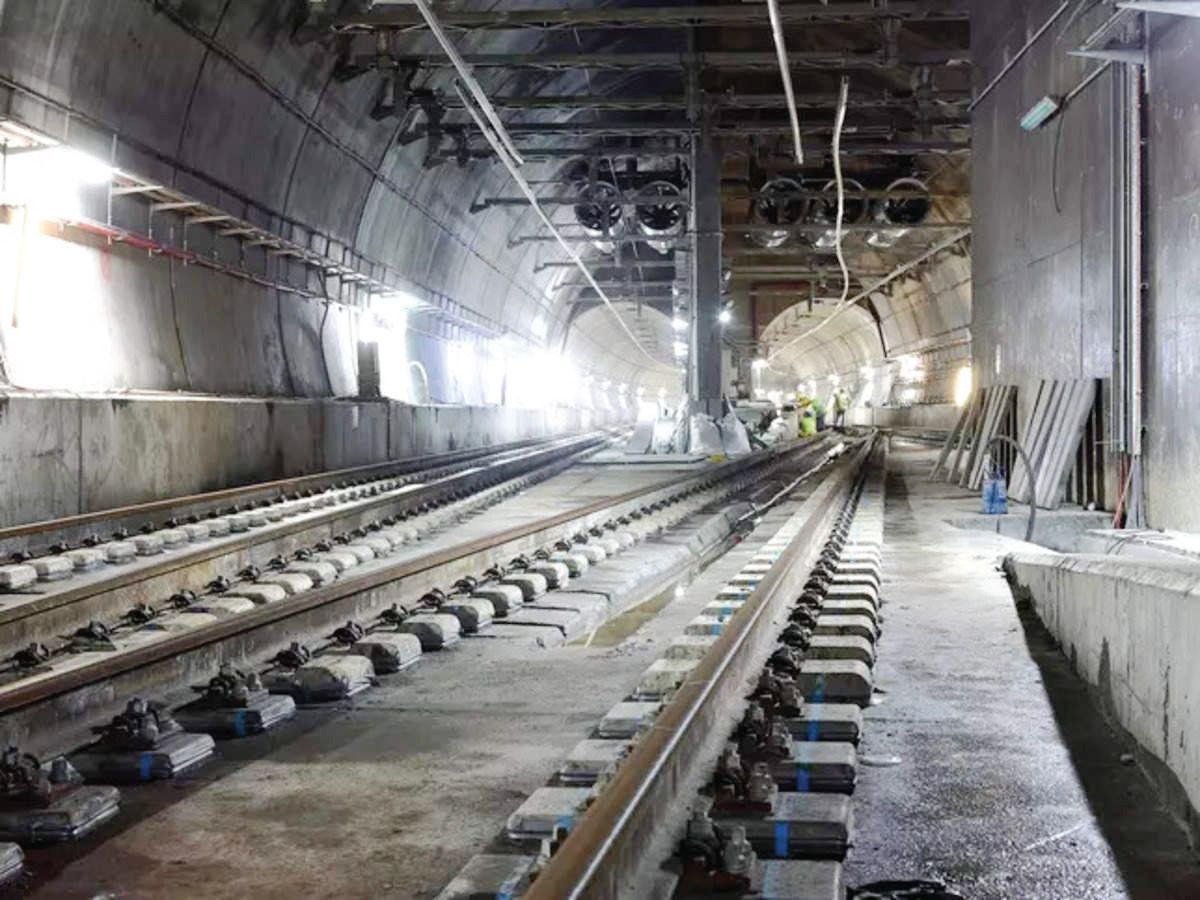
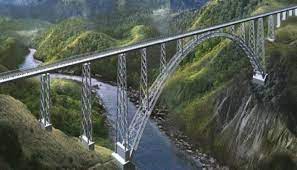
The trial, overseen by the Commissioner of Railway Safety, aims to ensure strict adherence to safety standards and operational efficiency. One of the major achievements in 2023 was the completion of the 3209 meters long Tunnel T-1, situated between Katra and Reasi Stations. Constructed by the Konkan Railway Corporation Ltd., Tunnel T-1 represents a crucial milestone in the completion of the entire USBRL Project. The tunnel’s alignment traverses challenging terrain, including the lesser Himalayas, and encountered difficulties such as highly jointed and fractured dolomite. The railway official highlighted that despite the achievement, there is still work to be done, with approximately 318 meters of excavation in benching and 680 meters of concrete lining yet to be completed. Railway Minister Ashwini Vaishnaw recently approved the Final Location Survey (FLS) of five new railway lines in the Kashmir division. The sanctioned projects include the doubling of the Baramulla-Banihal section (135.5 kilometers). Minister Vaishnaw also highlighted a significant increase in the annual budget allocation for rail infrastructure projects in Jammu and Kashmir, rising from an average of Rs 1044 crore per year from 2009 to 2014 to an impressive Rs 6003 crores in the fiscal year 2023-24. Speaking on the progress of the Udhampur-Srinagar-Baramulla Rail Link (USBRL) Project, the Minister emphasized that 161 km out of the total 272 km has already been commissioned. He hailed the Chenab railway bridge as an engineering marvel, being one of the highest bridges in the world and the highest railway bridge in the entire country. The bridge has successfully undergone tests, considering challenges such as high-velocity winds, extreme temperatures, seismic activity, and hydrological impacts. Vaishnaw announced there has been a fivefold increase in the annual budget allocation for rail infrastructure projects in Jammu and Kashmir, signaling a significant boost this year. During a Lok Sabha session, he stressed this positive development, revealing a substantial rise from an average outlay of Rs 1044 crore per year between 2009 and 2014 to an impressive Rs 6003 crores in the fiscal year 2023-24. He provided detailed insights into the noteworthy progress, particularly emphasizing the advancements made in the Udhampur-Srinagar-Baramulla Rail Link (USBRL) Project, where 161 km out of the total 272 km has already been commissioned. Notably, the active construction of the Katra-Banihal section, spanning 111 km, is underway, with an estimated project cost of Rs 37,012 crore. A standout feature of the USBRL project is the 97.42 km long tunnel on the Katra-Banihal section, poised to become the longest transportation railway tunnel in India. Vaishnaw commended the project’s complexity, navigating through the challenging terrain of the young Himalayas. Highlighting the socio-economic impact, Vaishnaw pointed out the generation of over 553 lakh man-days of indirect employment, underscoring the USBRL Project’s substantial contribution to regional development. Additionally, he highlighted improvements in passenger services, reduced travel time, and an enhanced travel experience, particularly in the Kashmir Valley. Addressing safety concerns, Vaishnaw assured that the USBRL project adheres to international norms, incorporating provisions such as mechanical ventilation systems, firefighting infrastructure, and proper access roads to escape tunnels and adits. The minister concluded by reaffirming the commitment to promoting rail-based tourism in the region through initiatives such as the ‘Bharat Gaurav Trains’ policy, providing flexibility for theme-based tourist circuit trains.
“The efficient transportation of goods via railways contributes to economic growth. Businesses can easily transport raw materials and finished products, reducing costs and increasing market reach. This, in turn, stimulates economic activities and generates employment opportunities. The scenic beauty of Kashmir makes it a popular tourist destination. The introduction of railways can attract more tourists, offering a comfortable and picturesque journey. Improved connectivity encourages tourism-related businesses, creating jobs and boosting the local economy. Rail travel is generally faster and more cost-effective compared to other modes of transportation. Reduced travel time and lower costs make it more convenient for people to commute within the region and for tourists to visit Kashmir, promoting overall regional development.”
This surge in budget allocation reflects a robust commitment to transforming the rail infrastructure landscape in Jammu and Kashmir, with tangible benefits for both residents and tourists alike. Recently, Northern Railways stated that significant progress on the Katra-Banihal section of the Udhampur-Baramulla-Srinagar Railway Link (USBRL) project has been achieved. Officials revealed that an impressive 95 percent of the work on this critical railway segment has already been completed, and the remaining 5 percent is expected to be finalized within the next few months. A spokesperson said that out of the total 272-kilometer railway line envisioned in the USBRL project, a substantial 161 kilometers have been successfully commissioned in three distinct phases. “The initial phase was completed in 2009, followed by the second phase in 2013, and the third phase in 2014. This noteworthy achievement is a testament to the unwavering commitment to the project, even in the face of the challenging geographical landscape of the region,” he said. In addition to this, Northern Railways has launched an aerial survey to pave the way for a double-track on the Banihal-Baramulla railway line, along with the development of a new railway line extending from Baramulla to Uri. The ongoing dedication and 24/7 efforts are expected to swiftly conclude outstanding tasks, bringing the Katra–Banihal railway line closer to its commissioning and significantly enhancing connectivity in the region. The transformative railway projects in Kashmir are poised to redefine the region’s accessibility and contribute to the nation’s broader transportation network.
Kashmir Horizon View: The expansion of railways in Kashmir has the potential to revolutionize the region’s transportation and contribute to its overall socio-economic development. These benefits extend beyond mere connectivity, impacting tourism, trade, and the quality of life for residents. Railways significantly enhance connectivity, linking different parts of Kashmir and connecting the region to the rest of the country. This improved accessibility facilitates the movement of people and goods, fostering economic and social development. The efficient transportation of goods via railways contributes to economic growth. Businesses can easily transport raw materials and finished products, reducing costs and increasing market reach. This, in turn, stimulates economic activities and generates employment opportunities. The scenic beauty of Kashmir makes it a popular tourist destination. The introduction of railways can attract more tourists, offering a comfortable and picturesque journey. Improved connectivity encourages tourism-related businesses, creating jobs and boosting the local economy. Rail travel is generally faster and more cost-effective compared to other modes of transportation. Reduced travel time and lower costs make it more convenient for people to commute within the region and for tourists to visit Kashmir, promoting overall regional development.
(This column provides general information on investment diversification. Individual investment decisions should consider personal financial circumstances and objectives. Please consult a financial advisor for personalized guidance. The author is MBA, NET, and IBPS. He works in the Middle Management of a reputed PSU Bank. The views are personal. The views, opinions and conclusions expressed in this article are those of the author and aren’t necessarily in accord with the views of “Kashmir Horizon”.)