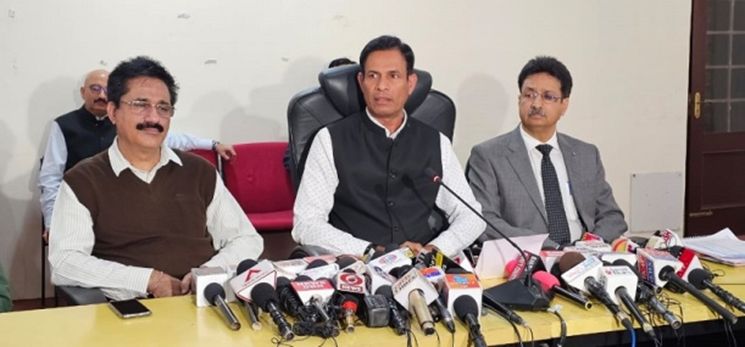
In a significant development aimed at bolstering the power supply infrastructure of Jammu and Kashmir during the winter season, the central government has taken a proactive stance by allocating an additional 293 Megawatts (MW) of power to the Union Territory, effective from December. This strategic move underscores a comprehensive effort to meet the surging energy demands of the region and ensure a seamless and uninterrupted power supply for residents and businesses. The announcement of this allocation was made by H. Rahesh Prasad, the Principal Secretary of the Power Development Department, who emphasized the timeliness of the decision in addressing the rising energy requirements. This augmentation is not an isolated measure; it synergistically complements the recent procurement of 500 MW, highlighting the government’s foresight in tailoring solutions to meet the specific power needs associated with the winter season.
“Jammu and Kashmir, with a compound annual growth rate of 10% in energy demand, is positioning itself to effectively tackle the challenges posed by the increasing need for power during the winter season. The combined impact of the recently allocated 293 MW and the previously procured 500 MW is expected to play a pivotal role in fortifying the energy needs of the Union Territory, providing a robust and reliable power supply during the challenging winter months.”
The decision to secure an additional 500 MW was formally ratified by the Jammu and Kashmir administration during a meeting of the Administrative Council, presided over by Lieutenant Governor Manoj Sinha. The council gave its approval for a new Power Purchase Agreement (PPA) between J&K Power Corporation Limited and the National Thermal Power Corporation (NTPC) for the Singrauli-III power station. Present at the meeting were key figures including Rajeev Rai Bhatnagar, Advisor to the Lieutenant Governor, Dr. Arun Kumar Mehta, Chief Secretary, and Dr. Mandeep Kumar Bhandari, Principal Secretary to the Lieutenant Governor. The Administrative Council’s assent for the purchase of an additional 500 MW of firm power from the Ministry of Power (MOP) aims to fulfill the Base Load power requirement of the Union Territory, a crucial step in addressing the winter demand. An official handout following the meeting revealed that the AC’s approval also includes the allocation of 500 MW of firm power from MOP in B(v) mode, with procurement being undertaken by PFC.
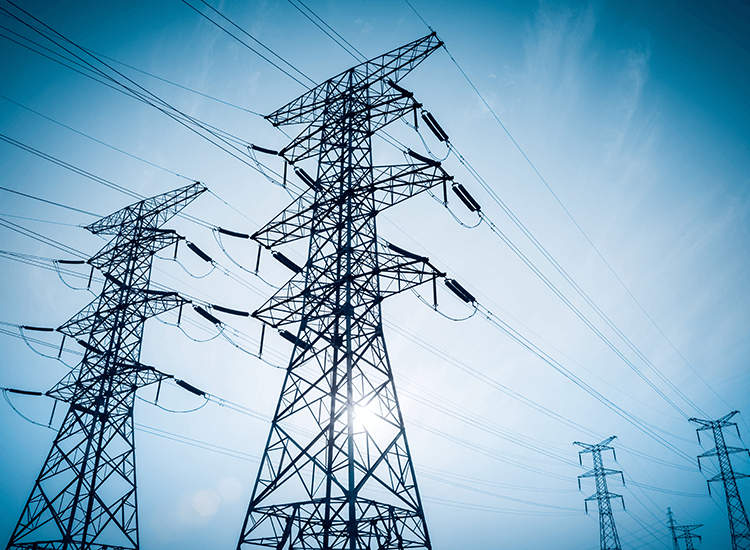
This allocation is specifically designed to meet the essential Base Load power requirement during the winter season when energy availability tends to diminish due to a higher proportion of hydropower in the UT. To bridge this gap between demand and availability during the winter months, the AC further greenlit the signing of a new Power Purchase Agreement by J&K Power Corporation Limited with NTPC concerning the Singrauli-III thermal power station. This power station plays a critical role in supporting Jammu and Kashmir’s power requirements during winter, compensating for the reduced generation from hydro generators of Independent Power Producers, which typically drops to 150-300 MW, signifying a significant reduction compared to summer generation. The proactive approach of the government in securing additional power, both through strategic partnerships and proactive procurement, aligns with the broader strategy of not just meeting immediate demands but ensuring the long-term financial viability and sustainability of the power infrastructure in the region. Jammu and Kashmir, with a compound annual growth rate of 10% in energy demand, is positioning itself to effectively tackle the challenges posed by the increasing need for power during the winter season. The combined impact of the recently allocated 293 MW and the previously procured 500 MW is expected to play a pivotal role in fortifying the energy needs of the Union Territory, providing a robust and reliable power supply during the challenging winter months.
Views Of Kashmir Horizon: Enhancing power development in Jammu and Kashmir involves a comprehensive approach that considers various aspects of energy generation, distribution, and sustainability. Explore and invest in a diverse range of energy sources such as solar, wind, and biomass to reduce dependence on a single source and enhance energy security. Encourage public and private investments in renewable energy projects through incentives, tax breaks, and subsidies. Facilitate the development of solar parks, wind farms, and other renewable energy installations. Upgrade and modernize the power grid infrastructure to improve efficiency, reduce transmission losses, and enhance reliability. Invest in smart grid technologies for better monitoring, control, and integration of renewable energy sources.
( In commitment to continuous improvement the “Team Kashmir Horizon” invites it’s valuable readers to share their valuable feedback and suggestions with the “Team Kashmir Horizon”. The insights of readers will surely play a vital role in improving the content quality of “Kashmir Horizon” and contribute more for the empowerment of people. Please feel free to reach out to us at
editor@ thekashmirhorizon.com.