The Srinagar-Jammu National Highway, known as National Highway 44 (NH-44), serves as a vital lifeline connecting the picturesque region of Kashmir with the rest of India. This highway plays a crucial role in the transportation of goods, people, and military supplies to and from the Kashmir Valley. In its earlier years, this route was a narrow, winding mountain road, susceptible to landslides and snowfall blockages, rendering it impassable during the harsh winter months and unsuitable for heavy traffic. Over time, concerted efforts were made to modernize and widen the road, transforming it into a year-round accessible route. The highway’s strategic significance soared as it became the primary conduit for the Indian military to access the Kashmir Valley. A series of projects, including road widening, tunnel construction, and snow and avalanche protection measures, were initiated to make the highway an all-weather lifeline. One of the standout projects is the Jawahar Tunnel, inaugurated in 1956, significantly reducing the distance and travel time between Srinagar and Jammu. Despite these endeavors, the Srinagar-Jammu National Highway has faced persistent challenges like landslides, avalanches, and adverse weather conditions, primarily during the winter season, necessitating frequent maintenance and repair work to keep it operational. The highway’s strategic importance lies in being the sole surface link to the Kashmir Valley, facilitating the supply of essential goods such as food, fuel, and medical provisions, especially when the valley remains isolated from the rest of the country during winter. The central government continues to invest in developing and enhancing the Srinagar-Jammu National Highway, initiating projects like new tunnels, road expansions, and other infrastructure upgrades to ensure year-round connectivity.
Progress and Expansion: Over the past five years, significant progress has been made in the state of Jammu and Kashmir. The four-laning project, which commenced in 2011, involves the construction of several tunnels, bridges, and flyovers, and is anticipated to be completed next year, despite facing delays over the past decade. Until 2014, there were only seven National Highways in the region, including Ladakh. However, in 2021, this number increased to 11 National Highways in Jammu and Kashmir. In 2015, Prime Minister Narendra Modi announced road infrastructure projects worth Rs 40,900 crores for Jammu and Kashmir, with approximately Rs 38,000 crores already in progress. The National Highways and Infrastructure Development Corp. (NHIDCL), a public sector company under the road ministry, has been tasked with constructing five tunnels in Jammu and Kashmir, totaling Rs 23,000 crore, to ensure all-weather access by 2024. These projects encompass new road and highway construction. The Srinagar-Jammu National Highway’s expansion has been a long-standing infrastructure development effort aimed at enhancing road connectivity and reducing traffic congestion on this vital route. Its widening is essential due to its role in connecting the northernmost region of India, Jammu and Kashmir, with the rest of the country. The primary objective of the highway’s expansion is to increase its capacity to handle higher traffic volumes, alleviating congestion, improving traffic flow, and reducing travel times. The central government approved an annual plan of ₹574.16 crore for national highway works in Jammu and Kashmir for 2020-21.
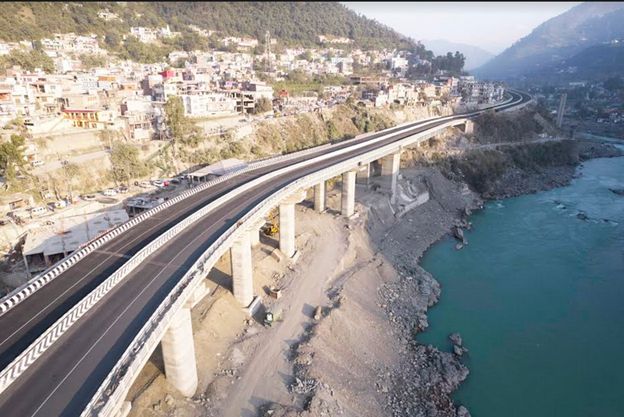
“This project included the construction of the Ram Ban Viaduct, an extraordinary feat covering a length of 1.08 kilometers with 26 spans. Costing ₹328 crores, this viaduct is situated on the Udhampur-Ramban section of National Highway-44. It has enhanced transportation connectivity in the Ram Ban Bazaar region, ensuring smoother vehicle flow and enhancing the scenic beauty of the area. These efforts underscore the government’s commitment to provide Jammu and Kashmir with superior highway infrastructure, contributing to regional economic prosperity and boosting its status as a premier tourist destination”.
“In our commitment to continuous improvement, we invite you to share your valuable feedback and suggestions with us. Your insights play a vital role in enhancing our services and making our newspaper better. Feel free to reach out to us at [email protected]. We eagerly anticipate your thoughts and ideas, which will help us serve you even more effectively. Your input is highly valued as we strive to provide you with the best possible experience. Thank you for being a part of the reader community”!
Notable Tunnels and Achievements: Construction work on significant tunnels along the highway includes the twin-tube tunnel, part of the National Highway Authority of India’s 286-km-long four-lane project, which began on May 23, 2011. Another noteworthy tunnel is the 8.45 km-long tunnel between Qazigund and Banihal on the Jammu-Srinagar highway, inaugurated by Prime Minister Narendra Modi in April of the previous year. This tunnel reduces the road distance between Banihal and Qazigund by 16 km and travel time by approximately one and a half hours. These completed projects not only alleviate traffic congestion but also substantially reduce the distance between various points, enhancing overall connectivity and accessibility.
Recent Developments and Future Prospects: To enhance travel between Jammu and Srinagar, three corridors, costing ₹35,000 crore, are under construction. The first corridor spans from Jammu to Udhampur-Ramban-Banihal and further to Srinagar. This 4-lane, 250-km road, with a total cost of ₹16,000 crore, involves 4-laning of a 210-km stretch, including the construction of 10 tunnels covering 21.5 km. Union Minister for Road Transport and Highways, Nitin Gadkari, recently announced the successful completion of a 4-lane project on the Udhampur-Ramban section. This project included the construction of the Ram Ban Viaduct, an extraordinary feat covering a length of 1.08 kilometers with 26 spans. Costing ₹328 crores, this viaduct is situated on the Udhampur-Ramban section of National Highway-44. It has enhanced transportation connectivity in the Ram Ban Bazaar region, ensuring smoother vehicle flow and enhancing the scenic beauty of the area. These efforts underscore the government’s commitment to provide Jammu and Kashmir with superior highway infrastructure, contributing to regional economic prosperity and boosting its status as a premier tourist destination. Recently Lieutenant Governor Manoj Sinha in Srinagar also highlighted UT Administration’s efforts to bolster air and road connectivity, in alignment with the growing aspirations of the people. The introduction of these reforms seeks to facilitate easier travel and foster overall development in the region, he said “Kashmir will not only get connected with railways to Kanyakumari but also with highways. Under the dynamic leadership of PM Modi, 1.50 Lakh Cr highway projects are underway in different parts of Jammu and Kashmir. Earlier it would take 10-12 hours to reach Jammu from Srinagar now the same journey is taken in 5-7 hours, from Karta to New Delhi, new express highway is being constructed and it will take only 5 hours now,” he said.
“The story of the Jammu-Srinagar Highway is a story of transformation, resilience, and progress. It reflects the power of infrastructure development in enhancing the lives of the people and fostering economic growth. As we applaud these achievements, we must remember that continued investments and maintenance are essential to ensure that this lifeline remains open and operational. The upgradation of the Jammu-Srinagar Highway is a journey of hope, and it must continue to shine as a beacon of progress for the years to come”.
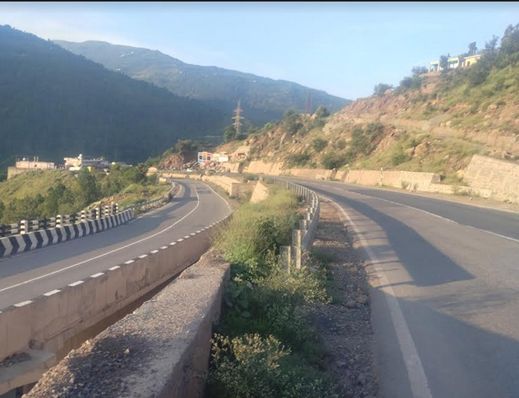
What Locals Say: Abdul Majeed, a local told Kashmir Horizon that the improved Jammu-Srinagar highway has been a game-changer for our region. It used to take hours to reach Srinagar, but now, the journey is much quicker, making life easier for everyone, he said. Majeed said that the highway upgrades have not only reduced travel time but have also brought economic opportunities to our doorstep. We see increased tourism and trade, which is a great boost for our livelihoods, he added. Sushil Bhagat employee who often travels from Jammu to Srinagar says the completion of the new tunnels and road widening has made it possible to visit our families in Srinagar or Jammu more frequently. It feels like our two beautiful cities are now much closer, he added. “The government’s focus on enhancing road infrastructure has improved the overall quality of life in the region. We are grateful for the increased connectivity and accessibility it has provided us,” he said.
Kashmir Horizon Take: For years, the Jammu-Srinagar Highway has been synonymous with challenges and obstacles, from treacherous mountain terrain to unpredictable weather conditions. However, in recent times, this vital lifeline connecting two of India’s most picturesque regions has undergone a remarkable transformation. The journey from Jammu to Srinagar, once an arduous and time-consuming endeavor, has now become a smoother, quicker, and more accessible experience. This remarkable feat of infrastructure development not only signifies progress but also offers a beacon of hope for the region. The highway’s significance is undeniable. It is the sole surface link to the Kashmir Valley, which becomes isolated from the rest of the country during the harsh winter months. The highway serves as a lifeline for the transportation of goods, people, and military supplies to and from this beautiful but challenging terrain. In the past, the highway was a narrow, winding mountain road that was susceptible to landslides, avalanches, and snowfall blockages. During the winter season, it was often impassable, leading to disruptions in essential supplies and creating significant hardships for the locals. It was ill-suited for heavy traffic and became a bottleneck for both trade and tourism. However, the past several years have witnessed a transformation that is nothing short of a revolution. The upgradation of the Jammu-Srinagar Highway has been a priority for the central government, and this commitment is evident in the remarkable projects that have been undertaken. These endeavors have included road widening, the construction of tunnels, and the implementation of snow and avalanche protection measures. The completion of the Jawahar Tunnel in 1956 marked a significant turning point in the highway’s history. This tunnel drastically reduced travel times and ensured that the highway could remain operational even during harsh weather conditions. The journey didn’t stop there. Over the past decade, a series of projects, such as the construction of the Banihal-Qazigund Road Tunnel, have further enhanced connectivity. This tunnel, inaugurated by Prime Minister Narendra Modi, not only reduced travel time but also added to the region’s overall accessibility. The expansion and modernization of the highway have brought about several benefits. It has not only reduced travel time and alleviated congestion but has also stimulated economic opportunities in the region. Tourism and trade have received a significant boost, leading to an improved quality of life for the local populace. These developments are a testament to the government’s unwavering commitment to the region’s progress. The creation of multiple tunnels, bridges, and flyovers, along with the four-laning project, has helped overcome the highway’s historical challenges. Projects worth billions of rupees have been initiated, and a network of National Highways in the region has expanded significantly. The upgradation of the Jammu-Srinagar Highway is a triumph of engineering and determination. It not only offers ease of travel but also enhances the region’s economic prospects. It has enabled the dreams of locals, who can now connect more swiftly with their families, and has brought hope to a region that was once marred by isolation and inaccessibility. The story of the Jammu-Srinagar Highway is a story of transformation, resilience, and progress. It reflects the power of infrastructure development in enhancing the lives of the people and fostering economic growth. As we applaud these achievements, we must remember that continued investments and maintenance are essential to ensure that this lifeline remains open and operational. The upgradation of the Jammu-Srinagar Highway is a journey of hope, and it must continue to shine as a beacon of progress for the years to come.