“For Kashmir, the significance of this message extends beyond the political arguments surrounding the constitutional changes. It provides an opportunity to assess how the post-2019 framework can be translated into a stronger system of rights, better governance, economic opportunities and democratic participation…………”
Mohammad Irfan
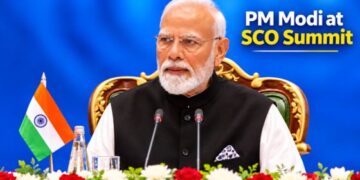
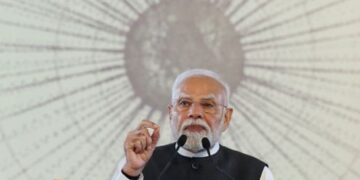
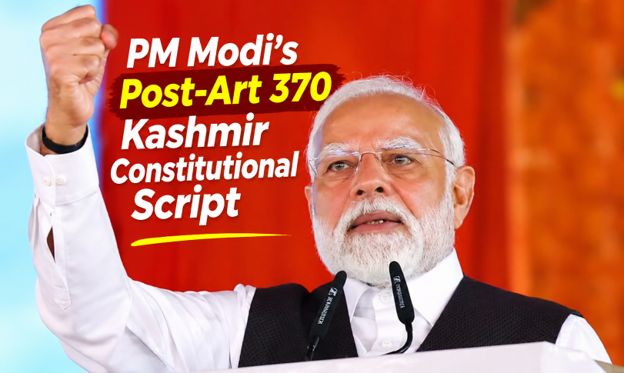
The Few constitutional developments in independent India’s history have generated as much discussion, debate and political attention as the abrogation of Article 370. For Jammu and Kashmir, August 5, 2019, marked a defining turning point, fundamentally changing the region’s constitutional and administrative relationship with the Union of India. Seven years later, the implications of that decision continue to shape discussions on governance, rights, development, democratic representation and the future of the region. Prime Minister Narendra Modi’s Constitution Day article on November 26 has brought this transformation back into the national conversation. Recalling the historical context of Article 370 and Article 35A, the Prime Minister argued that these provisions had prevented the full application of the Indian Constitution in Jammu and Kashmir and affected the rights of several sections of society. He described their abrogation as the correction of a historical wrong and emphasised that constitutional integration must strengthen the country’s unity and ensure equal opportunities for every citizen. For Kashmir, the significance of this message extends beyond the political arguments surrounding the constitutional changes. It provides an opportunity to assess how the post-2019 framework can be translated into a stronger system of rights, better governance, economic opportunities and democratic participation. The real measure of this constitutional transition will ultimately be the difference it makes to the lives of people across the Valley.
Constitutional Transition: Article 370 emerged from the distinctive historical circumstances surrounding Jammu and Kashmir’s accession to India in 1947. It provided a special constitutional arrangement under which the application of provisions of the Indian Constitution to the erstwhile State was subject to exceptions and modifications. The arrangement reflected the circumstances in which Jammu and Kashmir became part of the Indian Union and subsequently developed its own Constitution. Article 35A, introduced through the Presidential Order of 1954, empowered the state legislature to define permanent residents and provide them with special rights and privileges relating to employment, property and other matters. Over the decades, successive Presidential Orders extended numerous provisions of the Indian Constitution to Jammu and Kashmir. Nevertheless, the region continued to have a distinct constitutional framework.
On August 5, 2019, the Union Government issued Constitution Orders that rendered the earlier arrangement inoperative. Parliament also passed the Jammu and Kashmir Reorganisation Act, 2019, which reorganised the erstwhile State into the Union Territories of Jammu and Kashmir and Ladakh, with the reorganisation taking effect on October 31, 2019. The changes brought Jammu and Kashmir under the full application of the Constitution of India and extended the national legal framework to the region. The Supreme Court, in its landmark December 11, 2023 judgment in In Re: Article 370, upheld the constitutional validity of the decision to render Article 370 inoperative. The Constitution Bench also directed that Assembly elections be held by September 30, 2024, and that statehood be restored at the earliest. The judgment provided important judicial clarity on the constitutional status of Article 370. It also brought attention to the next phase of Jammu and Kashmir’s constitutional journey: strengthening representative institutions and ensuring that the benefits of governance reach citizens effectively.
Promise Of Constitutional Protection: One of the principal arguments advanced by the Union Government in support of the 2019 changes was that the full application of the Constitution would strengthen equality and extend legal protections to sections that had remained outside certain provisions and benefits. In his Constitution Day article, Prime Minister Modi specifically referred to Scheduled Castes, Scheduled Tribes, Other Backward Classes and women, arguing that the earlier constitutional arrangement had restricted their access to certain rights and safeguards. The extension of national laws and constitutional provisions has brought significant changes to the legal and administrative framework of Jammu and Kashmir. For instance, the extension of central legislation relating to social justice, education, labour welfare, protection of women, child rights and disadvantaged communities has created a common statutory framework. The important task now is to ensure that these provisions are effectively implemented. Legal equality must be accompanied by institutional awareness, accessible remedies and administrative responsiveness. A law becomes meaningful when citizens know their rights, can access the relevant institutions and receive timely justice.
The Development Dividend: Constitutional changes acquire their greatest significance when they contribute to improvements in people’s everyday lives. For Kashmir, this means creating a development environment where opportunities are not restricted by geographical isolation, economic circumstances or limited institutional access. The region has considerable potential in tourism, horticulture, handicrafts, agriculture, education, healthcare and entrepreneurship. These sectors can generate sustainable employment and strengthen the local economy if supported by modern infrastructure, investment and responsive policies. Tourism, for example, is not merely an industry associated with hotels and travel operators. It supports thousands of families engaged in transport, handicrafts, restaurants, guiding services, local markets and allied activities. Similarly, horticulture remains a vital source of livelihood for families across the Valley. Improving cold storage, processing facilities, transportation and market connectivity can increase farmers’ incomes and reduce post-harvest losses. The extension of national welfare programmes and financial inclusion initiatives has also created opportunities to strengthen social protection and economic participation. Schemes such as Ayushman Bharat, PM Awas Yojana, Ujjwala and MUDRA can contribute to improving the quality of life when benefits reach eligible households efficiently.
Changing Aspirations: The future of Jammu and Kashmir is closely linked to the aspirations of its young population. The Valley has a large pool of educated youth pursuing opportunities in civil services, medicine, engineering, information technology, research, sports and entrepreneurship. Their ambitions represent one of the region’s greatest strengths. The constitutional transition must therefore be accompanied by investments in education, skill development and employment generation. Universities and technical institutions can play a greater role in developing research partnerships, promoting startups and connecting students with industry requirements. Greater investment in digital infrastructure can also enable young professionals to participate in opportunities beyond geographical boundaries. The startup ecosystem deserves particular attention. Young entrepreneurs working in technology, agriculture, tourism, handicrafts and digital services require mentorship, access to credit and simplified administrative procedures. The region’s educational institutions must also encourage constitutional awareness and scientific temper so that young people understand both their rights and their responsibilities.
Importance Of Representation: While constitutional integration has changed the administrative framework of Jammu and Kashmir, democratic representation remains an equally important component of its future. The Assembly elections held in 2024 marked an important development in the restoration of representative political institutions after a prolonged period without an elected legislature. The elected Assembly provides a platform for public representatives to raise regional concerns, debate legislation and participate in governance. For a region with diverse geographical, economic and social requirements, representative institutions are particularly important. Issues concerning agriculture, education, healthcare, urban development, rural infrastructure and employment require continuous engagement between citizens, elected representatives and the administration. The question of restoration of statehood also remains an important part of Jammu and Kashmir’s constitutional discourse. The Supreme Court’s direction for restoration of statehood at the earliest established an important constitutional expectation. The issue has continued to feature in the political and institutional debate in the region.
“The focus increasingly needs to move towards how the region can benefit from national development programmes, legal protections, investment opportunities and institutional cooperation. Full application of national laws provides a common legal foundation, but effective governance requires more than the extension of legislation…..….”
Article 370, Changing Relationship: For decades, Article 370 was a defining feature of Jammu and Kashmir’s constitutional relationship with India. Its abrogation changed that arrangement and brought the region under the same constitutional framework applicable across the country. This transition has also changed the nature of the debate surrounding Jammu and Kashmir. The focus increasingly needs to move towards how the region can benefit from national development programmes, legal protections, investment opportunities and institutional cooperation. The full application of national laws provides a common legal foundation, but effective governance requires more than the extension of legislation. It requires institutions that understand local requirements, administration that responds to citizens and policies that recognise the region’s distinctive geographical and economic circumstances. Kashmir’s mountainous terrain, climatic conditions and dispersed settlements demand tailored development planning. A uniform constitutional framework can coexist with policies designed to address local needs.
Security And Stability: Security and stability remain important considerations in Jammu and Kashmir’s development journey. A peaceful environment is essential for tourism, investment, educational activities and the expansion of local businesses. It also allows institutions to concentrate on long-term priorities such as healthcare, education, employment and infrastructure. At the same time, sustainable stability requires public confidence, effective administration and opportunities for young people. Development and security should therefore be viewed as complementary objectives. Better educational facilities, employment opportunities, social protection and responsive institutions can strengthen the foundations of a peaceful society. The region’s progress should be assessed through a broad set of indicators, including economic growth, public service delivery, educational outcomes, investment, employment and the functioning of democratic institutions. The objective must be to ensure that peace translates into prosperity and that development generates opportunities across communities.
PM Modi’s Remarks: Prime Minister Modi’s Constitution Day article also places the larger question of national unity within the framework of constitutional values. His emphasis on India First and Kartavya, or duty, provides a perspective on the responsibilities of citizens and institutions in building a developed nation by 2047. For Jammu and Kashmir, these principles can find expression through inclusive development, constitutional awareness, respect for individual rights and active participation in democratic institutions. The region’s constitutional journey cannot be assessed exclusively through the events of August 2019. It must also be judged by what follows: the quality of governance, the effectiveness of welfare delivery, the opportunities available to young people and the strength of democratic representation. The next phase should prioritise institutional development, employment generation, women’s empowerment, social justice, economic diversification and the strengthening of public confidence.
Kashmir Horizon View: The way forward for Jammu and Kashmir must be guided by the principles of constitutional democracy, inclusive development and public participation. The constitutional changes of August 2019 have opened a new chapter, but their long-term success will depend on how effectively they translate into tangible benefits for ordinary citizens. Restoration of statehood, strengthening of elected institutions and responsive governance should remain important priorities. Equally significant are employment opportunities for youth, investment in education, healthcare, tourism, agriculture and local industries. The aspirations of people across regions and communities must find meaningful representation in policymaking. Constitutional integration should be accompanied by social and economic empowerment, ensuring that every citizen experiences equality, dignity and opportunity. The focus must now shift from debating the past to building a confident future—one in which peace, democratic participation, development and trust become the defining features of Jammu and Kashmir.
(“Team Kashmir Horizon” is committed to continuous improvement and invites feedback and suggestions from readers and its followers on social media sites. Reader insights are considered vital for enhancing content quality and empowering the community. The team encourages open communication and values the thoughts and ideas of its audience, believing that such input will enable them to serve the public more effectively. The initiative aims to ensure that readers have the best possible experience with “Kashmir Horizon”. Interested individuals can reach out to us via email at [email protected].)