“By placing civilisational dialogue on the SCO agenda, India has opened an important avenue for strengthening regional cooperation through the shared heritage of countries connected by centuries of interaction”….…
Mohammad Irfan
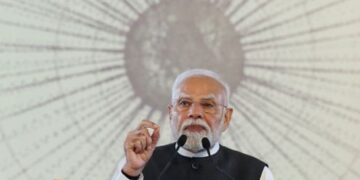
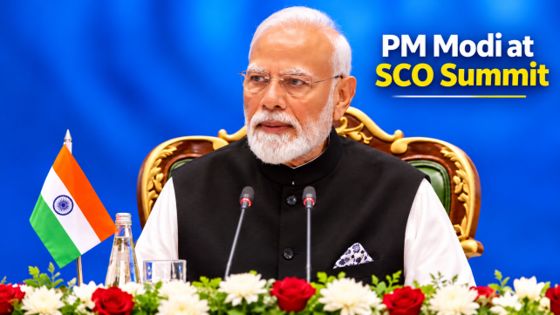
 From At a time when the world is searching for stronger foundations of peace, understanding and international cooperation, India’s initiative to host the first Shanghai Cooperation Organisation (SCO) Civilisational Dialogue Forum represents a significant contribution to the evolving discourse on global diplomacy. Prime Minister Narendra Modi’s address at the historic Purana Qila in Delhi offered a compelling vision of how shared civilisational heritage, cultural exchanges and intellectual cooperation can bring nations closer and strengthen the bonds between societies. The initiative carries significance beyond the inauguration of another international forum. It reflects India’s growing emphasis on cultural diplomacy as an important dimension of its international engagement and its belief that the foundations of lasting global relationships extend beyond political agreements and economic partnerships. Nations are also connected through their histories, languages, literature, philosophical traditions, artistic expressions and collective human experiences. By placing civilisational dialogue on the SCO agenda, India has opened an important avenue for strengthening regional cooperation through the shared heritage of countries connected by centuries of interaction. The timing is particularly meaningful. The SCO has completed 25 years of its establishment, during which it has expanded cooperation in security, economy and connectivity. The introduction of a dedicated civilisational dialogue platform provides an opportunity to add a deeper cultural and people-centric dimension to this engagement.
India’s Civilisational Legacy| An Instrument Of Global Engagement: The choice of Purana Qila as the venue for the inaugural forum gave the occasion a distinctive historical character. Associated with India’s rich historical traditions and heritage, the monument provided an appropriate setting for a dialogue centred on the continuity of civilisation and the movement of ideas across generations. The cultural performances, recitation of Vedic mantras, presentations of Buddhist philosophy and the portrayal of the journey of Hanuman Ji brought together different dimensions of India’s cultural and spiritual inheritance. These presentations conveyed a message that India’s civilisational traditions are not confined to historical memory; they continue to offer universal values of compassion, harmony, knowledge and human unity. The Prime Minister’s address effectively connected this cultural setting with the broader idea of international cooperation. India’s civilisational philosophy has historically encouraged dialogue, intellectual engagement and the acceptance of diversity. The principle of Vasudhaiva Kutumbakam, which regards the world as one family, offers a particularly relevant framework for contemporary global relations. Through this initiative, India is seeking to demonstrate how its historical experiences and philosophical traditions can contribute to a wider international conversation on peace and cooperation.
Rediscovering The Ancient Connections Of Eurasia: One of the most important dimensions of Modi’s address was his emphasis on the historical connections between India, China, Central Asia and other parts of Eurasia. The Prime Minister recalled the trade relations between the Indus Valley Civilisation and Mesopotamia around 5,000 years ago, explaining how ancient commercial networks gradually developed into extensive channels of cultural and intellectual exchange. These routes carried much more than merchandise. Merchants, scholars, travellers, philosophers and Buddhist monks moved across geographical boundaries, taking with them ideas, knowledge, languages and traditions that influenced societies far beyond their places of origin. This historical experience demonstrates that Eurasia was not merely a geographical space connecting different countries; it was also an important civilisational corridor where diverse traditions interacted and enriched one another. The Prime Minister’s reference to these ancient connections is particularly relevant to the SCO, whose geographical and cultural landscape encompasses several regions associated with these historical exchanges. Reviving the spirit of these connections through contemporary cultural and academic cooperation could provide the organisation with a distinctive identity and create new opportunities for its people.
Buddhism |A Bridge Of Knowledge Between India, Asia: The historical movement of Buddhism from India through Gandhara and Central Asia into China remains one of the most remarkable examples of civilisational interaction. Prime Minister Modi’s references to Kucha and Dunhuang highlighted the importance of these ancient centres in transmitting Buddhist philosophy and knowledge across Asia. The journeys of Chinese scholars Faxian, Xuanzang and Yijing to India represented an extraordinary tradition of intellectual curiosity and cross-cultural learning. Their engagement with Indian philosophical and religious traditions helped establish enduring connections between the two civilisations. Universities such as Nalanda emerged as important international centres of learning, attracting scholars who travelled considerable distances to study India’s intellectual traditions. The contribution of Kumarajiva, born in Kucha in Central Asia, in translating Buddhist texts into Chinese further illustrates the role played by individual scholars in bringing different societies closer.
Literature, Knowledge Know No Geographical Boundaries: The Prime Minister’s reference to the Panchatantra and Ramayana highlighted how India’s literary traditions travelled across geographical boundaries and became part of the cultural heritage of other societies. The Panchatantra’s journey into Persian and Arabic literary traditions, particularly through Kalila waDimna, demonstrates the enduring appeal of stories built around wisdom, morality and human behaviour. Similarly, the Ramayana’s adaptation into Cambodia’s Reamker reflects the ability of literature to connect societies while becoming part of their distinct cultural identities. These examples establish an important principle: cultural exchange is not simply the transmission of one tradition to another. It is a process through which societies learn from one another and create new forms of artistic and intellectual expression. The same spirit of exchange can be extended through collaborative literary projects, translation initiatives and comparative cultural studies among SCO countries.
Shared Scientific Traditions, Intellectual Prosperity: Another significant aspect of the Prime Minister’s address was his recognition of the historical movement of scientific and mathematical knowledge. His reference to the contributions of Indian mathematician Brahmagupta and the subsequent development of mathematical scholarship in Baghdad highlighted the interconnected nature of intellectual progress. The contributions of scholars such as Al-Khwarizmi demonstrate how knowledge travelled across regions, acquired new dimensions and contributed to the advancement of human understanding. This shared scientific history provides an excellent opportunity for universities and research institutions across the SCO region to undertake collaborative projects.
Music, Architecture And The Shared Cultural Vocabulary: The Prime Minister also highlighted the cultural relationship between the Maqam traditions of Central Asia and India’s Raga traditions, along with the contribution of Sufi ideas to the development of Qawwali. These connections reflect the richness of cultural interaction that has taken place across the region. Music has historically served as a universal language, bringing communities together through shared emotions, artistic expression and spiritual experiences. Similarly, the influence of Central Asian garden traditions associated with Samarkand and Herat on India’s Charbagh architecture illustrates the movement of aesthetic ideas across geographical boundaries. Such examples provide opportunities for collaborative cultural festivals, exhibitions, musical performances and research initiatives. They also demonstrate how architecture, music and artistic traditions can strengthen the cultural relationship between countries in ways that are accessible to ordinary citizens. The promotion of these shared traditions could become an important component of the SCO’s cultural cooperation agenda.
Technology Offers A New Silk Route For Cultural Exchange: While the Prime Minister’s address drew extensively upon history, it was equally forward-looking in its emphasis on digital technology and artificial intelligence. The ancient trade routes that once connected societies through months of travel have now been complemented by digital networks that enable communication and knowledge sharing within seconds. This transformation presents an extraordinary opportunity for the countries of the SCO. Prime Minister Modi proposed cooperation in digitising ancient manuscripts, rare texts, historical documents and artefacts preserved in museums, libraries and archives.
A shared digital heritage initiative could make valuable collections accessible to scholars, students and researchers across the region. Artificial intelligence could further accelerate the translation of literary works and historical material, allowing cultural knowledge to reach wider audiences. The establishment of collaborative digital archives, virtual exhibitions and multilingual knowledge platforms could help preserve heritage while making it relevant to the present generation. This would effectively create a modern digital Silk Route, connecting the intellectual and cultural resources of different countries through technology.
Cultural Tourism, Heritage Circuits|Opportunities For Cooperation: The Prime Minister’s suggestions regarding joint museum exhibitions, scholar exchanges, cultural tourism and heritage circuits offer practical pathways for taking the initiative forward. The SCO region possesses numerous historical sites associated with the Silk Routes, Buddhist heritage, ancient trade networks and the movement of religious and philosophical traditions. Connecting these sites through collaborative heritage circuits could strengthen cultural tourism and create economic opportunities for local communities. Such initiatives could also encourage greater interaction between tourists, researchers, artists and cultural organisations. Joint cultural festivals and artist exchange programmes could introduce traditional and contemporary art forms to international audiences, while providing opportunities for emerging artists to showcase their work.
“Modi rightly placed youth at the centre of his vision, recognising that today’s generation has unprecedented access to technology, information and international communication.Young people must be encouraged to explore the languages, literature, history and cultural traditions of other SCO countries……..”
Youth Custodians Of A Shared Future: The success of civilisational diplomacy will ultimately depend on the participation of younger generations. Prime Minister Modi rightly placed youth at the centre of his vision, recognising that today’s generation has unprecedented access to technology, information and international communication. Young people must be encouraged to explore the languages, literature, history and cultural traditions of other SCO countries. Universities can become important centres of this engagement through student exchange programmes, joint research, language courses, international conferences and cultural fellowships. Young writers, filmmakers, musicians and artists can also use digital platforms to present the shared heritage of the region in innovative ways. Equally important is the involvement of local artisans, traditional performers and craftspeople, whose knowledge and skills represent an essential part of the cultural identity of their societies. By creating opportunities for these communities, the SCO can ensure that cultural diplomacy reaches beyond institutional boundaries and becomes a meaningful part of people’s lives.
Vasudhaiva Kutumbakam| India’s Message To The World: The philosophical core of Modi’s address emerged through his invocation of Vasudhaiva Kutumbakam—the world is one family. This ancient Indian principle conveys the idea that human welfare is interconnected and that the well-being of one society is closely linked to the well-being of others. It reflects a worldview in which diversity is celebrated, mutual respect is encouraged and cooperation is considered essential for collective progress. The Prime Minister’s reference to India’s own experience of unity amid linguistic, cultural and social diversity further reinforced this message. India’s civilisational traditions have long emphasised dialogue and the coexistence of different schools of thought. The Vedic expression, “Sangachchhadhwam Samvadadhwam Sam Vo Manamsi Janatam”, meaning let us walk together, engage in dialogue and achieve harmony in our thoughts, provides an appropriate philosophical foundation for the forum. The message is particularly relevant in a world where cooperation is increasingly necessary to address shared challenges, including climate change, technological transformation, environmental protection and sustainable development. Civilisational dialogue can help create the understanding and trust necessary for countries to work together on these common priorities.
Kashmir Horizon View: The inaugural SCO Civilisational Dialogue Forum represents an important opportunity for India to strengthen its role as a promoter of cultural understanding and international cooperation. India’s historical connections with Central Asia, China and the wider Eurasian region provide a strong foundation for this engagement. Its literary, philosophical, scientific and artistic traditions offer considerable scope for collaborative initiatives. More importantly, India’s emphasis on civilisational diplomacy demonstrates that international leadership can also be exercised through ideas, knowledge, culture and the ability to bring societies together. The initiative adds a valuable dimension to the SCO’s existing framework and creates possibilities for stronger cooperation among universities, museums, research institutions, cultural organisations and younger generations. The way forward lies in converting the vision presented at Purana Qila into sustained programmes of collaboration. Joint digital archives, heritage conservation projects, academic exchanges, translation initiatives and cultural festivals could provide the institutional foundation for this emerging partnership. Ultimately, the first SCO Civilisational Dialogue Forum is an invitation to look at international relationships through a wider historical and human perspective. The ancient routes that connected India with Central Asia and other parts of Eurasia carried not only goods but also knowledge, wisdom and shared aspirations. Today, technology and institutional cooperation offer an opportunity to revive that spirit on an unprecedented scale. Prime Minister Modi’s address has placed before the SCO a vision in which shared heritage becomes a source of mutual understanding, cultural diversity becomes an instrument of unity and dialogue becomes a pathway to peace. The larger significance of this initiative lies in its belief that the future can be strengthened by understanding the past. In a world seeking common ground, India’s message through the inaugural forum is both timely and forward-looking: nations may have different histories and identities, but their shared human experiences can provide the foundation for a more connected, harmonious and peaceful world.
(“Team Kashmir Horizon” is committed to continuous improvement and invites feedback and suggestions from readers and its followers on social media sites. Reader insights are considered vital for enhancing content quality and empowering the community. The team encourages open communication and values the thoughts and ideas of its audience, believing that such input will enable them to serve the public more effectively. The initiative aims to ensure that readers have the best possible experience with “Kashmir Horizon”. Interested individuals can reach out to us via email at [email protected].)