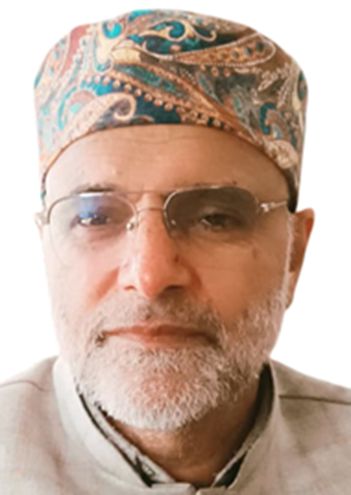
Prof. Hamid Naseem Rafiabadi
Hazrat Bilal ibn Rabah (may Allah be pleased with him) occupies an exceptionally distinguished position in Islamic history. His life is not merely the story of an African believer who embraced Islam, endured persecution and became the celebrated Mu’adhdhin (caller to prayer) of Prophet Muhammad (peace and blessings be upon him). It is a remarkable testimony to the transformative power of faith, the dignity of human beings and Islam’s rejection of racial and social discrimination. His personality illustrates the Qur’anic principle that human superiority is determined not by colour, ancestry, wealth or social position, but by righteousness and God-consciousness. Bilal was the son of Rabah and Hamamah and is generally described in classical biographical sources as being of Ethiopian or Abyssinian origin. Born in Makkah, he was enslaved by Umayyah ibn Khalaf, one of the prominent opponents of Islam. He belonged to the earliest generation of Muslims, known as al-Sabiqun al-Awwalun. His acceptance of Islam was an expression of sincere conviction in the Oneness of Allah (Tawhid), which liberated his conscience from idolatry and the authority of those who claimed power over his life. His conversion, however, exposed him to terrible persecution.
Umayyah ibn Khalaf subjected him to brutal torture in the scorching desert heat, placing a heavy stone upon his chest and demanding that he renounce his faith.
Yet Bilal remained steadfast, repeatedly declaring, Ahad, Ahad (One, One). These two words became an enduring expression of his spiritual courage and uncompromising commitment to monotheism. His persecutors could torture his body, but they could not conquer his conscience. His steadfastness represents one of the most inspiring examples of religious conviction in the formative history of Islam. When Abu Bakr al-Siddiq (RA) learned of his suffering, he purchased Bilal’s freedom and emancipated him. Umar ibn al-Khattab (RA) is reported to have remarked, “Abu Bakr is our master, and he has freed our master.” This statement reflects the esteem in which Bilal was held by the leading Companions. His emancipation was more than an individual act of kindness; it represented the ethical direction of Islam, which encouraged the liberation of enslaved persons and recognised human dignity as a fundamental moral responsibility. One of the greatest honours bestowed upon Bilal was his appointment as the Mu’adhdhin of the Prophet.
Following the establishment of the Muslim community in Madinah, the Adhan was introduced as the public call to congregational prayer. Bilal was entrusted with proclaiming it because of his strong and distinctive voice. Thus, a man who had once been denied basic human dignity became the voice through which Muslims were summoned to worship Allah. His Adhan proclaimed the greatness of God, the testimony of Tawhid and the messengership of Muhammad (peace and blessings be upon him). This appointment embodied the Islamic principle that honour and responsibility are determined by faith and merit rather than race or social status. The Qur’an expresses this principle in unmistakable terms: “Indeed, the most noble of you in the sight of Allah is the most righteous of you” (49:13). Bilal’s life became a practical illustration of this teaching. His African ancestry and former enslavement did not diminish his spiritual standing. Rather, his sincerity, perseverance and devotion earned him a distinguished place among the Companions. His spiritual eminence is further illustrated by an authentic narration recorded in Sahih al-Bukhari and Sahih Muslim. The Prophet once told Bilal that he had heard the sound of his footsteps in Paradise and asked which deed he considered most hopeful.
Bilal explained that whenever he performed ablution, he endeavoured to offer voluntary prayers. This narration reveals that his distinction rested not merely on his public service or suffering but also on his personal devotion, regular worship and intimate relationship with Allah.
“Hazrat Bilal ibn Rabah (RA) embodies the core spiritual and ethical ideals of Islam through his steadfast monotheism (Tawhid), emancipation, and appointment as the first Mu’adhdhin, which dismantled racial and social hierarchies. Though his earthly voice is silent, his call to prayer (Adhan) still echoes globally, leaving an enduring legacy that true greatness comes from faith, righteousness, sincerity, and service rather than ancestry, race, wealth, or status.”
Bilal participated in the major events of the Prophetic mission, including the Battle of Badr. Among those who fought against the Muslims at Badr was his former persecutor, Umayyah ibn Khalaf. Historical accounts associate Bilal with identifying Umayyah during the encounter. The episode symbolises the remarkable transformation brought about by Islam: the formerly oppressed believer now stood among those defending a community founded upon faith and justice. Another defining moment came during the conquest of Makkah in 8 AH. The Prophet, having entered the city with remarkable humility and magnanimity, entrusted Bilal with the honour of ascending the roof of the Ka’bah and proclaiming the Adhan. The symbolism was extraordinary. The same city where Bilal had once been tortured for his belief now heard his voice proclaiming the Oneness of Allah from its most sacred sanctuary. This was a powerful demonstration that Islam had challenged the inherited hierarchies of pre-Islamic society and placed spiritual merit above worldly privilege.
The death of the Prophet in 11 AH deeply affected Bilal.
Accounts in the biographical tradition indicate that he subsequently travelled to Syria and discontinued or greatly reduced his regular Adhan, owing to his profound attachment to the Prophet and the painful memories associated with Madinah. A well-known devotional narrative describes his return to Madinah at the request of Hasan and Husayn (RA), when his Adhan reportedly moved the people to tears. Although the details of this account require caution regarding their historical authentication, it reflects the deep emotional association between Bilal’s voice and the memory of the Prophetic era. Bilal spent his later years in Syria, and his death is traditionally associated with Damascus. Classical sources differ concerning the precise year, with 18 AH and 20 AH among the dates reported. His biography is preserved by major scholars, including al-Dhahabi in Siyar A’lam al-Nubala’, Ibn al-Athir in Usd al-Ghabah and Ibn Hajar al-Asqalani in Al-Isabah. The significance of Bilal extends beyond his individual achievements. His life offers a profound lesson in Islam’s understanding of racial equality and human fraternity.
The Prophet declared in his celebrated teachings that an Arab has no superiority over a non-Arab, nor a white person over a black person, except through righteousness and piety. Bilal’s elevation within the Prophetic community gave practical expression to this moral vision. His story remains relevant wherever racial prejudice, social exclusion and discrimination undermine human dignity.
It would be historically inaccurate to suggest that slavery disappeared immediately from Muslim societies. Nevertheless, Islam established strong ethical encouragement for emancipation and made the freeing of enslaved persons an important act of religious merit.
Bilal’s liberation by Abu Bakr remains one of the most memorable illustrations of this moral commitment. Ultimately, Hazrat Bilal ibn Rabah (RA) represents the spiritual and ethical ideals of Islam in a particularly inspiring form. His declaration of Ahad, Ahad symbolised the freedom of conscience through Tawhid; his emancipation demonstrated the value of human dignity; his appointment as Mu’adhdhin challenged racial and social hierarchies; and his devotion to Allah exemplified the qualities of a sincere believer. His earthly voice may have fallen silent, but the Adhan he proclaimed continues to resonate across the Muslim world. Bilal’s enduring legacy reminds humanity that true greatness is neither inherited through ancestry nor determined by colour, wealth or social position. It is attained through faith, righteousness, sincerity and service to humanity.
(The author a veteran academician is a former Professor and Head Department of Islamic Studies, Kashmir University. The views, opinions and conclusions expressed in this article are those of the author and aren’t necessarily in accord with the views of “Kashmir Horizon”)