The rapid advancement of digital technology and social media has transformed almost every dimension of human life, including religion and spirituality. Today, religious activities such as prayers, Quranic recitations, sermons and personal supplications are frequently recorded, live-streamed and circulated across digital platforms. While such practices are often defended as effective means of promoting Islamic teachings and facilitating Da’wah, they also raise an important theological and ethical question: Does the public display of religious worship undermine its fundamental requirement of sincerity (Ikhlas)? The recent position of the Grand Mufti of Saudi Arabia, Sheikh Abdulaziz al-Sheikh, supporting restrictions on filming and broadcasting prayers inside mosques, has brought this issue into sharper focus. It invites Muslims to reconsider the relationship between religious devotion, public visibility and spiritual integrity in the digital age.
In Islamic theology, the acceptance of worship rests upon two essential principles: conformity with the Sunnah of the Prophet Muhammad (peace be upon him) and sincerity of intention. An act may appear outwardly impressive, but its spiritual worth depends upon the intention behind it. Ikhlas requires that every act of worship be performed exclusively for the pleasure of Allah, without seeking human admiration, social recognition, prestige or material benefit. The Quran declares: “He who created death and life to test you as to which of you is best in deed.” (Al-Mulk, 67:2). Fudayl ibn Iyad explained that the best deed is one that is both sincere and correct. Sincerity means performing it for Allah alone, while correctness means following the Sunnah. Neither quality can substitute for the other.
The Quran further establishes this principle: “They were commanded only to worship Allah, sincerely devoting their religion to Him.” (Al-Bayyinah, 98:5). These teachings establish that worship is not merely an outward performance but an intimate spiritual relationship between the servant and the Creator. One of the greatest dangers associated with the public display of worship is Riya, commonly understood as ostentation or performing religious acts to attract the attention and admiration of others. Islamic teachings regard Riya as a form of minor Shirk (Shirk al-Asghar), because it introduces human approval into an act that should be directed exclusively towards Allah. Mahmood ibn Labid reported that the Prophet Muhammad (peace be upon him) said: “The thing I fear most for you is minor Shirk.”
When the Companions asked about it, he replied, “It is Riya.” (Musnad Ahmad). In another tradition, the Prophet described hidden Shirk as a person beautifying his prayer because someone is watching him (Sunan Ibn Majah). This warning assumes particular significance in the digital age. A camera can become a permanent observer, while thousands of online viewers may become an invisible audience. If an imam, reciter or religious speaker modifies his voice, prolongs his prostrations or changes his manner of presentation primarily to attract online attention, the possibility of Riya becomes a serious spiritual concern. The Prophet also warned against those who employ religious knowledge and Quranic recitation for personal fame.
According to a narration in Sahih Muslim, a person who acquired knowledge, taught others and recited the Quran will be questioned on the Day of Judgement. Although he will claim to have acted for Allah, he will be told that he pursued knowledge to be recognised as a scholar and recited the Quran to be praised as a reciter. He will have already received the recognition he sought in worldly life, but will find no reward awaiting him in the Hereafter. This Hadith demonstrates that public appreciation cannot replace divine acceptance. Imam al-Ghazali, in his celebrated work Ihya Ulum al-Din, provides a profound psychological analysis of Riya. He explains that ostentation can exist in extremely subtle forms. Sometimes a person worships regularly in solitude but experiences particular satisfaction when others happen to observe his devotion. Such inward pleasure may indicate hidden attachment to recognition.
“Digital tools should support Islamic learning and responsible outreach without turning worship into self-promotion. Religious authority must protect the sanctity and privacy of prayer spaces, as true worship (Ikhlas) is measured solely by Allah’s acceptance and devotion to Him—not by views, likes, or public approval.”
Al-Ghazali’s analysis provides an important framework for examining digital religious practices. Religious content creators, imams and reciters should therefore ask themselves a fundamental question: Would they maintain the same enthusiasm, concentration and excellence in worship if no camera were present and nobody except Allah could witness their actions? This question makes self-examination indispensable. The early Muslim scholars and spiritual masters demonstrated extraordinary concern for protecting their devotional lives from public display. Ayyub al-Sakhtiyani reportedly concealed his night prayers whenever he feared that someone might discover them.
Ibrahim al-Nakha’i would cover his Quranic manuscript when an unexpected visitor entered. Such examples reflect a spiritual culture in which good deeds were treated as private treasures between the individual and Allah. This tradition stands in contrast to contemporary practices in which journeys to Makkah, emotional moments during supplication and voluntary night prayers are routinely recorded and published to attract digital engagement.
Nevertheless, it would be incorrect to conclude that Islam prohibits the use of modern communication technologies for religious purposes. A necessary distinction must be maintained between disseminating religious knowledge and displaying personal acts of worship. Recording academic lectures, Quranic explanations, scholarly discussions, Fatawa, educational seminars and intellectual debates can serve important religious and educational objectives. Such activities facilitate learning, expand access to knowledge and strengthen public understanding of Islam. In many circumstances, their dissemination may fulfil a collective religious responsibility.
The greater concern arises when intimate devotional activities, including congregational prayers, personal supplications and spiritual retreats, are unnecessarily transformed into public spectacles. These practices are fundamentally expressions of humility, submission and dependence upon Allah. Their routine exposure to digital audiences can introduce avoidable spiritual distractions. The mosque, in particular, must retain its character as a sanctuary of remembrance, tranquillity and concentration. The Quran states: “In houses which Allah has ordered to be raised and in which His name is mentioned.” (Al-Nur, 24:36). Continuous filming may disturb worshippers, weaken their concentration and create self-consciousness about their appearance and movements. Furthermore, social media metrics, including views, likes, followers and comments, can gradually encourage religious activities to be evaluated through popularity rather than spiritual worth.
Therefore, Muslims must learn to benefit from technological advancement without compromising the sanctity of worship. Digital platforms should facilitate religious education, intellectual engagement and responsible Da’wah, rather than turn private devotion into an instrument of self-promotion. Religious institutions and scholars should establish appropriate safeguards to preserve the dignity of mosques and the spiritual privacy of worshippers. Ultimately, the success of worship cannot be measured by the number of people who watch it, appreciate it or share it. Its true worth lies in its acceptance by Allah. The central purpose of worship is not to elevate oneself in the eyes of people but to seek the pleasure of the Creator. This is the essence of Ikhlas, the demand of Tawhid and the enduring foundation of Islamic spirituality.
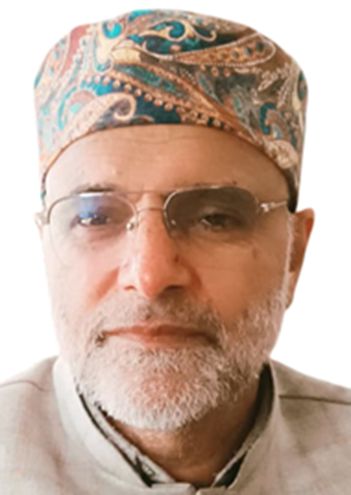
(The author a veteran academician is a former Professor and Head Department of Islamic Studies, Kashmir University. The views, opinions and conclusions expressed in this article are those of the author and aren’t necessarily in accord with the views of “Kashmir Horizon”)
[email protected]