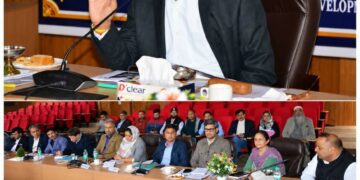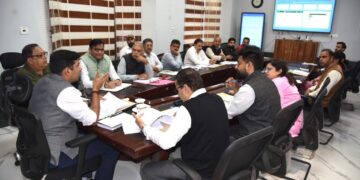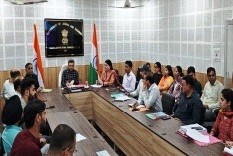
Jammu : A meeting was held under the chairmanship of Relief and Rehabilitation Commissioner (M), J&K Dr. Arvind Karwani to review the status of delivery of essential services in the migrant camps, ongoing developmental works of the current financial year and proposed development works for the next financial year in all the migrant camps.
The review of social sector schemes for eligible migrant beneficiaries highlighted significant efforts to improve basic amenities in migrant camps. The Relief & Rehabilitation Commissioner directed the Jal Shakti Department to ensure a continuous water supply, including the deployment of water tankers to address shortages. Both short-term and long-term strategies are being implemented, with a major project planned for Jagti Township, estimated to cost around Rs 10 crore, aimed at enhancing water supply. Dr. Karwani emphasized the importance of regular water quality testing to guarantee safe drinking water and instructed repairs to hand pumps and bore wells. The Public Works Department (PWD) reported ongoing renovation projects across migrant camps, including the repair of over 200 building blocks and approximately 5,000 flats, with an administrative approval of Rs 82.45 crore for these initiatives. Additionally, a comprehensive project for improving internal roads, parks, and facilities in schools and health dispensaries was outlined, with a focus on prioritizing repairs based on public consultation. The Jammu Municipal Corporation was tasked with evaluating the need for additional manpower to improve sanitation efforts. The Urban Environmental Engineering Department announced the establishment of Sewage Treatment Plants for several migrant camps, with a budget of about Rs 11.5 crore, set to commence shortly. The extension of social sector schemes has benefited around 3,500 families following the integration of migrant ration cards into the national database. Plans for further outreach camps in Jammu were established to enhance awareness and facilitate applications for various government schemes. Senior officers from the Relief Organization were instructed to conduct weekly visits to their assigned camps to monitor development and address grievances, particularly concerning properties in the Kashmir Valley. They were also tasked with overseeing a door-to-door campaign to assist eligible beneficiaries with documentation and online applications for social welfare schemes. Dr. Karwani reiterated the necessity for adherence to directives from the General Administration Department regarding the responsibilities of Transit Migrant Camps. The meeting included participation from various government departments and local officials to ensure a coordinated approach to these initiatives.