

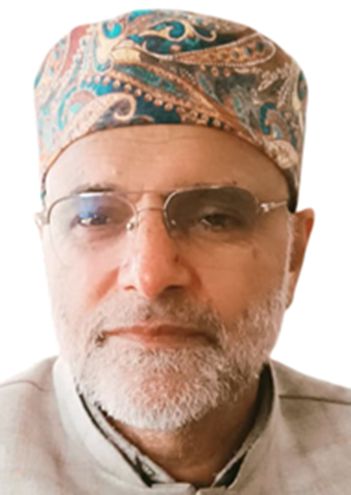
Prof. Hamid Naseem Rafiabadi
In his seminal work al-Muqaddimah, the fourteenth-century Muslim polymath and historian Ibn Khaldun formulated one of the most penetrating theories of the rise, consolidation and decline of human civilizations. At the heart of his analysis stands the concept of ʿasabiyyah—social solidarity, mutual loyalty, collective responsibility and the moral cohesion that enables a human group to unite, establish authority and build an enduring civilization. For Ibn Khaldun, a civilization does not become strong merely because it possesses wealth, armies, territory or sophisticated institutions. Its real strength lies in the quality of relationships that bind its members together and in the justice through which authority is exercised. When solidarity is sustained by a sense of common purpose and reciprocal obligation, society acquires resilience; when oppression, corruption and selfishness replace justice, that solidarity begins to disintegrate. Ibn Khaldun observed that when dynasties become established, rulers and elites often become accustomed to luxury, excessive expenditure and concentration of privilege. The state can gradually cease to function as an instrument of public welfare and become an instrument of extraction. Excessive taxation burdens the productive classes, economic activity is discouraged, agricultural and commercial interests are exploited, political privileges become hereditary, and the judicial system may be manipulated to protect the powerful. As these tendencies intensify, the relationship between rulers and ruled deteriorates. People lose confidence in institutions, economic incentives weaken, social trust declines and the very ʿasabiyyah that enabled the state to rise begins to disappear. Ibn Khaldun’s historical insight can therefore be summarized in the profound principle that ẓulm—oppression and injustice—is destructive of civilization. This Khaldunian understanding finds a remarkable resonance in the thought of the distinguished twentieth-century Islamic scholar and historian Maulana Abul Hasan Ali Hasani Nadwi (Ali Miyan Nadwi), whose reading of history likewise rejected the assumption that material advancement alone guarantees civilizational survival. Nadwi repeatedly emphasized the moral and spiritual dimensions of civilization and the indispensable place of justice in a healthy social order. In his discussion of the contribution of Islam to human civilization, he writes that Islam “blessed life by giving it faith and knowledge, fraternity, justice, and self-confidence,” and he speaks of the development of “a just, healthy, and balanced system.” These words are particularly significant because they place justice alongside faith, knowledge and fraternity as one of the foundations of a healthy civilization. They also challenge the modern tendency to identify progress exclusively with technology, industrial capacity, military strength, economic growth and scientific achievement. A nation may possess artificial intelligence, nuclear technology, advanced aerospace systems, sophisticated financial markets and enormous military power, yet none of these guarantees its moral or civilizational permanence.
Technology can strengthen a just society, but it can also make an unjust society more powerful in its capacity to surveil, exploit, manipulate and destroy. Material power is therefore a force multiplier; it is not a substitute for moral purpose. The Islamic understanding of justice begins with the recognition that ʿadl is not merely a political virtue but a divine command and one of the fundamental purposes of revelation. The Qur’an declares: “Indeed, Allah commands justice, excellence and generosity to relatives, and He forbids immorality, wrongdoing and transgression.” (Qur’an 16:90). Justice is thus placed at the centre of the moral order established by Allah. The Qur’an goes further and connects the entire mission of the prophets with the establishment of justice: “Indeed, We sent Our messengers with clear proofs, and We sent down with them the Scripture and the Balance so that people may uphold justice.” (Qur’an 57:25). The reference to al-Mīzān, the Balance, is profoundly meaningful. Revelation provides humanity with a moral criterion by which individual conduct, economic relationships, political authority and social institutions can be measured. Justice means that everything is placed in its proper position and that every person receives his or her legitimate due. It means that power is restrained by accountability, wealth by responsibility, law by morality and freedom by concern for the rights of others. The Qur’an commands those entrusted with authority: “Indeed, Allah commands you to render trusts to whom they are due, and when you judge between people, judge with justice.” (Qur’an 4:58). The command is addressed not merely to judges but, in its wider moral significance, to everyone who exercises responsibility and authority. Leadership, therefore, is an amānah, a trust. Political power is not private property, and public institutions do not exist merely for the benefit of those who control them.
The Qur’an establishes an even higher standard by commanding believers to uphold justice even when justice is personally costly: “O you who believe! Stand firmly for justice, as witnesses for Allah, even if it is against yourselves, your parents or close relatives.” (Qur’an 4:135). This principle is revolutionary because it refuses to make justice dependent upon personal interest, family loyalty, political affiliation or communal identity. A person who demands justice only when he is the victim has not yet understood the Islamic conception of justice. The real test of justice is whether one is prepared to uphold it when it goes against one’s own interests. The Qur’an similarly commands: “Do not let the hatred of a people cause you to depart from justice. Be just; that is nearer to righteousness.” (Qur’an 5:8). Thus, justice in Islam is universal. It cannot be suspended because the other person belongs to another religion, ethnicity, nation, political party or social class. The strength of an ethical civilization is demonstrated precisely by how it treats those over whom it has power. This has enormous implications for contemporary society. A community survives when its members believe that the institutions governing their lives are fundamentally fair. People need confidence that their dignity, property, rights and opportunities will not depend solely upon wealth, family connections, political influence or social status. They must believe that the law protects the weak as well as the powerful and that those entrusted with authority can themselves be held accountable. Once this confidence disappears, the foundations of society begin to weaken. Citizens cease to trust institutions; workers lose confidence in economic structures; young people become cynical about their future; corruption becomes normalized; and social groups increasingly perceive one another as competitors rather than partners in a common civilization. This is where Ibn Khaldun’s concept of ʿasabiyyah becomes particularly relevant. Social solidarity cannot survive indefinitely in an environment where people believe that the system is fundamentally unjust.
People willingly sacrifice for a community when they believe that the community recognizes their sacrifices and protects their legitimate interests. Justice creates trust; trust creates cooperation; cooperation creates solidarity; and solidarity gives society the strength to withstand internal and external crises. Conversely, injustice produces resentment; resentment destroys trust; destroyed trust weakens solidarity; and weakened solidarity eventually undermines political and social stability. The Qur’an’s concept of ẓulm is therefore central to understanding civilizational decline. Ẓulm does not mean only physical violence. It includes every form of placing something in the wrong position, violating rights, abusing authority, exploiting the vulnerable, withholding legitimate dues and transgressing moral limits. The Qur’an repeatedly warns humanity against injustice. Allah says: “Allah does not wrong people at all, but people wrong themselves.” (Qur’an 10:44). The Qur’an also invites human beings to study the remains of previous civilizations and learn from their fate: “Have they not travelled through the land and seen what was the end of those before them? They were greater than them in strength, and they cultivated the earth and developed it more than these have developed it…” (Qur’an 30:9). The message is clear: physical strength does not make a civilization invulnerable.
The ruins of history constitute a warning that material power without moral restraint cannot guarantee permanence. The Prophet Muhammad (SAW) likewise placed extraordinary emphasis upon justice and warned against oppression. In a famous ḥadīth qudsī, Allah says: “O My servants, I have forbidden injustice for Myself and have made it forbidden among you, so do not wrong one another.” (Ṣaḥīḥ Muslim). The Prophet (SAW) also said: “Beware of injustice, for injustice will be dark nesses on the Day of Resurrection.” (Ṣaḥīḥ Muslim). These teachings establish that injustice is not simply a political mistake or economic inefficiency; it is a grave moral and spiritual crime. It damages both the victim and the moral character of the society that permits it. Justice must also be expressed through the economic architecture of society. It cannot remain an abstract legal principle while economic institutions systematically concentrate wealth, privilege and opportunity in a narrow minority. Islam does not condemn wealth, private property, trade or legitimate profit. Rather, it places wealth within a moral framework of responsibility. The Qur’an warns against an economic order in which wealth merely circulates among the wealthy: “…so that it does not merely circulate among the rich among you.” (Qur’an 59:7). This principle demonstrates that the circulation of wealth is a social concern, not merely a private matter. Zakat provides an institutional mechanism through which wealth is transferred to categories of people who are entitled to assistance, including the poor, needy, debtors and travellers in need (Qur’an 9:60).
The Qur’an also commands: “Do not consume one another’s wealth unjustly.” (Qur’an 4:29). The prohibition of ribā and other forms of exploitative financial conduct belongs to this wider Islamic concern with economic justice. The objective is to prevent financial relationships from becoming mechanisms of exploitation and to ensure that economic activity remains connected to responsibility, productive effort and legitimate exchange. When wealth becomes excessively concentrated, the consequences are not merely economic. First, social trust erodes because people begin to believe that effort and merit cannot overcome structural privilege. Second, class resentment increases as large inequalities create a sense of exclusion and humiliation. Third, institutions become vulnerable to capture when concentrated wealth can purchase disproportionate political influence. Fourth, corruption becomes normalized when citizens believe that law can be bypassed by those who possess money or connections. Finally, young people lose hope when they see little relationship between education, hard work and opportunity. A society cannot remain stable indefinitely when a large part of its population feels that the economic system exists for the benefit of someone else. Justice therefore becomes an economic necessity as well as a moral obligation. The same principle applies to political authority. The Qur’an’s insistence upon trust and justice means that rulers and institutions must be accountable. Power without accountability tends toward abuse, because the human being is vulnerable to pride, greed and self-interest.
“Civilizations may rise on power, wealth, and knowledge, but they endure only when grounded in justice, mercy, integrity, and ruler accountability.”
The Qur’an records the principle that judgment must be based upon justice, not upon status or privilege. The Prophet (SAW) also emphasized the tremendous responsibility of leadership. Authority is an amānah for which its holder will be answerable before Allah. The true strength of a state is consequently not merely its ability to compel obedience but its capacity to earn legitimate trust. A government may possess an enormous bureaucracy, sophisticated weapons and powerful security institutions, but if its people experience systematic injustice, its apparent strength conceals an internal weakness. A state becomes genuinely strong when citizens believe that law is fair, institutions are trustworthy and power is accountable. This is also why justice cannot be separated from raḥmah, mercy. Islamic justice is not a cold legalism concerned only with punishment. It is embedded within a moral order that recognizes human dignity, vulnerability and social responsibility. The Prophet Muhammad (SAW) was described by the Qur’an as “a mercy to the worlds” (Qur’an 21:107).
Justice protects rights, while mercy recognizes circumstances; justice prevents exploitation, while mercy enables society to respond humanely to weakness and hardship. A healthy civilization therefore needs both. This understanding is beautifully reflected in the famous statement of Ibn al-Qayyim al-Jawziyyah concerning the objectives of the Sharīʿah. He explains that the Sharīʿah is founded upon wisdom and the welfare of people in this world and the Hereafter and that it is justice, mercy, benefit and wisdom. He famously states, in substance, that anything which turns from justice to injustice, from mercy to its opposite, from benefit to harm and from wisdom to futility cannot truly belong to the Sharīʿah, even if someone attempts to justify it through interpretation. This principle is of extraordinary relevance today. Islamic law cannot be reduced to isolated legal forms while the higher objectives of justice, mercy, human welfare and wisdom are ignored. The Sharīʿah, properly understood, seeks to establish a moral and social order in which human beings can live with dignity and security. The contemporary world, however, often mistakes technological advancement for civilizational security. Nations possessing artificial intelligence, nuclear deterrence, advanced biotechnology, sophisticated financial systems and unprecedented communication networks may imagine themselves protected from the cycles of history. Yet technology itself is morally neutral. The same technology that can diagnose disease can facilitate surveillance; the same financial networks that can expand opportunity can facilitate exploitation; the same scientific knowledge that can save millions of lives can also be used to produce weapons capable of destroying millions. Technology therefore magnifies the moral character of the civilization using it. When technology is placed within a framework of justice, compassion and accountability, it can serve human dignity. When it is placed within a framework of greed, oppression and domination, it can magnify injustice on an unprecedented scale.
The central question of civilization is therefore not simply what can humanity do? but what ought humanity to do? The first is a question of technological capability; the second is a question of moral wisdom. History provides abundant examples of powerful civilizations that achieved remarkable material accomplishments but eventually declined. Ancient Egypt developed extraordinary architectural and administrative capabilities. Rome created sophisticated legal and military institutions and vast systems of infrastructure. The Sasanian Empire possessed considerable administrative and military sophistication. Yet no empire was able to make itself permanent. The Qur’an repeatedly draws attention to the remains of earlier peoples because historical memory is intended to become moral wisdom. The ruins of civilization remind humanity that material achievement is not an insurance policy against moral collapse. What ultimately determines the durability of a society is the condition of its institutions and the moral relationships among its people. In this respect, the insights of Ibn Khaldun and Maulana Ali Miyan Nadwi complement the Qur’anic worldview. Ibn Khaldun explains the social mechanism through which solidarity is strengthened or destroyed; Nadwi reminds us of the moral and spiritual substance required for a civilization to remain healthy; and the Qur’an provides the normative foundation of justice, balance, mercy and accountability. Together they offer a profound framework for understanding the survival of human communities.
Justice must also extend beyond one’s own community. The Qur’anic command not to allow hatred to lead to injustice establishes a universal ethic that is urgently needed in today’s polarized world. Religious communities, nations and political movements frequently demand justice for themselves while rationalizing injustice against others. Islam rejects this double standard. Justice is not genuine if it applies only to one’s friends. It is not genuine if it applies only to one’s own nation. It is not genuine if it disappears when one’s political interests are threatened. True justice requires the courage to acknowledge truth even when it is uncomfortable and to protect the rights of others even when doing so brings no immediate advantage. This principle is particularly important for religious communities seeking to survive and flourish in a pluralistic world. A community that wishes to command moral respect must demonstrate justice in its own institutions, economic dealings, family relationships, scholarship, leadership and relations with other communities. Moral credibility cannot be demanded; it must be earned through conduct. The ultimate test of a civilization, therefore, is not the height of its skyscrapers, the size of its armies, the sophistication of its technology or the volume of its financial markets. The deeper questions are: Are the weak protected? Are the powerful accountable? Can an ordinary citizen obtain justice against a powerful person? Are workers treated with dignity? Are minorities protected? Is corruption condemned regardless of who commits it? Does wealth carry social responsibility? Are young people given genuine opportunities? Do institutions serve the public rather than privileged interests? Does society distinguish between right and wrong even when doing so is costly? These questions reveal the moral health of a civilization more accurately than its material statistics.
Justice is therefore not merely one virtue among many. It is the civilizational capital upon which trust, solidarity, stability and sustainable prosperity depend. Ibn Khaldun’s analysis shows how oppression destroys the social cohesion that enables civilizations to rise. Maulana Abul Hasan Ali Nadwi’s emphasis on faith, knowledge, fraternity, justice and a balanced system reminds us that civilization must be morally as well as materially developed. The Qur’an places justice at the heart of the mission of revelation, while the Sunnah warns that oppression becomes darkness on the Day of Resurrection. The lesson is universal: a civilization may temporarily survive through fear, wealth, coercion and technological superiority, but it cannot achieve lasting stability without justice. Justice creates trust; trust creates solidarity; solidarity creates stability; and stability creates the environment in which knowledge, economic development, culture and technology can flourish. Conversely, injustice generates resentment, resentment destroys trust, destroyed trust weakens solidarity, and weakened solidarity ultimately undermines the institutions upon which political and economic power depend.
As the contemporary world confronts widening inequality, environmental crises, wars, displacement, technological disruption and profound political polarization, the insights of the Qur’an, the Prophet (SAW), Ibn Khaldun, Ibn al-Qayyim and Maulana Abul Hasan Ali Nadwi acquire renewed relevance. Humanity does not merely need more power; it needs wisdom in the use of power. It does not merely need greater wealth; it needs fairness in the distribution and use of wealth. It does not merely need stronger governments; it needs more accountable governments. It does not merely need technological innovation; it needs an ethical framework capable of directing innovation toward human welfare. The survival of civilization ultimately depends upon restoring the balance represented by al-Mīzān—a balance between power and accountability, wealth and responsibility, rights and duties, freedom and moral restraint, technological capability and ethical wisdom. The Qur’anic vision is therefore not simply a programme for individual morality; it is a foundation for a just civilization. “Indeed, Allah commands justice and excellence…” (Qur’an 16:90). And the purpose of revelation is expressed in the words: “…so that people may uphold justice.” (Qur’an 57:25). These principles transcend time and place. They remind humanity that true civilizational strength is not measured merely by what a society possesses, but by how it treats those who have the least power within it. A civilization becomes worthy of survival when justice governs its institutions, mercy shapes its social relations, integrity guides its economy and accountability restrains its rulers. Without these foundations, even the most powerful civilization may gradually become a monument to its own decline. The enduring lesson of the Qur’an, the Sunnah, Ibn Khaldun and Maulana Abul Hasan Ali Nadwi is therefore clear: civilizations may rise through power, wealth and knowledge, but they endure only through justice.
(The author a veteran academician is a former Professor and Head Department of Islamic Studies, Kashmir University. The views, opinions and conclusions expressed in this article are those of the author and aren’t necessarily in accord with the views of “Kashmir Horizon”)
[email protected]






