The Evolution Of Languages And Human Speech: Language is the definitive bridge of human civilization, reflecting the history, culture, philosophy, and intellect of human societies across millennia. From the earliest communal gatherings of prehistoric communities to the creation of formal literary traditions, the ability to express subtle thoughts, record historical events, and convey abstract spiritual truths remains humanity’s most distinguishing trait. Scholars, philologists, and theologians throughout history have engaged in profound debates regarding the ultimate origins of human speech—how diverse languages emerged, how dialects diverged, and how linguistic groups migrated across the globe. In classical scholarship and linguistic anthropology, two primary theoretical frameworks explain the origins and early multiplication of human languages. The first is the Theory of Direct Divine Instruction (Tawqif). According to several prominent classical scholars and commentators, Almighty Allah taught Prophet Adam (peace be upon him) the fundamental names, terms, and conceptual frameworks of speech directly (al-Asma’). In this tradition, Prophet Adam (pboh) was endowed with immediate fluency in multiple foundational tongues—including Arabic, Syriac, Hebrew, Persian, and early Latin roots. As his descendants multiplied and migrated across different continents and geographical terrains, distinct communities naturally preserved and adapted specific linguistic branches, which gradually evolved into the regional tongues of various ancient civilizations.
The second perspective is the Theory of Dialectal Branching and Linguistic Fusion (Ishtilah). Alternatively, many linguists and historians hold that Prophet Adam (pboh) was taught a single, primary, highly structured language. As human populations expanded and dispersed across isolated geographic regions, environmental factors, physical distance, and cultural developments precipitated gradual phonetic shifts, grammatical modifications, and vocabulary shifts. Over generations, these regional variants solidified into distinct languages. Furthermore, whenever different linguistic communities interacted along borders, migration routes, or commercial trade paths, their intermingling generated entirely new linguistic syntheses—much like the convergence of Persian, Arabic, and local Indian dialects in later history birthed the Urdu language. Despite the variations in historical theory regarding secondary languages, classical Islamic scholarly traditions overwhelmingly emphasize that the primary, pristine language taught to Prophet Adam (pboh) in Paradise was Arabic. According to a renowned narration transmitted on the authority of Hazrat Abdullah ibn Abbas (may Allah be pleased with him), Prophet Adam (pboh) communicated in the Arabic language while in Paradise. Following his descent to Earth, his speech temporarily shifted to Syriac during his period of trial; however, upon the divine acceptance of his repentance, the profound fluency and eloquence of Arabic were restored to him. Consequently, classical scholars view Arabic not merely as an evolutionary cultural byproduct, but as the foundational language of human history and the eternal medium of expression for the inhabitants of Paradise.
Heavenly Scriptures And The Sacred Status Of Arabic: The relationship between divine revelation, prophetic history, and the Arabic language constitutes a cornerstone of Islamic theology and scriptural study. The selection of Arabic as the medium for the final, uncorrupted revelation to humanity is viewed by theologians not as a random historical coincidence, but as an intentional divine choice matched to the intrinsic structural perfection of the language. Renowned scholar Imam Jalal al-Din al-Suyuti notes in his monumental work Al-Itqan fi ‘Ulum al-Quran that the archetype and ultimate origin of all heavenly scriptures—including the Torah (Tawrat), the Psalms (Zabur), and the Gospel (Injeel)—were originally recorded in the Preserved Tablet (Lauh al-Mahfuz) in the Arabic language. When the archangel Jibril (peace be upon him) brought these messages to various nations throughout history, the divine guidance was communicated in the native languages of their respective prophets to ensure immediate understanding and clear moral accountability. This profound thematic continuity across scriptures is explicitly highlighted in the Holy Quran: “Indeed, this is in the former scriptures, the scriptures of Abraham and Moses) and “And indeed, it is mentioned in the scriptures of former peoples”. These Quranic affirmations demonstrate that the fundamental theological truths, ethical codes, and spiritual wisdoms found in the Quran were embedded within all preceding divine books, reflecting a unified source of divine wisdom.
Regarding the analytical perspectives of classical exegetes, Imam al-Tabari, Ibn Kathir, and al-Qurtubi clarified that the Quranic assertion regarding earlier scriptures implies total thematic and creedal alignment—specifically on Monotheism (Tawhid), accountability, and righteousness—rather than identical word-for-word Arabic syntax in the historical texts of the Torah or Gospel. The majority of scholars (Jumhur) emphasized Surah Ibrahim (4:4)—”And We sent not a messenger except with the language of his people”—affirming that earthly revelations were delivered in local vernaculars (Hebrew for Moses, Aramaic for Jesus) so that prophets could articulate guidance clearly to their immediate communities. In synthesizing Imam al-Suyuti’s accord, scholars reconciled these views by establishing that while the eternal blueprint of divine speech exists in Arabic within the heavenly realm (Lauh al-Mahfuz), its historical manifestation on Earth adapted dynamically to the native tongue of each designated messenger.
Historical Lineage And Categorization Of Arab Lineages: The historical development of classical Arabic spans distinct epochs, marked by careful preservation through specific tribal lineages across the Arabian Peninsula. Following the Great Deluge, human settlement resumed under Prophet Noah (peace be upon him) and his offspring. Historical records document that an ancient form of Arabic was preserved through the descendants of Iram (grandson of Noah) and the ancient southern tribes. When Prophet Abraham (peace be upon him) brought his wife Hajar and infant son Prophet Ishmael (peace be upon him) to the barren valley of Mecca, the area was eventually settled by the nomadic Bedouin tribe of Jurhum. As Prophet Ishmael (pboh) grew up among the Jurhumites, Almighty Allah blessed him at the age of fourteen with divine inspiration, enabling him to master, refine, and articulate Arabiyyah Khalisah—the purest form of classical Arabic. Prophet Ishmael (pboh) became the linguistic and genealogical forefather of the northern Arab tribes, passing this refined speech down to his descendants, including the noble tribe of Quraysh. Historically, genealogists and linguists categorize the Arab peoples into two primary structural branches:
Arab al-‘Aribah (The Primary, Pure Arabs): These were the indigenous Arab tribes descended directly from Iram ibn Sam ibn Nuh. They inhabited the southern and central regions of Arabia long before Prophet Abraham (pboh). Historical tribes belonging to this category include ‘Ad, Thamud, Tasm, Jadis, ‘Amliq, and the original Jurhum.
Arab al-Musta’ribah (The Arabized / Adnanite Arabs): These are the descendants of Prophet Ishmael (pboh) through his noble descendant Adnan. Although Prophet Abraham’s ancestral lineage originated in non-Arabic Mesopotamia, Prophet Ishmael adopted Arabic through his upbringing with Jurhum and received divine inspiration that elevated his speech to the highest standard of eloquence. This line culminated in the Quraysh of Mecca, who became the custodians of the Kaaba and the guardians of classical Arabic rhetoric.
“Translating the Holy Quran is like capturing lightning in a jar—you get the light, but lose the thunder. While translations into English, Urdu, or French offer valuable human interpretations (Tafsir), they only provide a flat, single-dimensional preview of the original.”
Structural Peculiarities And Linguistic Grandeur: The Arabic language exhibits structural, morphological, and rhetorical attributes that set it apart from all other human languages. Its internal architecture provides a unique blend of mathematical precision, acoustic resonance, and expansive vocabulary. First is its unrivaled lexical abundance and synonymous precision. While many languages expand their vocabulary by creating composite words or relying heavily on adjectival modifiers, classical Arabic possesses an immense native vocabulary with specialized single terms for distinct subtle states of an object, emotion, or action. Imam al-Shafi’i, the great jurist and master of Arabic literature, declared that no human being—with the sole exception of a divinely inspired prophet—could ever fully comprehend the complete lexicon of the Arabic language in its entirety. Lexicographers such as Ibn Durayd (in his landmark Jamharat al-Lughah) and Khalil ibn Ahmad al-Farahidi cataloged tens of millions of potential word combinations derived from trilateral, quadrilateral, and pentaliteral root structures. Demonstrating this incredible lexical range for common physical phenomena, classical scholar Ibn Khalawayh documented over 500 distinct names for a lion, 200 distinct terms for a snake, and nearly 600 specific vocabulary words describing various forms of trial and calamity (Asma’ al-Dahiyah). Second is root-system derivation (Ishtiqaq) and morphological precision. Classical Arabic operates upon a dynamic morphological framework based on three-letter root forms (Maddah). From a single trilateral root, a writer can derive dozens of distinct verbal forms, active participles, passive participles, nouns of place, and instruments. Each derived pattern (Wazn) carries inherent semantic properties—such as intensity, causation, reciprocity, or repetition. For example, from the trilateral root k-t-b, Arabic derives Kataba (He wrote), Kitab (Book), Maktab (Desk), Maktabah (Library), and Katib (Author). This derivational flexibility allows Arabic to maintain extreme precision while maintaining structural harmony across its vocabulary. Furthermore, the system of vocalic inflections (I’rab) clearly indicates grammatical relationships—such as subject, direct object, and possessive state—allowing for flexible sentence structures without compromising semantic clarity. Third is concise rhetoric (I’jaz) and pronominal efficiency. Classical Arabic excels in rhetorical brevity (Ijaz). Complex relationships, conditionality, and temporal actions that require multiple sentences or lengthy clauses in Western languages can often be expressed in Arabic through a single, highly integrated word containing attached subject pronouns, object markers, and conjunctions. A classic example is found in the Quran which translates as “And We gave it to you to drink.” In a single eleven-letter word, Arabic expresses a conjunction, a past-tense plural subject, a first-person actor, a second-person indirect object, and a third-person direct object.
Literature, Lexicography, Preservation: The historical preservation of Arabic lexicography represents an extraordinary chapter in the history of human scholarship. Following the rapid expansion of the Islamic state across the Middle East, North Africa, and Asia, millions of non-Arab populations entered the fold of Islam. To prevent dialectal corruption (Lahn) and preserve the pristine integrity of the Quranic text, classical scholars undertook an unprecedented, systematic effort to record, codify, and dictionary every root word in the Arabic language. Key milestones in Arabic lexicography include:
Kitab al-‘Ayn: Compiled by Khalil ibn Ahmad al-Farahidi as the first comprehensive Arabic dictionary. Jamharat al-Lughah: Authored by Ibn Durayd. Al-Sihah: Authored by Al-Jawhari. Al-Qamus al-Muhit: Authored by Majd al-Din al-Firuzabadi. Taj al-‘Arus: Authored by Sayyid Murtada al-Zabidi as a massive 10-volume commentary on Al-Qamus. The scale of these lexicographical undertakings was monumental. It is recorded that the scholar and statesman Sahib ibn ‘Abbad declined a prestigious political appointment in a distant city because transporting his personal collection of Arabic reference dictionaries alone would have required sixty cargo camels. During the standardization of the written Quran under the Caliphates of Hazrat Umar and Hazrat Uthman (may Allah be pleased with them), strict philological criteria were established. Linguists collected poetic compositions, idiomatic expressions, and vocabulary exclusively from uncorrupted Bedouin tribes inhabiting the deep desert—such as Qays, Tamim, Asad, and Hudhayl—whose speech had remained completely isolated from foreign language contact. The dialect of the Quraysh was selected as the ultimate standard for classical Arabic because Mecca served as a major center for pilgrimage and trade. Over centuries, the Quraysh had deliberately adopted the most elegant, harmonious, and rhetorically superior terms from all visiting Arab tribes, filtering out regional guttural flaws or harsh dialectal quirks.
Loanwords In Arabic (Mu’arrab) And The Limits Of Translation: An important area of classical Arabic philological study involves the treatment of foreign vocabulary that entered the language through historical trade and geographical proximity prior to the revelation of the Quran. While rigorous purists such as Imam al-Shafi’i maintained that classical Arabic contains no foreign components whatsoever, the vast majority of classical linguists—including Abu ‘Ubayd and Ibn Durayd—clarified that ancient Arabic did absorb select terms (Mu’arrab or Dakhil) from Roman, Persian, Syriac, and Ethiopic sources over centuries of commercial contact, such as Sijjl (Persian origin: written scroll/book), Firdaws (Greek/Persian origin: elevated paradise), Qistas (Roman/Greek origin: precise balance or scale), and Istabraq (Persian origin: fine brocade silk). However, linguists emphasize a critical structural point: these terms entered Arabic poetry and speech generations before the advent of Islam. They were fully modified to conform to Arabic morphological weights (Awzan), phonetic patterns, and grammatical rules. Once these foreign roots were naturalized and vocalized by classical Arab poets, they became an integral part of pure Arabic eloquence. Post-Quranic foreign introductions (Muwallad), on the other hand, were strictly excluded from classical dictionaries. Because classical Arabic integrates precise root derivation, acoustic balance, rhetorical conciseness, and multi-layered semantic depth, classical scholars unanimously agree that it is fundamentally impossible to translate the Holy Quran into any other language without losing significant layers of meaning. While the Arabic original contains multilayered root meanings, rhetorical brevity, and acoustic cadence, a literal translation provides only a single-dimensional semantic approximation. Translations into English, Urdu, Persian, or French provide valuable explanatory commentaries (Tafsir), but they represent only a singular, human interpretation of the divine text. They cannot replicate the structural perfection, rhetorical majesty, and divine weight of the original Arabic revelation. Through its divine selection, rich historical development, morphological precision, and unmatched lexicographical preservation, Arabic remains a monumental achievement in human speech—a language that continues to bridge historical antiquity with contemporary civilization.
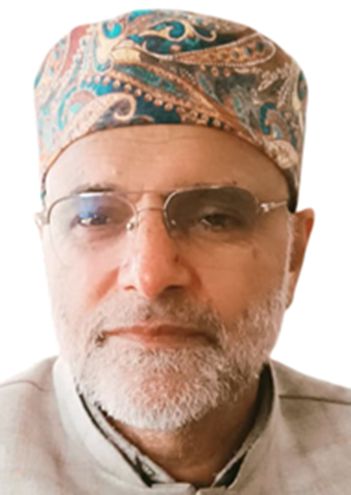
(The author a veteran academician is a former Professor and Head Department of Islamic Studies, Kashmir University. The views, opinions and conclusions expressed in this article are those of the author and aren’t necessarily in accord with the views of “Kashmir Horizon”)
[email protected], [email protected]