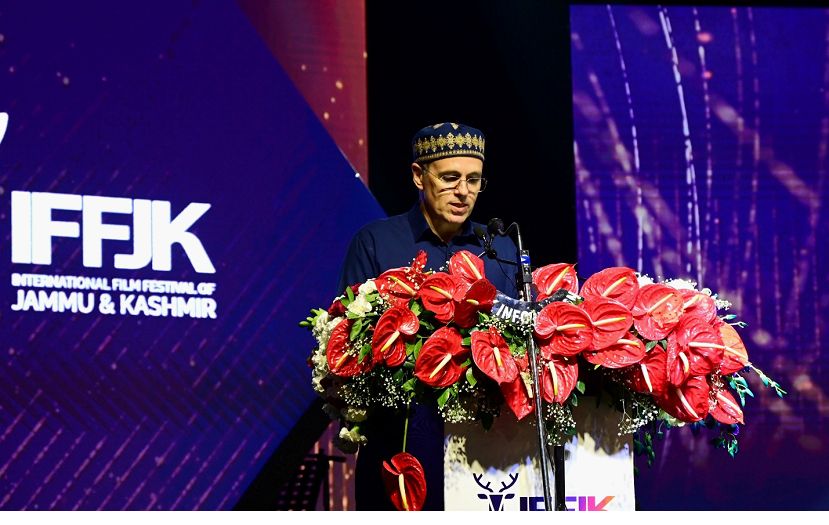
“With around 120 films from more than 30 countries screened during the four-day festival and around 1,100 submissions received from over 80 countries, the event brought international cinema to Jammu and Kashmir while simultaneously placing the region’s own filmmakers, actors and stories before a wider audience…..”
Mohammad Irfan
 The first International Film Festival of Jammu and Kashmir (IFFJK) has ended, but the more important question begins after the closing ceremony: can Jammu and Kashmir turn its extraordinary cinematic landscape into a sustainable filmmaking ecosystem? For decades, Kashmir has occupied a special place in the imagination of Indian cinema. Its mountains, snow-covered meadows, gardens, rivers and lakes have provided some of the most recognisable frames in Hindi films. Generations of audiences have associated Kashmir with romance, beauty and escape, while filmmakers have repeatedly returned to the region in search of spectacular locations.
IFFJK 2026 | An Attempt To Open A Different Chapter In That Relationship: With around 120 films from more than 30 countries screened during the four-day festival and around 1,100 submissions received from over 80 countries, the event brought international cinema to Jammu and Kashmir while simultaneously placing the region’s own filmmakers, actors and stories before a wider audience. Its larger message was clear: Jammu and Kashmir should not remain merely the backdrop against which other people’s stories are told. It has the potential to become a place where stories originate, talent develops, films are produced and creative businesses grow.That transition, however, will require more than festivals.It will require an ecosystem.
From A Famous Location To A Film Destination : The distinction between a film location and a filmmaking destination is fundamental. A location provides scenery. A filmmaking destination provides an entire ecosystem around that scenery.Jammu and Kashmir already has the first ingredient in abundance. What it now needs to strengthen is the second.A production coming to the region requires actors, technicians, cinematographers, editors, sound professionals, production managers, costume designers, set designers, equipment suppliers, accommodation, transport, catering and post-production services.If most of these services are imported from outside, the region remains primarily a location. If local professionals increasingly fill these roles, filmmaking begins to generate a lasting economic footprint.That is where IFFJK’s potential significance lies. The festival can become more than an annual celebration of cinema. It can serve as a meeting point between local talent and the national and international industry. The ultimate measure of success will not be the number of films screened at the festival but the number of collaborations, productions, jobs, training opportunities and new filmmakers that emerge from the relationships created around it.
The End Of The ‘Scenic Kashmir’ Formula: Chief Minister Omar Abdullah’s appeal to filmmakers to look beyond the mountains and lakes goes to the heart of the challenge.The scenic image of Kashmir has been commercially successful for decades, but it has also created a narrow cinematic vocabulary.Kashmir is much more than what appears in a tourist brochure or a traditional Bollywood song.Its cities, towns and villages contain stories about changing families, generations, migration, education, entrepreneurship, agriculture, climate change, sports, music, literature, crafts and evolving social identities. The region’s people themselves are an enormous storytelling resource.“Our ambition must go beyond being a beautiful filming location,” Abdullah said, arguing that Jammu and Kashmir should increasingly become a place from which stories emerge, talent is discovered and films are conceived and created.That proposition could change the way the region approaches cinema. The objective should not be to abandon scenic filmmaking. Instead, scenery should become one element of a much broader narrative.The mountains can remain in the frame without becoming the entire story.Dal Lake can remain central to a film without the film being only about the lake.The real transformation would occur when audiences begin travelling to Jammu and Kashmir not simply to see familiar landscapes on screen but to discover characters, stories and filmmakers associated with the region.
IFFJK And The Question of Representation : The festival has also opened a larger conversation about how Jammu and Kashmir is represented.For many years, cinema and television have frequently approached the region through the prism of conflict. There are stories of conflict and stories of ordinary life. There are stories of hardship alongside stories of achievement. There are stories of political tension alongside stories of entrepreneurship, education, culture and aspiration. The comments of filmmaker Captain Bali at the festival reflected this desire for a wider cinematic vocabulary. His argument that audiences are tired of repeatedly seeing Kashmir through conflict points towards a growing appetite for stories that explore the region in greater complexity.The opportunity is therefore not to replace one stereotype with another.It is to create space for many narratives.Jammu and Kashmir should be able to tell its own stories on its own terms while also allowing filmmakers from outside to interpret the region through different creative perspectives.
Local Languages Could Become A Major Advantage: One of the region’s biggest untapped cinematic resources is its linguistic diversity.Kashmiri, Dogri, Urdu, Gojri, Pahari and other linguistic traditions carry centuries of literature, poetry, folklore, music and oral storytelling.For a long time, language was viewed primarily as a limitation to the commercial expansion of regional cinema.The digital era has changed that calculation.Streaming platforms, subtitles and dubbing have made it possible for films produced in regional languages to travel much further than their original markets.For Jammu and Kashmir, this creates an opportunity to transform linguistic diversity into a competitive advantage.A compelling Kashmiri-language film does not have to become a Hindi film to find a national or international audience.Instead, its cultural specificity can become its strength.The same applies to Dogri and other regional languages.The more diverse the stories and languages represented in the region’s cinema, the less likely Jammu and Kashmir will be reduced to a single cinematic identity.
The Biggest Opportunity Is The Young Generation: Perhaps the most important constituency for the future of IFFJK is the region’s young population. The presence of established filmmakers and international jury members creates exposure, but exposure alone is not enough.Young filmmakers require training, mentorship, equipment, financing and opportunities to showcase their work. The suggestion at the festival for a dedicated student week and greater participation by young filmmakers could therefore become one of the most consequential ideas for future editions. A student programme could include filmmaking workshops, script development, cinematography masterclasses, editing sessions and interactions with established directors. Film competitions could encourage students to document their own communities.A script lab could help transform local ideas into professional screenplays. Mentorship programmes could connect emerging filmmakers with industry professionals. Such initiatives would address one of the fundamental problems facing creative talent in smaller markets: the gap between ability and opportunity.As actress Khateeb noted, talent exists across Kashmir, Jammu, Doda, Rajouri, Poonch, Bhaderwah and Ladakh. What is often missing is access to platforms capable of taking that talent beyond its immediate surroundings.IFFJK can potentially fill part of that gap.
Cinema Can Become A Job Creator: The discussion around filmmaking should also be viewed through an economic lens.Cinema is not only entertainment. It is a labour-intensive industry.A single production can generate employment across multiple sectors.Transporters move equipment and people. Hotels accommodate cast and crews. Restaurants and caterers provide food. Local artisans contribute to costumes and production design. Technicians manage lighting and sound. Photographers and videographers document productions. Editors and post-production professionals shape the final product.The economic benefits can therefore spread far beyond the film set.The more local professionals are involved, the greater the economic impact.This makes skill development particularly important. If Jammu and Kashmir can build a trained pool of cinematographers, editors, sound designers, production assistants, technicians, writers and visual-effects professionals, productions will have a stronger incentive to return.Each new production can then strengthen the local workforce.This creates a cycle in which investment generates skills, skills attract more investment and increased production creates more employment.
From Film Industry To Wider Creative Economy: The future is also larger than conventional cinema.The media and entertainment industry is rapidly expanding into animation, visual effects, gaming, virtual reality, extended reality, streaming, digital content and other emerging formats. Union Minister of State for Information and Broadcasting L Murugan’s reference to India’s broader AVGC ecosystem underlines the scale of the opportunity.The emerging creative economy could provide Jammu and Kashmir with opportunities beyond traditional filmmaking.A young computer science graduate could work in animation or gaming.A media student could specialise in editing or digital production.A literature graduate could develop screenplays.A photographer could move into cinematography.A musician could enter film scoring.This makes the creative sector particularly relevant to young people because it offers a broad range of professional pathways.
The Infrastructure Question: The greatest natural asset of Jammu and Kashmir is already in place.The next requirement is professional infrastructure.Filmmakers need efficient permissions, predictable regulations, trained crews, equipment, studios, accommodation, transportation and post-production facilities. A producer deciding where to shoot will consider not only whether a location looks good but whether the entire production can operate efficiently.This is where policy can make a significant difference. A transparent and efficient filming mechanism can reduce uncertainty. Training programmes can increase the availability of local technicians. Better production infrastructure can reduce dependence on outside resources. Post-production facilities can ensure that a greater portion of the economic value remains within the region. The goal should be to make Jammu and Kashmir attractive not only because it looks like Kashmir but because filmmaking here is professionally viable.
Why A Year-Round IFFJK Could Matter More: Another important idea emerging from the festival is the possibility of transforming IFFJK from a four-day annual event into a year-round platform. That could prove crucial.Festivals create visibility. Institutions create continuity. A year-round IFFJK programme could include screenings, workshops, film appreciation programmes, student initiatives, script labs, documentary projects, industry interactions and collaborations with film schools. It could also take cinema beyond Srinagar.If workshops and screenings reach Jammu, Baramulla, Anantnag, Kupwara, Rajouri, Poonch, Doda, Kishtwar and other areas, the festival could become a broader cultural movement rather than an event concentrated in the capital.Suchdecentralisation would also help identify talent from areas that rarely receive access to professional film networks.
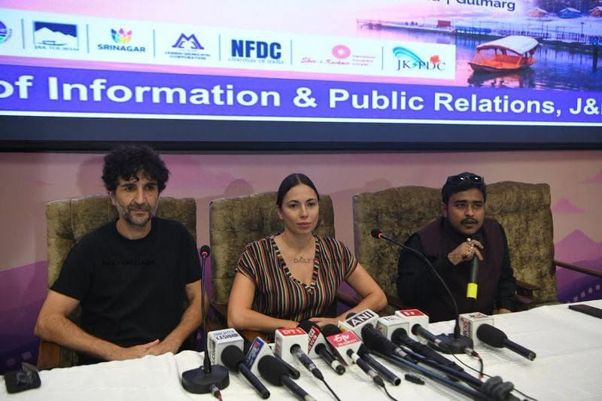
The International Dimension Is An Opportunity: The international participation at IFFJK is another asset that should be developed. The festival’s jury included filmmaker and cinematographer Santosh Sivan, Dorothee Wenner, Keiko Bang and Himanshu Shekhar Khatua. International participation matters because filmmaking is ultimately a networked industry. A visiting filmmaker may return to shoot in Jammu and Kashmir. A student may establish a professional connection that becomes important several years later. These relationships cannot always be measured in the immediate aftermath of a festival, but they can determine the long-term growth of a creative ecosystem. IFFJK can therefore serve as a bridge between Jammu and Kashmir and the global film community.
Cinema And Tourism Can Reinforce Each Other: There is also an obvious connection between cinema and tourism. Films can create destination awareness in ways conventional advertising cannot. A compelling story set in a particular village, town or landscape can make audiences curious about visiting that place. But the relationship can work in both directions. Tourism infrastructure can support filmmaking, while successful films can encourage tourism. The opportunity for Jammu and Kashmir is to develop this relationship carefully. Rather than repeatedly using the same iconic locations, filmmakers could be encouraged to explore lesser-known areas. That could distribute the economic benefits of both filmmaking and film-induced tourism.It could also introduce audiences to a more diverse Jammu and Kashmir.
Building A Film Culture, Not Just A Film Policy: Ultimately, no government policy can create a successful film industry by itself. Infrastructure and incentives can help.Efficient permissions can help. Festivals can help. But a sustainable film culture must be created by filmmakers, writers, actors, technicians, educators, producers and audiences. The Real Legacy Of IFFJK Will Be What Happens Next
The First Edition Of Iffjk Has Provided Visibility: It has brought international cinema to Jammu and Kashmir, given local filmmakers a platform and opened a conversation about the region’s place in the global creative economy.But its real legacy will not be determined by the closing ceremony. It will be determined by what happens between now and the next edition. The opportunity now is for Jammu and Kashmir to show itself to the world—not simply through its scenery but through its stories. That means putting people alongside landscapes. It means allowing local languages to reach new audiences. It means creating professional opportunities for young talent. It means creating a film culture capable of producing stories that can stand on their own, whether they are set against snow-covered mountains, crowded city streets, rural landscapes or ordinary family homes. IFFJK has demonstrated that there is international curiosity about cinema in Jammu and Kashmir. The next challenge is to convert curiosity into collaboration, collaboration into production and production into a sustainable creative economy. The region does not have to choose between being a spectacular filming location and becoming a storytelling hub.But the second identity will require deliberate institution-building, sustained investment and, above all, confidence in the stories that already exist within the region. The mountains brought cinema to Kashmir. The stories of its people can take Kashmir’s cinema much further. The first IFFJK has opened that possibility. What comes next could determine whether Jammu and Kashmir remains one of cinema’s most beautiful backdrops—or becomes one of its most distinctive sources of stories.
“Jammu and Kashmir’s transition from a filming location to a filmmaking destination becomes important. The region already possesses the natural landscapes that producers seek..”
Creative Economy Beyond Cinema: The opportunity emerging from IFFJK extends well beyond conventional filmmaking. The entertainment industry is undergoing a rapid transformation in which cinema increasingly intersects with streaming, gaming, animation, visual effects, music, virtual production, augmented reality, extended reality, podcasts and short-form digital content. For Jammu and Kashmir, this expanding creative economy offers the possibility of creating opportunities for a much wider range of young people than those who traditionally aspire to become actors or directors. Union Minister of State for Information and Broadcasting L Murugan’s reference to India’s AVGC ecosystem during the festival underlined the scale of this transformation. He said the government’s initiative envisages content creator labs in 15,000 schools and 500 colleges, backed by an allocation of nearly Rs 250 crore, while the media and entertainment industry could require nearly two million professionals by 2030. For Jammu and Kashmir, participation in this emerging sector could open new avenues for employment and entrepreneurship. A graduate trained in media could build a career in editing or visual effects, while a computer science student could enter gaming, animation or virtual production. A literature student could find opportunities in screenwriting, and a photographer could move into cinematography or visual storytelling. The creative economy therefore provides multiple pathways for young people to participate in an industry that is no longer confined to the traditional film set. This broader understanding of filmmaking is important for Jammu and Kashmir because it allows the region to look at cinema not simply as an occasional production activity but as a potential economic sector. The arrival of a film production can create demand across a wide range of services, from location scouting and transportation to hospitality, catering, construction, costume design and technical support. The economic impact can continue even after shooting is completed, particularly when films generate interest in locations and contribute to tourism. The challenge is to ensure that these opportunities increasingly benefit local communities and professionals rather than remaining limited to visiting productions.
Building An Ecosystem Around Filmmaking: A major production can become an economic multiplier because its requirements extend far beyond actors and directors. Hotels accommodate crews, local transport operators move people and equipment, restaurants and caterers provide food, while technicians, electricians, carpenters, costume designers and production assistants become part of the filmmaking process. With a trained local workforce, these activities can create skills and employment that remain in the region after a production leaves. This is where Jammu and Kashmir’s transition from a filming location to a filmmaking destination becomes important. The region already possesses the natural landscapes that producers seek. What it needs to strengthen is the professional ecosystem surrounding those locations. The objective should be to encourage productions not only to shoot in Jammu and Kashmir but to employ local professionals, use local services and build longer-term partnerships with the region’s creative community. If this happens consistently, filmmaking can create a cycle of growth. Productions can generate employment; employment can develop skills; skilled professionals can make the region more attractive to producers; and increased production can encourage investment in studios, equipment and post-production facilities. Over time, the region could begin retaining a greater share of the economic value generated by its growing relationship with cinema.
Infra Will Determine Whether Filmmakers Return: Natural beauty may bring a filmmaker to Jammu and Kashmir once, but professional infrastructure can determine whether that filmmaker returns.A sustainable film ecosystem requires efficient permissions, predictable procedures, trained local crews, equipment availability, accommodation, transportation and post-production capabilities. Producers planning large projects need certainty about timelines, logistics and costs. The easier it becomes to manage these requirements, the more competitive the region becomes as a production destination.Government therefore has an important enabling role. Transparent filming procedures can reduce uncertainty for producers, while investment in training can expand the pool of skilled local technicians. Developing post-production capabilities could be particularly significant because it would allow more of the filmmaking process to take place within Jammu and Kashmir instead of requiring productions to move elsewhere after shooting. But infrastructure alone cannot create an industry. Omar Abdullah’s observation that the government can provide infrastructure and an enabling environment while a sustainable film culture must ultimately be driven by the creative community captures the larger challenge. The state can create favourable conditions, but artists must create the culture, producers must develop sustainable businesses and audiences must create demand. An industry emerges when these different elements begin reinforcing each other.
IFFJK Should Become A Year-Round Platform: The future importance of IFFJK may ultimately depend on what happens between one edition and the next. A four-day festival can generate visibility, excitement and international attention, but a year-round institution can create lasting transformation. IFFJK could gradually develop into a platform for regular screenings, workshops, masterclasses, student programmes, script development, documentary initiatives and collaborations with national and international film institutions. Such activities could provide young filmmakers with opportunities to learn throughout the year rather than waiting for the next festival. There is also an opportunity to take the festival beyond Srinagar. Screenings and filmmaking workshops in Jammu, Baramulla, Anantnag, Kupwara, Doda, Rajouri, Poonch, Kishtwar and other districts could broaden access to the emerging film ecosystem. This would be particularly important for young people who may have creative potential but limited access to established industry networks. A year-round programme could also create stronger links between filmmakers and communities. Local writers could pitch stories to visiting producers, young actors could participate in auditions and workshops, and emerging filmmakers could receive mentorship from established professionals. In this form, IFFJK would evolve from an annual event into an institution capable of continuously connecting Jammu and Kashmir with the wider film industry.
An International Bridge For Local Talent: The international character of IFFJK provides another significant opportunity. The participation of filmmakers and jury members such as Santosh Sivan, DorotheeWenner, Keiko Bang and Himanshu Shekhar Khatua brought professional perspectives from different cinematic traditions to Jammu and Kashmir. The value of such participation extends beyond the competition itself. Film festivals function as networks where relationships can lead to future collaborations. A filmmaker visiting Srinagar may return to shoot a project, a producer may discover a local artist, a cinematographer may work with a regional crew, or a young filmmaker may establish a professional relationship that becomes important years later. Dorothee Wenner’s remarks about the courage and resilience reflected in several films, along with her opportunity to understand the people and experiences of Jammu and Kashmir beyond familiar images, also demonstrate the cultural value of these exchanges. Cinema can become a two-way window through which the world discovers new dimensions of Jammu and Kashmir while local filmmakers gain exposure to different approaches to storytelling. For the region, this international engagement could become one of the most valuable long-term outcomes of the festival.
From Scenery To A New Cinematic Identity: Ultimately, IFFJK should not be judged only by the number of films screened, awards presented or guests who attended its first edition. Its deeper significance lies in the conversation it has initiated about Jammu and Kashmir’s cinematic identity. For decades, the region was celebrated by cinema largely because of what it looked like. The next chapter can be about what it has to say.The mountains will remain extraordinary film locations. Dal Lake will continue to attract cameras. Gulmarg will remain one of the country’s most spectacular landscapes. But behind those familiar images are countless stories waiting to be explored. There are stories of families and generations, young people navigating a changing economy, artists preserving traditions, farmers responding to environmental change, women building enterprises, sportspeople pursuing national and international ambitions, artisans preserving crafts, musicians carrying forward cultural traditions, students searching for opportunities and entrepreneurs creating new businesses. There are stories in every town and village, and the cinematic potential of Jammu and Kashmir will ultimately depend on whether those stories find their way onto screens. The region therefore does not need to stop being a filming location. It needs to become much more than one. It can develop into a place where locations, talent, stories, technology, investment and audiences come together.
Kashmir Horizon View: The first IFFJK has provided the beginning of that journey. Its international participation has demonstrated that there is interest in bringing global cinema to Jammu and Kashmir. Its local films and artists have demonstrated that talent exists within the region. Its discussions have highlighted the need for training, infrastructure, investment and sustained engagement. If IFFJK develops into a year-round platform, if local talent receives systematic training, if production procedures become increasingly efficient, if private investment grows and if regional-language cinema receives sustained attention, Jammu and Kashmir could gradually establish a distinctive position within India’s expanding creative economy. Such a transformation will not happen overnight. Building a film industry requires years of investment, experimentation, institution-building and, above all, a community willing to take creative risks. But every successful creative industry begins with people coming together around the belief that something larger is possible.IFFJK has brought many of those people into the same space.The next task is to ensure that they return—not merely as festival guests, but as filmmakers, producers, mentors, collaborators and investors. Return to shoot. Return to write. Return to teach. Return to collaborate. Return to discover. Most importantly, return because Jammu and Kashmir has stories that cannot be told anywhere else. The region’s cinematic future does not require it to abandon the image that made it famous. It requires expanding that image. The mountains can remain in the frame, the lakes can remain in the frame and the snow can remain part of the visual identity. But increasingly, the people should be at the centre of the story.If that transition succeeds, Jammu and Kashmir will no longer be known merely as a beautiful place where films are made. It could become a place from which stories emerge, filmmakers grow, talent finds opportunity and cinema travels from the region to audiences across India and the world. The real opportunity now is to build what lies beyond it.
(“Team Kashmir Horizon” is committed to continuous improvement and invites feedback and suggestions from readers and its followers on social media sites. Reader insights are considered vital for enhancing content quality and empowering the community. The team encourages open communication and values the thoughts and ideas of its audience, believing that such input will enable them to serve the public more effectively. The initiative aims to ensure that readers have the best possible experience with “Kashmir Horizon”. Interested individuals can reach out to us via email at [email protected].)