Says “SCO’s Next 25 Years Must Focus on Peace, Security, Results, Wars Aren’t Won on Battlefields”
“Terror Cannot Be a Strategic Asset for Anyone”
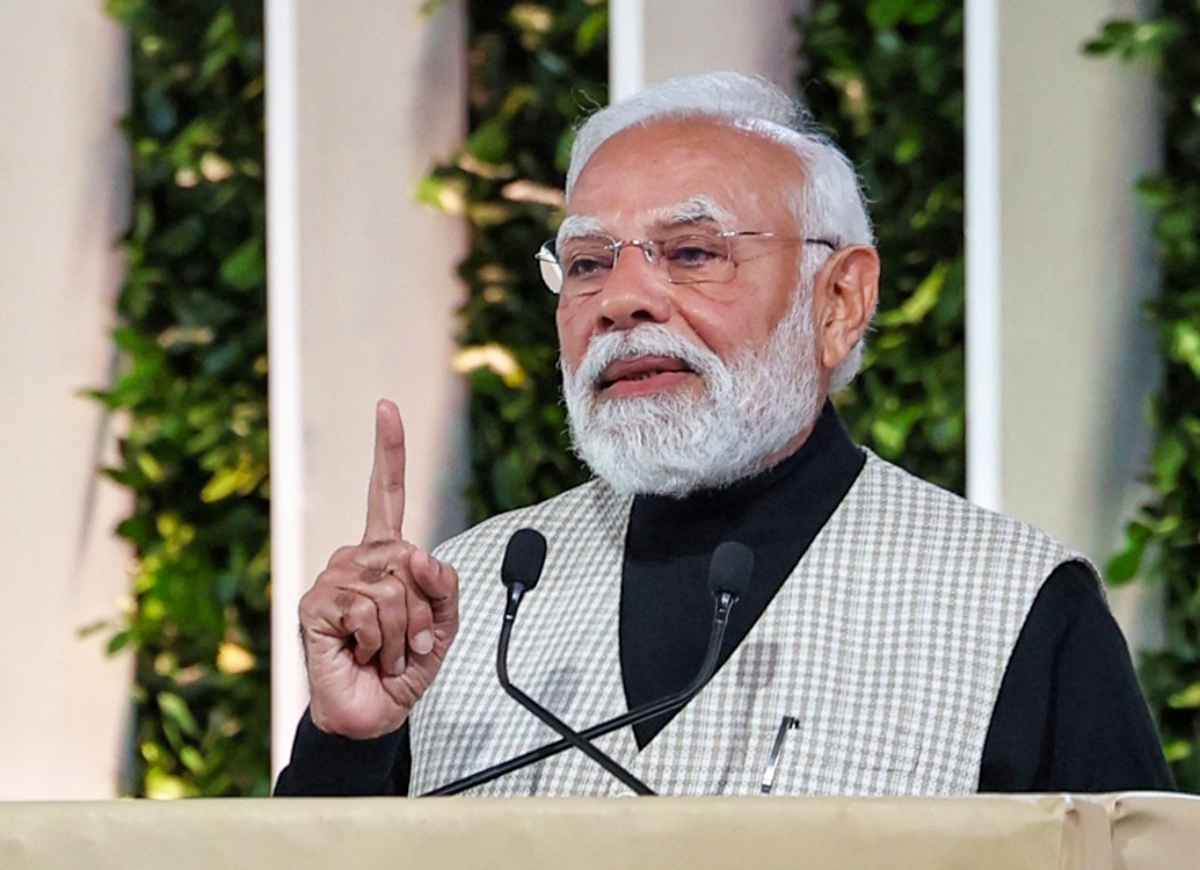
New Delhi: Prime Minister Narendra Modi on Tuesday called on the Shanghai Cooperation Organisation (SCO) to translate its longstanding vision of cooperation into tangible outcomes, saying the grouping’s next 25 years should be centred on peace and security, reliable connectivity and opportunities that bring direct benefits to its people.
Addressing the 26th SCO Summit in Bishkek, Modi said it was a matter of great pleasure for him to participate in the special occasion marking the organisation’s 25th anniversary and thanked Kyrgyz President Sadyr Zhaparov for the warm welcome and hospitality extended to the visiting leaders. Recalling his participation in Kyrgyzstan’s Independence Day celebrations a day earlier, Modi congratulated President Zhaparov and the people of Kyrgyzstan.
He also conveyed his greetings to the President and people of Uzbekistan on their Independence Day. The Prime Minister said the opening ceremony of the World Nomad Games had provided the participating leaders with a glimpse of Kyrgyzstan’s rich cultural traditions and shared heritage. “This shared heritage and mutual connectedness are one of the great strengths of the SCO family,” he said. Reflecting on the SCO’s journey over the past 25 years, Modi said the organisation had built a strong tradition of dialogue and cooperation across the vast Eurasian region and made significant contributions to the welfare of its people and the advancement of humanity.
“We have laid a strong foundation of cooperation over these 25 years. Now, in the next 25 years, our goal should be to translate this cooperation into concrete outcomes,” Modi said. Against the backdrop of growing geopolitical uncertainty and instability, he called for the SCO’s shared geography to be transformed into shared opportunities.
“We must turn our shared geography into shared opportunities, and through our efforts bring positive change to the lives of our people,” he said. Recalling the three pillars of India’s approach to the SCO – “Security, Connectivity and Opportunity” – Modi said the time had come to move beyond declarations and translate these priorities into measurable results. On security, the Prime Minister said peace and stability must remain the organisation’s foremost priority and described terrorism as one of the gravest challenges facing humanity.
He argued that the fight against terrorism could not be restricted to an “action-reaction” approach and called for dismantling the entire ecosystem that enables terrorist activities. “We must destroy the entire ecosystem of terrorism financing, recruitment, radicalisation and safe havens,” Modi said, stressing that there could be no place for double standards in the fight against terrorism. He called for sending a clear message to countries that use terrorism as an instrument of policy or provide shelter and support to terrorists.
“Terrorism cannot be a strategic asset for anyone,” he said. Modi also connected the SCO’s objective of building a peaceful and secure Eurasia with the need for peace and stability in Afghanistan. He said India had continued to contribute to Afghanistan’s development and humanitarian assistance requirements and would continue supporting the Afghan people. The Prime Minister said the concept of security had acquired a much broader dimension in an interconnected world, pointing to the crisis in West Asia as an illustration of how conflicts in one part of the world could have repercussions far beyond their immediate region.
Such conflicts, he said, affected global energy security, maritime trade and supply chains, with countries of the Global South often bearing a disproportionate share of the consequences. Reiterating India’s position on resolving conflicts, Modi said, “All tensions and wars can be resolved not on the battlefield, but only through dialogue and diplomacy.” He also highlighted drug trafficking as a serious threat to young people, public safety and regional security.
Modi welcomed the establishment of SCO centres dealing with security threats, organised crime, information security and narcotics, and called for these institutions to be developed into effective mechanisms for practical coordination and timely action. Turning to connectivity, Modi said strong, reliable and efficient connectivity represented the second foundation for shared development. India, he said, supported initiatives that connect markets, facilitate trade and create new avenues for development, while emphasising that such efforts must respect the sovereignty and territorial integrity of all countries.
“This is also the fundamental spirit of the SCO Charter,” Modi said. He stressed that connectivity in the coming years would need to go beyond roads, railways and air corridors. Simplified customs procedures, wider adoption of digital documentation and more efficient logistics networks, he said, would be equally important in strengthening regional economic integration. On the third pillar of Opportunity, Modi said SCO cooperation must ultimately translate into tangible benefits for ordinary citizens. He described people-to-people ties as the organisation’s greatest strength and portrayed the SCO as a meeting point of major civilisations, cultures and intellectual traditions. “People-to-people ties should be at the centre of our cooperation in the next 25 years of the SCO,” he said.
The Prime Minister said the success of the organisation should be measured by the opportunities it creates for young people, the new markets it opens for entrepreneurs, the benefits technology delivers to farmers and the improvements it brings to the everyday lives of citizens. “This is the real meaning of Security, Connectivity and Opportunity,” he said. Calling for a more people-driven SCO rather than an organisation focused primarily on government-to-government engagement, Modi welcomed the emphasis on youth participation during Kyrgyzstan’s chairmanship.
He noted that India had already initiated platforms such as the SCO Start-up Forum, Young Authors’ Conclave and Young Scientists’ Forum. He also recalled India’s proposal last year for an SCO Civilizational Dialogue Forum and welcomed the decision to hold its first session in India this year. Modi expressed confidence that active participation by SCO member states would turn the forum into a vibrant platform for dialogue and mutual understanding. Invoking the words of renowned Kyrgyz writer Chingiz Aitmatov, Modi observed that the world often paid greater attention to differences that divide people than to the commonalities that unite them. He said the message was equally relevant to the SCO as it entered the next phase of its development. “Our diversity is our identity.
Our shared purpose is our strength,” Modi said, outlining the direction he envisaged for the organisation: “From shared geography to shared opportunities, from vision to outcomes, and from government-driven cooperation to people-driven partnership.” Modi said India was ready to contribute to the SCO’s common journey with this belief and commitment as the organisation entered the next 25 years amid mounting geopolitical uncertainty and growing economic and security challenges across Eurasia.