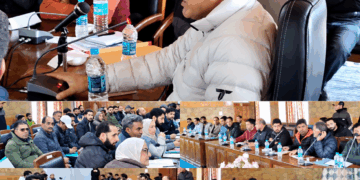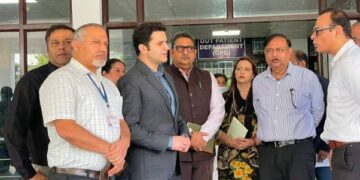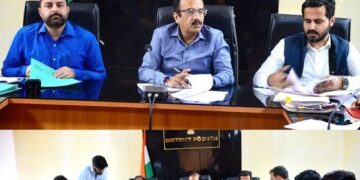
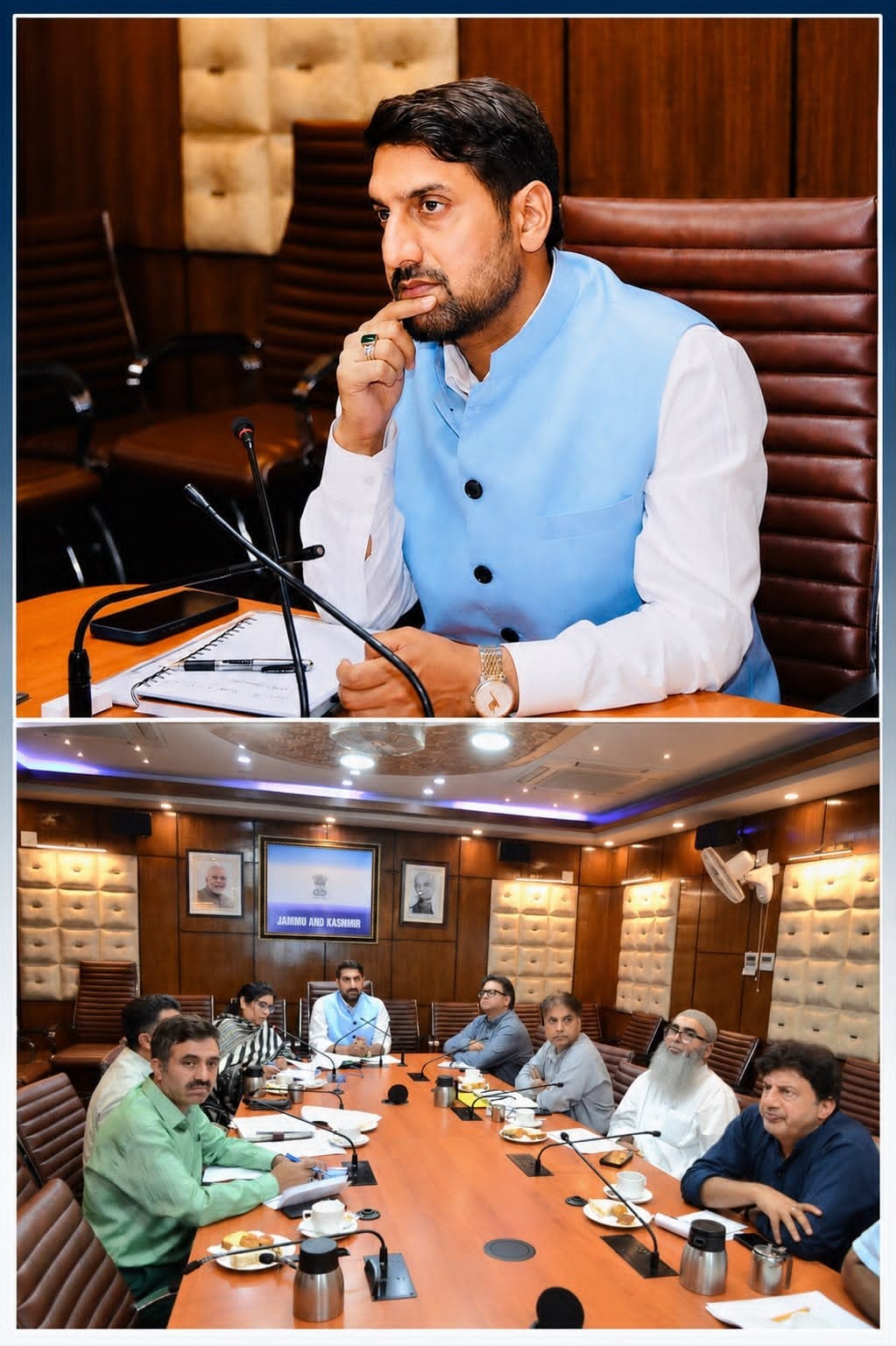
Srinagar : Secretary, Rural Development Department (RDD) and Panchayati Raj, Muhammad Aijaz Asad, on Thursday directed all Deputy Commissioners to accelerate the implementation of the Swachh Bharat Mission-Grameen (SBM-G) by operationalising door-to-door waste collection in every village, adopting cluster-based waste management systems and strengthening community participation.
Chairing a review meeting on the progress of SBM-G and District Sanitation Plans, the Secretary assessed the physical and financial status of sanitation projects across Jammu and Kashmir.
The meeting was attended by the Director General, Rural Sanitation, District Development Commissioners, Director Finance, RDD, Superintending Engineers, REW, Deputy Directors of Rural Sanitation, Assistant Commissioners Panchayats and Executive Engineers.
Appreciating innovative sanitation models developed by Bandipora and Budgam, Asad said these could serve as templates for other districts. He advocated a cluster-based approach to solid waste management, allowing adjoining blocks to pool financial resources, manpower and machinery for efficient and sustainable waste disposal.
He directed officials to identify village-level waste collection points, establish secondary collection centres where required and prepare scientific transportation routes. Districts were also asked to explore Public-Private Partnership (PPP) and Viability Gap Funding (VGF) models for improving waste management infrastructure.
The Secretary instructed all districts to prepare Gram Panchayat-wise inventories of sanitation assets, assign operation and maintenance responsibilities and implement monthly maintenance schedules to ensure long-term functionality.
Asad also directed districts to operationalise door-to-door waste collection in every village by mapping households and commercial establishments, finalising collection routes, engaging collection agencies and creating linkages with recycling industries, cement plants and other authorised waste processing agencies.
To make sanitation services financially sustainable, he asked districts to generate revenue through user charges and the sale of compost, recyclable materials and e-waste.
Highlighting the need to improve waste management at institutions and commercial establishments, the Secretary directed officials to identify and register all bulk waste generators. He also called for greater involvement of Self-Help Groups, NGOs, civil society organisations, religious leaders, social influencers and Swachhata Champions in sanitation campaigns.
Reviewing progress, officials informed the meeting that under the Annual Implementation Plan (AIP) 2026-27, 10,083 sanitation assets have been targeted across Jammu and Kashmir, including compost pits, soak pits, community sanitary complexes, segregation sheds, plastic waste management units, faecal sludge treatment plants, DEWATS and GOBARdhan biogas plants. So far, 5,569 works (55 per cent) have been tendered.
The meeting also reviewed ODF+ progress, with 6,036 of 6,185 model villages completing first-stage verification, while 149 remain pending. Another 277 villages await second verification after the mandatory 180-day period. The Secretary directed districts to complete the verification process on priority.
Reviewing the Swachh Survekshan Grameen 2025 rankings, the Secretary noted that Kulgam secured the top position in Jammu and Kashmir, followed by Samba and Kathua. He urged lower-ranked districts to improve sanitation indicators through timely execution of works and sustained public participation.