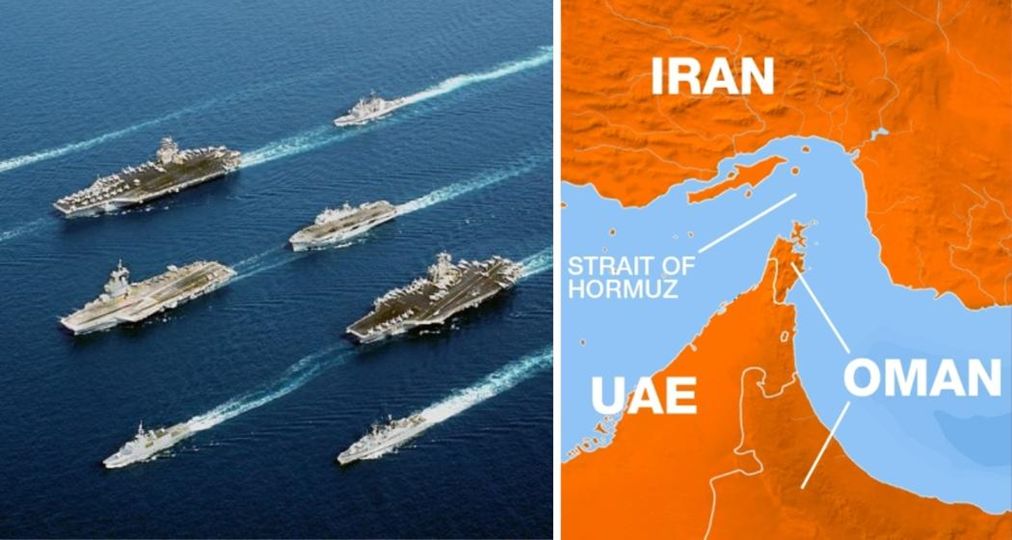
Tehran, July 12 (UNI) Conflicting statements have emerged over the status of the Strait of Hormuz, with Iran and the United States issuing opposing claims over whether vessels can continue passing through the strategic waterway.
Iran’s authority responsible for overseeing a new transit protocol for the strait said on Sunday that the passage of vessels was currently “not possible,” shortly after the US Central Command (CENTCOM) said the waterway remained open to all vessels.
The Persian Gulf Strait Authority (PGSA), an Iranian body tasked with managing transit arrangements, said the restriction was linked to what it described as recent US military movements in the region. “Due to the recent unlawful movements of United States military forces in the region, transit through the Strait of Hormuz is currently not possible,” the PGSA said in a post on X.
The authority added that once “stability and calm are restored,” applications for vessel movement would be reviewed according to the established schedule and the required permits would be issued.
The US Central Command said the Strait of Hormuz was “open to all vessels,” despite the Islamic Revolution Guards Corps (IRGC) announcing that it had closed the waterway.
“The Strait of Hormuz is open to all vessels seeking to lawfully transit the international waterway,” CENTCOM said in a post on X, adding that US forces were positioned to ensure freedom of navigation remained available despite what it described as “unwarranted Iranian aggression, harassment, threats, and arbitrary declarations.”
“Iran does not control the strait. Traffic is flowing,” CENTCOM said.
The Joint Maritime Information Center (JMIC), overseen by the US Navy, said the Omani “southern route” through the Strait of Hormuz remained available for two-way traffic.
However, it warned that the security threat level in the waterway remained “severe.”
Data from maritime tracking agency MarineTraffic showed that traffic through the strait had again declined following Iran’s announcement.
The Strait of Hormuz, located between Iran and Oman, is one of the world’s most critical maritime chokepoints, with a major share of global oil and gas shipments passing through the narrow waterway.
The conflicting statements come amid heightened tensions between Tehran and Washington following a series of military strikes and retaliatory actions in the region, raising concerns over possible disruptions to international shipping and energy markets.UNI
Turkey, Pakistan ready to help Riyadh in confronting its adversaries: Saudi Minister
Moscow, Oct 6 (Sputnik/UNI) Saudi Arabia, Pakistan and Turkey have expressed their readiness to jointly counter those who attack the...
Read moreDetails