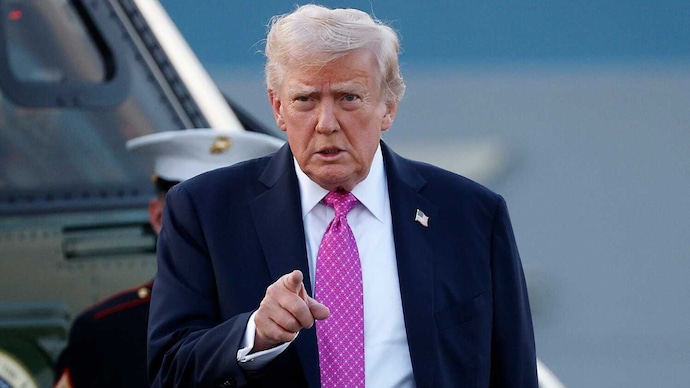
Washington, Aug 4 (UNI) President Donald Trump said Iran had one “last chance” to accept a US nuclear deal before facing “decapitation,” claiming he had called off what would have been “the biggest attack since World War II” to allow diplomacy one final opportunity.
Speaking at the White House, Trump said negotiations with Tehran were underway at the request of regional powers, even as Iran flatly denied holding any talks with Washington, exposing deep uncertainty over the state of US-Iran diplomacy and raising fresh questions over whether a breakthrough or a military confrontation is closer.
Trump said he had paused what he described as a massive U.S. military operation against Iran after signs of diplomatic progress and appeals from regional allies, but warned the window for a deal was rapidly closing.
“I think we’re going to maybe get something, but I want to give them every last chance before decapitation,” Trump said. “This is Iran’s last chance… to sign a good document.”
Trump insisted U.S.-Iran negotiations were “going on right now,” saying the talks were being pursued at the request of Iran as well as Saudi Arabia, the United Arab Emirates and Qatar. He also claimed he had called off strikes that “would have been the biggest attack since World War II” because diplomacy appeared to be gaining momentum.
Tehran has contradicted the president’s account on Monday.
Iran’s Foreign Ministry said no direct negotiations with Washington were taking place, adding that its only current discussions were with Oman over a temporary maritime safety arrangement in the Strait of Hormuz.
The public contradiction exposed the deep uncertainty surrounding Trump’s latest diplomatic push, with Washington portraying negotiations as active while Tehran denied they even existed.
Responding to Iran’s remarks, Trump accused the country’s leadership of being “unbelievably duplicitous” and dismissed its statements over the Strait of Hormuz as “the usual blather.”
The latest exchange underscores Trump’s strategy of pairing military pressure with offers of diplomacy as he seeks to revive a nuclear agreement with Tehran. The US president has repeatedly issued deadlines and warned of military consequences, but previous rounds of negotiations have stalled over sanctions relief, uranium enrichment and broader regional security issues.
The Strait of Hormuz remains at the center of the standoff. The narrow waterway handles roughly a fifth of global oil shipments, making any threat to its security a key risk for energy markets and geopolitical stability.