- Book Procurement SOPs Unveiled For Tightening Scrutiny
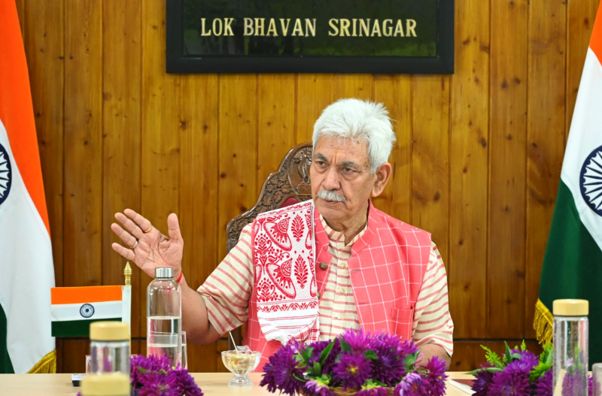
Srinagar: In a major policy intervention aimed at tightening oversight of educational institutions in Jammu and Kashmir, this week Lieutenant Governor Manoj Sinha ordered a comprehensive audit of schools, colleges, universities and libraries following the reported recovery of books and literature allegedly containing anti-national and separatist content. Chairing a high-level security and administrative review meeting at Raj Bhawan, the Lieutenant Governor directed officials to establish a robust mechanism to ensure that no educational institutiongovernment or private—procures, distributes or retains books, journals, magazines or any other academic material deemed to promote anti-national, separatist or objectionable narratives. The move comes amid heightened scrutiny of educational content in the Union Territory and signals the administration’s intent to institutionalise monitoring mechanisms across the education sector.
Institution Heads To Be Personally Accountable: One of the key decisions taken during the meeting was fixing personal responsibility on heads of educational institutions. According to the directions issued by the Lieutenant Governor, vice-chancellors, principals, school heads and other institutional authorities will be required to certify within a specified timeframe that no objectionable literature exists in their respective campuses or libraries. The administration also ordered comprehensive inspections and audits of educational institutions, including government and private schools, colleges, universities and public and private libraries, to verify compliance. Officials said any lapse in implementing the directives would invite strict accountability, with the head of the concerned institution being held personally responsible.
Recovery Of Literature Triggers Review : During the meeting, senior officials briefed the Lieutenant Governor on the recovery of books allegedly glorifying separatism from certain educational institutions. Authorities informed the meeting that investigations are underway to determine how such publications were procured and made available. Officials said individuals responsible for approving, purchasing or circulating such material would face strict legal action in accordance with the law. While the Government did not disclose the names of the institutions involved or the titles of the publications recovered, the issue has prompted a wider review of procurement practices across the education sector.
Standard Operating Procedure For Procurement: To prevent similar incidents in future, the Lieutenant Governor directed the formulation of a comprehensive Standard Operating Procedure (SOP) governing the procurement of books and academic material for educational institutions.
The proposed SOP will establish a structured screening mechanism before books are approved for purchase. According to the directions issued during the meeting, the mechanism will include periodic random scrutiny of academic material by a panel comprising eminent educationists, intellectuals and senior government officers. The objective, officials said, is to ensure that educational institutions do not inadvertently introduce publications that promote separatist ideology or narratives considered contrary to constitutional values. The Government believes that standardising procurement procedures will improve transparency while ensuring greater accountability in academic acquisitions.
Digital Content Also Under Scanner: The review was not limited to printed publications. Recognising the increasing dependence of educational institutions on digital resources, the Lieutenant Governor instructed authorities to examine websites, online repositories and digital libraries maintained by universities and higher educational institutions. Officials have been directed to immediately remove any objectionable material found on institutional digital platforms. The decision reflects the growing role of online academic resources in higher education and the administration’s intent to extend oversight beyond physical libraries.
Educational Institutions Must Promote Constitutional Values: During the meeting, the Lieutenant Governor reiterated that educational institutions should function as centres of learning, critical thinking and nation-building. He stressed that schools, colleges and universities should promote constitutional values and academic excellence while remaining free from material that could mislead or radicalise students. The Government, he said, would maintain zero tolerance towards attempts to introduce objectionable literature into educational spaces. Officials said the emphasis would remain on protecting the educational ecosystem while strengthening institutional responsibility.
Multi-Department Meeting: The high-level meeting brought together senior civil, police and intelligence officials, reflecting the seriousness with which the administration is treating the issue. Those present included Chief Secretary Atal Dulloo, Additional Chief Secretary, Power Development Department, Ashwani Kumar, Principal Secretary, Home Department, Chandraker Bharti, Principal Secretary to the Lieutenant Governor Dr. Mandeep K. Bhandari, Additional Director, Intelligence Bureau, Pankaj Thakur, Additional Director General of Police (CID) Nitish Kumar and Commissioner/Secretary, School Education Department, Ram Niwas Sharma. The participation of senior intelligence and police officers indicated that the issue is being examined not only from an educational perspective but also from the standpoint of security and public order.
Wider Policy Implications: The latest directions are expected to trigger extensive verification exercises across educational institutions in Jammu and Kashmir over the coming weeks. Universities, colleges and schools are likely to undertake internal reviews of library collections, procurement records and digital repositories to ensure compliance with the new directives. The proposed SOP is also expected to bring greater uniformity to book procurement by establishing defined approval procedures and periodic audits. Education experts note that educational institutions routinely review library collections and academic material as part of curriculum updates. However, the administration’s latest directions introduce a more formalised accountability framework by placing direct responsibility on institutional heads and mandating periodic scrutiny.
Balancing Academic Freedom And Oversight : The Government’s decision is likely to generate debate over the balance between academic autonomy and regulatory oversight. While governments have the responsibility to prevent the circulation of material that violates the law or promotes violence and unlawful activities, universities have traditionally functioned as spaces for academic inquiry and research. The challenge for policymakers will be to implement the proposed screening mechanism in a manner that safeguards national security concerns while preserving legitimate academic study, historical research and intellectual discourse. Officials, however, maintained that the objective of the exercise is to prevent the circulation of material that promotes separatist ideology rather than interfere with genuine academic scholarship.
Comprehensive Review Ahead: With audits, inspections, digital reviews and procurement reforms now set in motion, Jammu and Kashmir’s educational institutions are expected to undergo one of the most extensive verification exercises in recent years. The administration has made it clear that accountability will extend from procurement committees to institutional leadership, while future acquisitions of academic material will be governed by stricter scrutiny and standardised procedures. The latest directives underscore the government’s emphasis on ensuring that educational campuses remain spaces dedicated to learning, constitutional values and academic development, while preventing the circulation of literature considered objectionable under the administration’s policy framework.