• Says “Road connectivity, electrification, telecom and education have transformed border areas”
• “The Top four priorities are self-reliance, youth empowerment, healthcare, security infra”
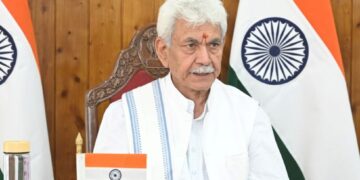
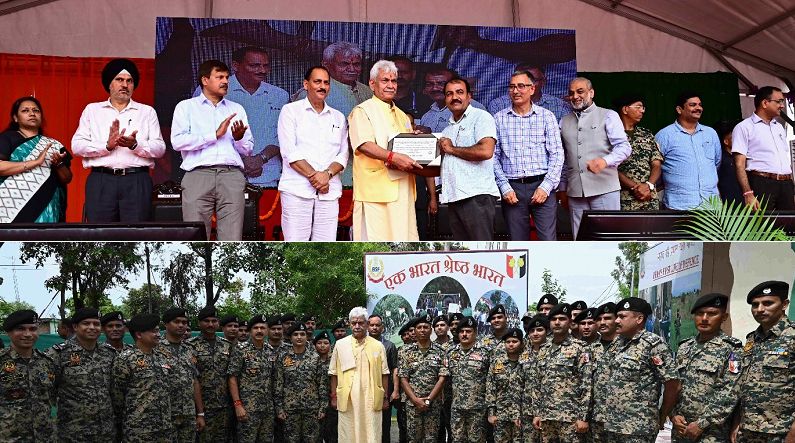
Srinagar: Lieutenant Governor Shri Manoj Sinha on Thursday visited Karol Krishna, a border village in Kathua district covered under the Vibrant Villages Programme-Phase 2 (VVP-2), and highlighted the transformation taking place in border areas through improved infrastructure, livelihood opportunities and stronger security arrangements.
Karol Krishna, along with Rathua, Gujjar Chak, Gajnal, Bobiya and Kadiyala, is among the strategic border villages covered under VVP-2. During his visit, the Lieutenant Governor handed over benefits under various government schemes to local families and appointment letters to youth.
Addressing residents of the six villages, the Lieutenant Governor said border villages should not be viewed as the last villages of the country but as its first villages and the frontline of India’s identity.
“I always believe that this land is not India’s last village but it is India’s first village and the gateway where our nation begins,” he said.
The Lieutenant Governor said that for decades, border villages remained relatively distant from development priorities, but the situation has changed significantly in recent years.
“Border villages are the frontline of India’s identity. Under the leadership of Prime Minister Narendra Modi the border villages of Jammu Kashmir are no longer on the margins but they are now at the centre of development. Roads, electricity, telecom, and education have reached every home,” LG Sinha said.
Highlighting the progress made in Kathua since 2019, he said all 216 border villages of the district are now connected by roads and have achieved full electrification. Telecommunication and television access have also expanded to households that earlier had limited connectivity.
He said poverty has declined, migration to cities has reduced by around half, rural incomes have increased by 30 per cent and employment opportunities have expanded, with unemployment nearly halved. More than 2,000 individual and community bunkers have also been constructed to enhance the safety of border families.
“These figures are not just numbers and reports but they represent real change in your lives,” the Lieutenant Governor said.
LG Sinha highlighted the contribution of women’s self-help groups in strengthening livelihoods in border villages. Under the National Rural Livelihood Mission, more than 1,300 self-help groups have been formed, benefiting over 12,000 families.
He said women are engaged in tailoring, embroidery, handicrafts and small enterprises, helping strengthen both household incomes and local economies.
The Lieutenant Governor also highlighted improvements in government schools, including digital classrooms, better facilities and vocational training, and encouraged the youth of border villages to aspire for opportunities on par with their counterparts in metropolitan cities.
“This is not a minor change but it is a generational transformation,” he said.
The Lieutenant Governor outlined four key priorities for the continued development of border villages.
The first is self-reliance, with greater connectivity to markets and promotion of horticulture and dairy cooperatives. The second is youth empowerment through opportunities in agriculture, tourism, defence-support services and crafts.
The third priority is better healthcare, including strengthened health facilities and telemedicine connectivity. The fourth is robust security infrastructure, supported by greater coordination between the civil administration and security forces.
“It is our resolve to make border villages self-reliant, empower youth with opportunities, strengthen health facilities and reinforce security infrastructure,” LG Sinha said.
He emphasised that development and security must move together, saying only secure villages can become prosperous and contribute to the building of a self-reliant and developed India.
Calling upon the youth to take greater responsibility for the future of their villages, the Lieutenant Governor said the people of Karol Krishna and neighbouring villages had preserved their connection with the land through difficult circumstances and must now use the opportunities available to build stronger communities.
He assured residents that their genuine demands would be addressed promptly and said the administration would ensure that the benefits of development reach every household.
“The Vibrant Villages Programme is not just about infrastructure but it is also about dignity, opportunity, and security. Border families, alongside BSF jawans, are guardians of India’s future,” he said.
During his visit to the Karol Krishna Border Out Post (BOP), the Lieutenant Governor interacted with BSF personnel and commended their commitment to securing the nation’s borders. He also acknowledged their service during Operation Sindoor and stressed the need for continued vigilance against hostile attempts.
The Lieutenant Governor said the people living in border villages and the security personnel guarding the frontier together represent an important line of defence and national resilience.
Advocate Vijay Kumar, MLA Hiranagar; ShaleenKabra, Additional Chief Secretary, Jal Shakti Department; Ashwani Kumar, Additional Chief Secretary, Power Development Department; Bhim Sen Tuti, IGP Jammu; Asif Jalal, IG BSF; M Raju, Commissioner Secretary, GAD; Vikramjit Singh, Commissioner Secretary, Industries & Commerce; Sarmad Hafeez, Commissioner Secretary, Social Welfare Department; R. Alice Vaz, Commissioner Secretary, Planning and Information; Ramesh Kumar, Divisional Commissioner Jammu; Mohammad Aijaz, Secretary, Rural Development & Panchayati Raj; Amitava Chatterjee, MD & CEO, J&K Bank; Rajesh Sharma, Deputy Commissioner Kathua; senior officials and people from different walks of life were present.