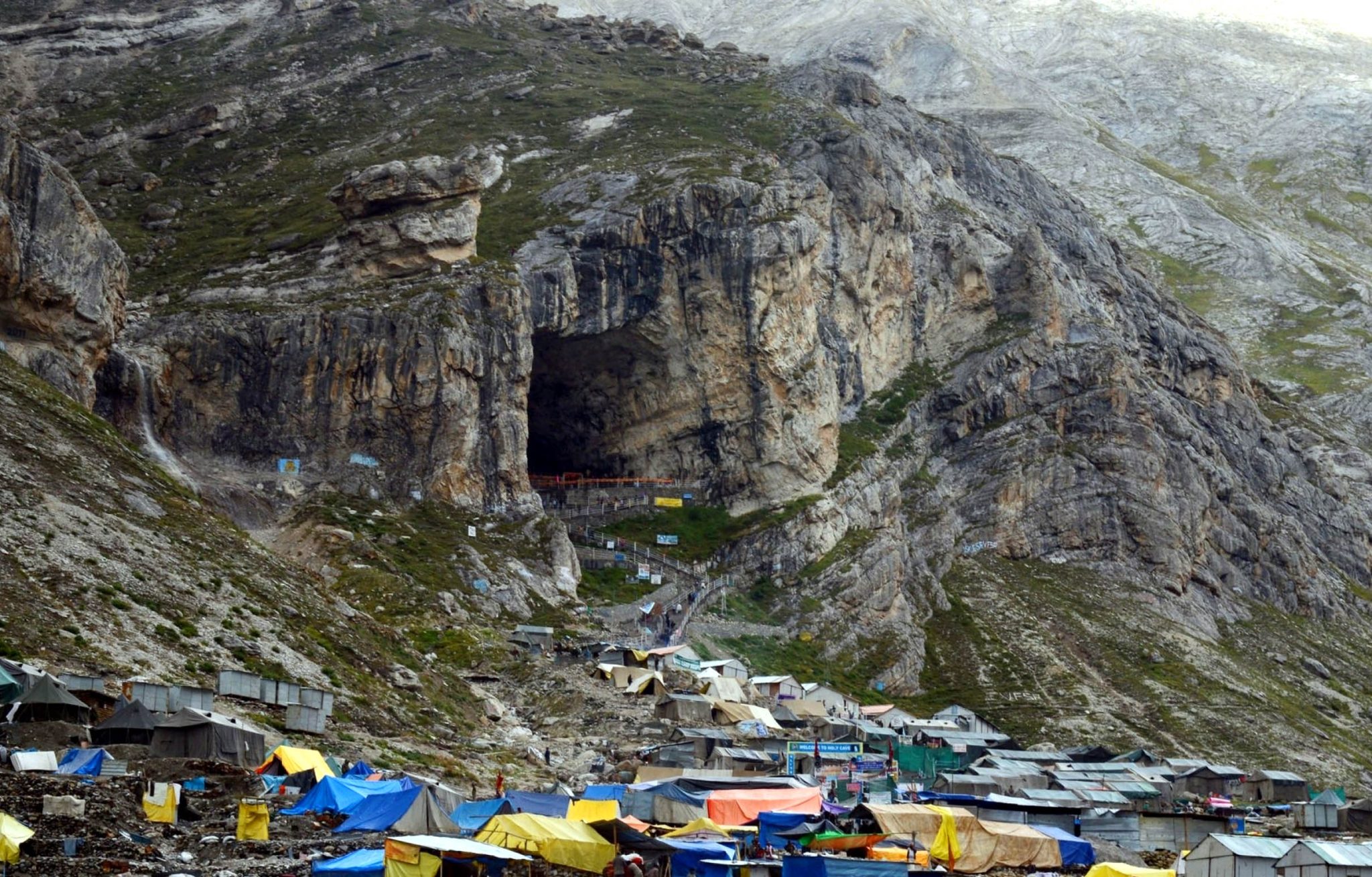
Police strengthen surveillance with multi-layer security grid across Pahalgam axis
Srinagar: With the annual Shri Amarnath Ji Yatra witnessing a surge in pilgrim arrivals, Anantnag Police has rolled out an extensive multi-layered security architecture, combining advanced surveillance technology with ground deployment to ensure the safety of thousands of devotees travelling along the Pahalgam route.
From high-rise CCTV cameras and drone surveillance to elevated Machan Morchas and strategically positioned checkpoints, security agencies have created a robust security grid that operates round the clock to detect, deter and respond to any potential threat.
Officials said the security arrangement has been designed to provide seamless protection from the moment pilgrims enter the district until they leave for the holy cave shrine. The measures are part of a broader coordinated security plan involving the Jammu and Kashmir Police, Army, Central Armed Police Forces (CAPFs) and intelligence agencies.
At several vulnerable locations, high-definition CCTV cameras installed on elevated structures provide continuous real-time monitoring of pilgrim movement, traffic flow and surrounding areas. The surveillance network is linked to control rooms where personnel monitor live feeds and coordinate immediate responses whenever required.
Adding another layer to the security framework, drones equipped with high-resolution cameras conduct aerial surveillance over the Yatra route, transit camps and surrounding forests. The aerial monitoring enables security forces to keep watch over inaccessible terrain, detect suspicious movement and assess crowd management in real time.
Security officials said the use of drone technology has significantly enhanced situational awareness and operational preparedness, particularly in vulnerable stretches where conventional surveillance is limited.
Complementing the technological measures are Machan Morchaselevated observation posts established at key vantage points along the route. Security personnel stationed at these locations maintain continuous visual surveillance over the highway, trekking routes and nearby forested areas, enabling quick detection of any suspicious activity.
Ground deployment has also been strengthened with multi-tier checkpoints, mobile patrols, Quick Reaction Teams (QRTs), bomb disposal squads, dog squads and intensified vehicle checking at strategic locations.
Police personnel have been deployed in large numbers at base camps, transit points, langars and other sensitive locations to regulate pilgrim movement and ensure immediate assistance in case of emergencies.
Officials said security deployment is being continuously reviewed based on threat perception, weather conditions and the daily movement of pilgrims. Senior police officers are regularly inspecting arrangements and issuing operational directions to field formations to maintain a high level of alertness.
Apart from security, emphasis has also been laid on public facilitation. Police teams are assisting pilgrims with route guidance, emergency response, traffic regulation and dissemination of safety advisories. Public address systems and help desks have been established at key locations to provide timely information and assistance.
The integrated security plan is supported by close coordination among the police, Army, CAPFs, intelligence agencies and civil administration, with continuous sharing of intelligence and real-time operational inputs to ensure a swift response to any contingency.
Officials said the objective is not only to provide a secure environment but also to ensure that pilgrims undertake the spiritual journey with confidence and without inconvenience.
As the Yatra progresses and the number of pilgrims continues to rise, Anantnag Police has reiterated its commitment to maintaining an impregnable security grid, combining technology, manpower and inter-agency coordination to safeguard every devotee travelling on the sacred route.