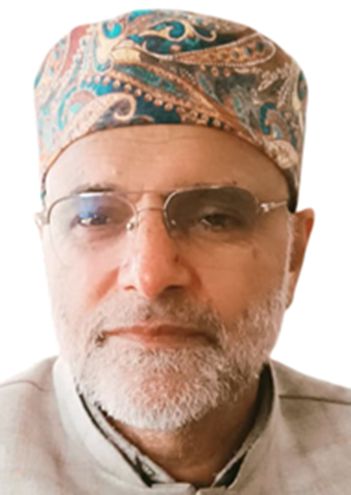
Prof. Hamid Naseem Rafiabadi
Introduction: Islamophobia has emerged as one of the defining social, political, and cultural challenges of the twenty-first century. Although prejudice against Muslims has existed in different forms throughout history, contemporary Islamophobia represents a unique and multifaceted phenomenon shaped by globalization, international conflicts, migration, media representation, identity politics, and the changing dynamics of global security. Broadly defined, Islamophobia refers to irrational fear, hostility, prejudice, discrimination, or hatred directed towards Islam and Muslims because of their religious identity or their perceived association with Islamic beliefs and practices. It manifests itself not only through individual acts of intolerance but also through institutional discrimination, political rhetoric, restrictive legislation, media stereotyping, and social exclusion.
The increasing visibility of Muslim communities across Europe, North America, Australia, and other regions has brought questions of religious diversity, multiculturalism, and integration into public debate. Millions of Muslims contribute positively to their societies as educators, scientists, physicians, entrepreneurs, civil servants, artists, and political leaders. Nevertheless, many continue to experience suspicion and unequal treatment simply because of their religious identity. Women wearing the hijab, men with traditional Islamic attire, and individuals bearing Muslim names frequently encounter prejudice in employment, education, housing, healthcare, and public spaces. Hate crimes against mosques and Islamic institutions have also increased in several countries, reflecting a wider climate of fear and intolerance.
Islamophobia is not merely a challenge for Muslim communities; it poses a serious threat to democratic values and universal human rights. Societies committed to equality before the law, freedom of religion, and respect for human dignity cannot selectively protect these principles. Discrimination against one religious group inevitably weakens the moral and constitutional foundations that safeguard the rights of all minorities. Consequently, understanding Islamophobia is essential not only for protecting Muslims but also for preserving pluralism, social cohesion, and peaceful coexistence within increasingly diverse societies.
Unlike ordinary prejudice, modern Islamophobia is sustained by interconnected political, economic, cultural, and psychological forces. Historical stereotypes interact with contemporary security concerns, while misinformation spreads rapidly through digital media and political discourse. As a result, Islamophobia has become deeply embedded in many public debates concerning immigration, citizenship, national identity, and international relations. Understanding its historical origins and contemporary evolution is therefore essential for addressing one of the most pressing social challenges of our time.
Historical Background: Although the term “Islamophobia” is relatively recent, negative perceptions of Islam have a much longer history. Since the emergence of Islam in the seventh century, interactions between Muslim and Christian civilizations have alternated between cooperation, intellectual exchange, commercial interaction, and military confrontation. Political rivalries frequently reinforced religious differences, producing narratives that portrayed each civilization as fundamentally opposed to the other.
The Crusades played a particularly significant role in shaping European perceptions of Muslims. Religious propaganda often depicted Muslims as enemies of Christianity, creating enduring stereotypes that survived long after the military campaigns had ended. Medieval literature and theological writings frequently represented Islam through distorted descriptions that emphasized conflict rather than shared religious traditions or intellectual exchange. These early images became deeply rooted within European historical memory.
The rise of European colonialism introduced a new dimension to anti-Muslim attitudes. During the eighteenth and nineteenth centuries, European colonial powers extended their political control over large parts of the Muslim world. Colonial administrators, missionaries, and many scholars portrayed Islamic societies as stagnant, irrational, despotic, and resistant to progress. Such representations served important political purposes by portraying colonial domination as a civilizing mission intended to modernize supposedly backward societies. Islam itself was frequently described as the principal obstacle to scientific advancement, democracy, and social reform.
Orientalist scholarship, although diverse in its approaches, often reinforced assumptions of Western cultural superiority. Muslim societies were frequently studied as static civilizations incapable of internal development unless guided by European intervention. These portrayals shaped educational curricula, literature, journalism, and political discourse throughout the colonial period and continued to influence public perceptions even after colonial rule formally ended.
It is important to recognize, however, that historical prejudice alone cannot explain contemporary Islamophobia. Earlier forms of religious hostility were primarily rooted in military rivalry and theological competition. Modern Islamophobia, by contrast, has developed within a globalized world characterized by mass migration, rapid communication, transnational terrorism, and identity politics. Historical stereotypes remain influential, but they now interact with entirely new political and social realities.
Evolution Of Islamophobia In Contemporary World: The end of the Cold War fundamentally transformed international politics. For nearly half a century, ideological competition between capitalism and communism had dominated global affairs. With the collapse of the Soviet Union, policymakers and commentators increasingly searched for new frameworks through which to understand emerging global conflicts. Cultural and religious identities gradually assumed greater importance within political discourse, and Islam frequently became portrayed as a major ideological and civilizational challenge to the liberal democratic order.
This geopolitical transformation coincided with significant demographic changes. Large-scale migration from Muslim-majority countries into Europe and North America accelerated during the final decades of the twentieth century. Muslim communities became increasingly visible through the establishment of mosques, Islamic educational institutions, cultural organizations, and businesses. While multiculturalism was officially embraced in many countries, sections of society viewed these demographic changes with anxiety. Public debates concerning immigration gradually merged with discussions about national identity, cultural integration, secularism, and public security.
“Ignorance feeds Islamophobia, while fringe extremists weaponize faith for violence. Together, they form a toxic feedback loop—each fueling the other’s narrative while peaceful citizens pay the price.”
International conflicts further reinforced negative perceptions of Islam. The Iranian Revolution of 1979, the Soviet-Afghan conflict, the Gulf Wars, civil wars in the Middle East, and continuing political instability across several Muslim-majority countries generated extensive global media attention. News coverage frequently presented these conflicts through simplified narratives that associated violence primarily with Islam rather than with their complex political, historical, and economic causes.
The terrorist attacks of 11 September 2001 represented perhaps the most significant turning point in the evolution of modern Islamophobia. The attacks profoundly shocked the international community and transformed global security priorities. Although Muslim governments, scholars, and ordinary believers overwhelmingly condemned these acts of terrorism, extremist organizations claimed religious legitimacy for their actions. Consequently, many members of the public began to associate Islam itself with terrorism, despite the clear distinction between mainstream Islamic teachings and extremist ideologies.
The international response to the attacks included military interventions, expanded intelligence operations, stricter immigration controls, enhanced airport security, and comprehensive counterterrorism legislation. Governments consistently emphasized that these measures targeted terrorism rather than Islam. Nevertheless, many Muslims experienced increased surveillance, ethnic profiling, immigration restrictions, financial investigations of charitable organizations, and growing public suspicion. Muslims often found themselves repeatedly expected to condemn acts committed by individuals with whom they had no connection whatsoever.
Media coverage during this period frequently reinforced these perceptions. Stories involving terrorism, extremism, political violence, and conflict dominated public discussions concerning Islam, while the everyday lives and positive contributions of millions of ordinary Muslims received comparatively little attention. Consequently, public understanding of Islam increasingly became shaped by exceptional acts of violence rather than by the lived experiences of the overwhelming majority of peaceful Muslim communities.
Causes Of Contemporary Islamophobia: The persistence of Islamophobia cannot be attributed to a single factor. Rather, it emerges from the interaction of historical memories, political interests, media narratives, economic anxieties, social change, and psychological perceptions. One of its principal causes is the continuing influence of international conflicts involving Muslim-majority regions. Continuous media coverage of wars, insurgencies, terrorism, and humanitarian crises often creates the misleading impression that violence is an inherent characteristic of Islam rather than a consequence of complex political circumstances.
Mass media plays an especially influential role in shaping public perceptions. Modern societies depend heavily upon television, newspapers, films, online platforms, and social media for information about communities with whom they have limited direct interaction. News organizations naturally prioritize dramatic events, meaning that terrorism, armed conflict, political instability, and extremist violence receive extensive coverage. By contrast, the contributions of Muslims in medicine, science, education, commerce, public administration, humanitarian relief, and civic life rarely receive equivalent attention. This imbalance reinforces selective perceptions in which Islam becomes associated primarily with crisis rather than with ordinary social life.
The rapid expansion of digital media has intensified these challenges. Social networking platforms facilitate the rapid dissemination of misinformation, fabricated stories, conspiracy theories, and hate speech. Algorithms often prioritize emotionally charged content because it generates higher levels of engagement, allowing anti-Muslim propaganda to spread rapidly across national boundaries. Online echo chambers further reinforce existing prejudices by exposing users primarily to information that confirms their pre-existing beliefs.
Political developments have also significantly contributed to the growth of Islamophobia. Across numerous countries, populist movements have increasingly portrayed Muslim immigration as a threat to national identity, cultural traditions, employment opportunities, public security, and social cohesion. Electoral campaigns frequently exploit fears concerning demographic change, presenting Muslim communities as unwilling to integrate or as fundamentally incompatible with democratic values. Debates over mosque construction, Islamic dress, halal food, refugee resettlement, and religious education are often transformed into symbolic conflicts over national identity rather than addressed within the framework of constitutional rights and religious freedom.
Economic uncertainty likewise encourages scapegoating. During periods of recession, unemployment, or rapid social transformation, minority communities are often blamed for structural problems beyond their control. Immigrants, including Muslims, may be portrayed as competitors for employment, housing, or public services despite limited empirical evidence supporting such claims. Economic grievances thereby become intertwined with cultural and religious prejudice.
Finally, ignorance and limited knowledge about Islam remain among the most significant causes of Islamophobia. Many individuals possess little direct familiarity with Islamic beliefs, history, or Muslim communities. Their understanding is therefore shaped primarily by sensational media coverage rather than by personal interaction or accurate educational resources. Fear often flourishes where knowledge is absent, and misunderstanding easily develops into prejudice. This situation is further complicated by the actions of extremist organizations that misuse Islamic terminology to justify acts of violence. Although they represent only a tiny minority of Muslims worldwide, their actions receive disproportionate international attention, providing anti-Muslim groups with opportunities to generalize about Islam as a whole. Consequently, terrorism and Islamophobia become mutually reinforcing phenomena, each strengthening the narratives of the other while harming ordinary citizens and undermining prospects for peaceful coexistence.
(The author a veteran academician is a former Professor and Head Department of Islamic Studies, Kashmir University. The views, opinions and conclusions expressed in this article are those of the author and aren’t necessarily in accord with the views of “Kashmir Horizon”)