- Rollout Turns Policy Into Paychecks
Srinagar: This week in a major push towards formal employment generation and expansion of social security coverage, Prime Minister Narendra Modi on Thursday disbursed incentives worth around Rs 2,400 crore under the Pradhan Mantri Viksit Bharat Rozgar Yojana (PM-VBRY), benefiting over 15 lakh individuals and establishments across the country. Jammu and Kashmir emerged as one of the key beneficiaries of the flagship employment-linked incentive scheme, receiving more than Rs 26 crore in financial support aimed at accelerating job creation and strengthening the organised workforce. Official figures revealed that in Jammu and Kashmir, 1,522 employees received direct incentives amounting to Rs 74 lakh, while incentives worth Rs 25.42 crore were transferred directly into the bank accounts of 304 employers. The benefit transfer marks a significant step in promoting formal employment, particularly for first-time workers entering the organised sector.
National Rollout With J&K Focus: The nationwide disbursement programme was held at Vigyan Bhavan, New Delhi, in the presence of Union Minister for Labour and Employment and Youth Affairs and Sports Dr Mansukh Mandaviya, Minister of State for Labour and Employment Shobha Karandlaje, senior officials, employers and beneficiaries. Simultaneously, outreach programmes were conducted at 200 locations across the country, including major venues in Jammu and Kashmir such as Lok Bhavan Srinagar, Convention Centre Jammu, NIFT College SIDCO Industrial Complex Ompora Budgam, and Bari Brahmana Industrial Association Samba. Addressing the national gathering, Prime Minister Narendra Modi described PM-VBRY as a transformative intervention designed to empower youth and strengthen the connection between employment seekers and industry. He said the scheme represents much more than financial assistance, as it directly addresses the aspirations of young Indians entering the workforce for the first time. “Pradhan Mantri Viksit Bharat Rozgar Yojana is much more than an employment scheme. It is an initiative designed to strengthen the aspirations of young people entering their first jobs while creating a robust bridge between industry and the workforce,” the Prime Minister said.
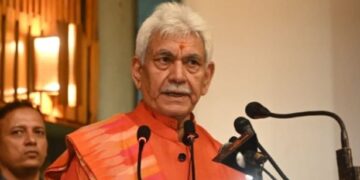
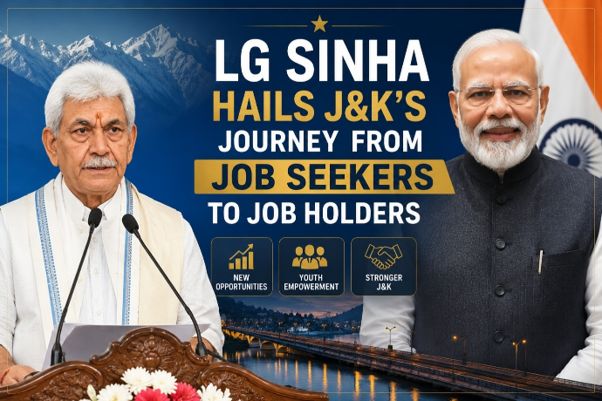
LG Calls Scheme Historic For J&K: For Jammu and Kashmir, the scheme assumes particular significance as the Union Territory continues to witness structural changes in its employment ecosystem. Speaking virtually during the UT-level programme, Lieutenant Governor Manoj Sinha termed the occasion historic and said the employment-linked initiative reflects the broader transformation underway in Jammu and Kashmir. Expressing gratitude to Prime Minister Modi, the Lieutenant Governor said the Centre’s policies have created a new momentum in employment generation, improved employability and expanded access to social security for thousands of youth across the Union Territory. “This historic occasion is not merely a programme for distributing financial benefits under a government scheme; it is a celebration of Jammu and Kashmir’s transformative journey. It is a celebration of the dreams, aspirations and opportunities that are giving a new direction to the lives of our youth,” Sinha said.
Post-2019 Labour Reforms Highlighted: According to the Lieutenant Governor, one of the most significant policy shifts in Jammu and Kashmir came after the extension of central labour laws to the Union Territory. He recalled that prior to August 2019, workers in Jammu and Kashmir remained outside the ambit of several national-level labour welfare protections. “Prior to August 2019, workers in Jammu and Kashmir were deprived of comprehensive social security protections. Following the implementation of the Employees’ Provident Fund and Miscellaneous Provisions Act, 1952 in November 2019, lakhs of regional workers were integrated into the national social security fold for the first time,” he said. The extension of these protections has had long-term implications for labour welfare, especially for workers employed in private enterprises, manufacturing units and service-sector establishments.
How The Scheme Works: Officials said PM-VBRY has been designed around two core pillars. The first pillar focuses on employees, especially first-time entrants into formal employment. Under this component, eligible workers receive direct financial support equivalent to one month’s wage, capped at Rs 15,000. The second pillar targets employers by offering incentives to establishments that generate additional employment. Industries and institutions that expand their workforce receive financial support for two years. In labour-intensive sectors such as manufacturing, support has been extended for an additional two years to sustain long-term job creation. “When industries grow, employment opportunities increase and society prospers. Through these two components, more than 3.5 crore employment opportunities across India are expected to be incentivised over the next two years,” Sinha said.
Strong Response From J&K Establishments: Jammu and Kashmir’s performance under the scheme has been described by officials as encouraging. The Lieutenant Governor revealed that over 3,300 establishments in the Union Territory have already registered under PM-VBRY. These establishments have collectively facilitated the entry of more than 22,500 youth into formal employment for the first time. Additionally, over 31,000 job openings have qualified for incentives under the scheme, resulting in direct positive economic impact on more than 53,000 citizens. Industry experts say the transition towards formal employment is particularly important in Jammu and Kashmir, where unemployment and underemployment among youth remain key concerns.
Boost To Industry, Employment: The scheme is also expected to boost investor confidence by incentivising workforce expansion and lowering hiring costs for employers. This comes at a time when the administration is promoting industrial growth, entrepreneurship and private-sector investment in the Union Territory. The Lieutenant Governor also praised the Employees’ Provident Fund Organisation (EPFO) for implementing reforms aligned with the national priorities of ease of doing business and ease of living. He urged more enterprises across Jammu and Kashmir to register under the scheme and participate actively in employment generation.
Ground-Level Impact Visible: At the Convention Centre in Jammu, the regional programme witnessed participation from MPs, senior government officials, industry representatives, EPFO officers, employers and beneficiaries. More than 600 participants attended the event, including around 400 beneficiaries and over 200 employers. As part of the programme, employment letters were distributed to newly recruited workers. Twenty appointment letters were handed over in Jammu, while six employment letters were distributed at Bari Brahmana Industrial Association in Samba. Employer representatives welcomed the initiative and acknowledged its positive impact on industries and businesses. Employee beneficiaries also shared their experiences, describing the financial assistance as meaningful support during the initial stages of formal employment.
A Long-Term Economic Shift: As Jammu and Kashmir continues its economic transition, PM-VBRY is increasingly being viewed as a key policy instrument linking welfare with employment generation. By supporting both youth and employers, the scheme seeks to address multiple labour-market challenges simultaneously. With over Rs 26 crore already flowing into Jammu and Kashmir under the latest disbursement and thousands of youth entering the formal workforce, the scheme signals a broader shift toward institutionalised job creation and inclusive growth. For a region where employment generation remains central to economic stability and social progress, the success of PM-VBRY may serve as a key indicator of how effectively policy-driven incentives can reshape labour markets and unlock long-term opportunities for the next generation.